
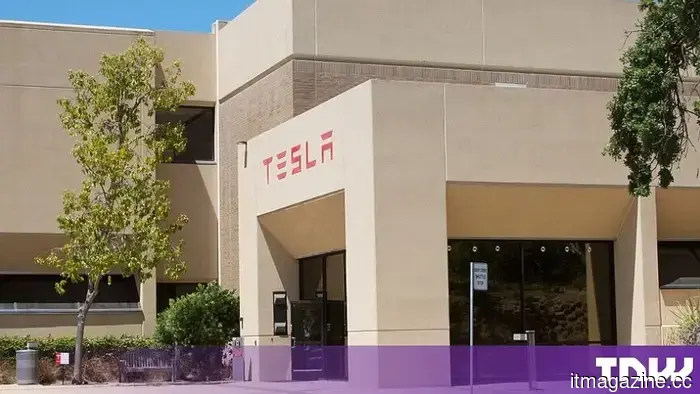
Tesla concluded Sweden's longest strike by purchasing out all of the remaining strikers.
The union made the announcement on August 13, stating that the strike would conclude at one minute past midnight on Wednesday, August 19. The strike, which began on October 27, 2023, involved approximately 120 mechanics across seven workshops in Sweden, marking the longest industrial conflict in contemporary Swedish history. Tesla did not sign a collective agreement, which was the main demand of the striking mechanics.
As for how the strike ended, IF Metall attributed the outcome to simple arithmetic: Tesla bought out its striking members until there were none left. The total number was around 80. Malmö lost all its strikers, and only a few remained in Stockholm and Uppsala by the end of this month. Simon Petersson, the union’s agreement secretary, stated that Tesla is so opposed to collective agreements that it chose to buy out employees rather than provide them with stable working conditions. A strike needs strikers, and once the last member accepted a buyout agreement, there was no leverage left.
Union chair Marie Nilsson did not mince words, stating, “Det är klart vi har misslyckats,” meaning they have clearly failed. She remarked that the union did not win this round, a notably direct comment for a union leader to make at the conclusion of an action. In a communication to members, however, she referred to them as “fackliga hjältar,” or union heroes. The union maintains that its objectives remain unchanged, with IF Metall prepared to advocate for collective agreements "oavsett var eller när," irrespective of when or where.
Petersson highlighted the historical significance of the situation, noting that systematic strike-breaking of this sort has not been seen in the Swedish labor market since the 1930s.
Tesla's position has been that it does not accept this premise. The company’s communications manager stated to Sweden Herald that employment at Tesla encompasses all standard conditions outlined in Swedish laws and regulations. These conditions include occupational pension, working hours, and safe working environments, asserting that Swedish law already addresses what the agreement would cover. Tesla did not respond to Reuters regarding the conclusion of the strike, and Elon Musk has previously described the action as insane.
Investors perceived it as a victory for Tesla, as shares closed approximately 4% higher on Thursday, with an additional 1% increase in after-hours trading.
In Sweden, there is no statutory minimum wage; instead, pay, hours, and pensions are determined through collective agreements between unions and employer federations that encompass the majority of the labor market. This system is intentional, with parliament delegating these terms to the industry, effectively making the agreement function as wage laws do in other countries. Consequently, a dispute at a single workshop escalated significantly, as the agreement serves as the regulatory framework, meaning that rejecting it is not merely a private issue between an employer and 120 mechanics.
Sympathy strikes are permitted in Sweden and occurred quickly, with dockworkers refusing to unload Tesla vehicles at ports in Malmö, Gothenburg, and elsewhere. Transport unions from Denmark, Norway, and Finland joined the port blockade. Postal workers halted delivery of number plates, electricians stopped maintaining chargers, and cleaners ceased cleaning showrooms.
The blockade related to number plates resulted in an unusual legal dispute. Tesla sued the Swedish Transport Agency and PostNord for failing to deliver the plates. While it won an interim ruling in November 2023, it lost the appeal in December, keeping the plates blocked. Sweden has a track record of ruling against large American tech firms, as seen when a Stockholm court mandated that Google pay nearly $2 billion to Klarna's PriceRunner unit in July. However, this legal backdrop did not alter the situation here since the courts were unlikely to enforce a signature, and the strike was the only means of leverage.
The union directly indicated why Tesla could manage this situation. Veli-Pekka Säikkälä from LO, the Swedish trade union confederation, stated Tesla has "gigantiska ekonomiska resurser," or enormous financial resources, and utilized them to buy out the strikers. The size of the company in relation to the dispute tells the entire story, as Tesla reported $28.24 billion in revenue for the second quarter alone. Profit margins, however, decreased significantly, with operating income dropping 57% to $398 million as the company invested in AI and robotics. Even with this reduced income, the cost of buying out 80 individuals amounted to a trivial expense. Therefore, the potential costs of maintaining the strike were never a constraint.
Tesla is not retreating from Europe; for example, the Netherlands approved its FSD Supervised software in April, becoming the first European country to do so. The market for electric vehicles is expanding, with these vehicles accounting for over a quarter of European sales for the first time in June. Atle Høie, general secretary of the global union federation IndustriALL, summarized the implications for other employers, stating, "There seems to be no limits
Other articles
 Canva's investors reduced its valuation by $7.1 billion, while its own appraiser made an even larger cut.
Blackbird and Airtree reduced Canva's valuation to $34.9 billion, and Canva's internal valuation also dropped, following a revenue downgrade prompted by AI expenses.
Canva's investors reduced its valuation by $7.1 billion, while its own appraiser made an even larger cut.
Blackbird and Airtree reduced Canva's valuation to $34.9 billion, and Canva's internal valuation also dropped, following a revenue downgrade prompted by AI expenses.
 The ban on social media for individuals under 15 in France has been overturned just two weeks prior to its implementation.
France's prohibition on social media access for individuals under 15 has been overturned by the Constitutional Council, just two weeks before it was set to be implemented. However, the ban on phones in schools remains intact.
The ban on social media for individuals under 15 in France has been overturned just two weeks prior to its implementation.
France's prohibition on social media access for individuals under 15 has been overturned by the Constitutional Council, just two weeks before it was set to be implemented. However, the ban on phones in schools remains intact.
 A judge has instructed Google to ease the installation of competing app stores.
The compliance order from Epic v Google allows Google one week to eliminate the additional taps and warning screens that hinder the installation of competing Android app stores.
A judge has instructed Google to ease the installation of competing app stores.
The compliance order from Epic v Google allows Google one week to eliminate the additional taps and warning screens that hinder the installation of competing Android app stores.
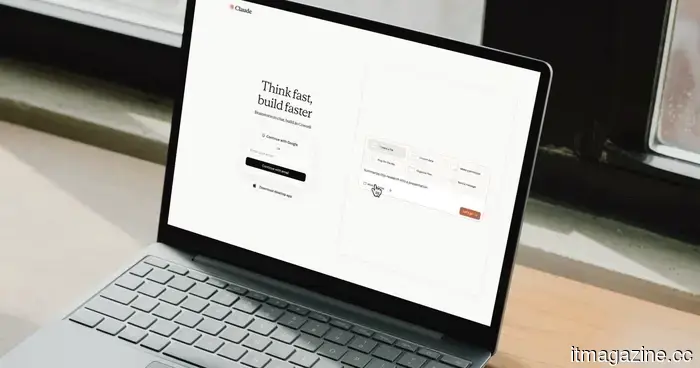 Reports indicate that Samsung is utilizing Claude to accelerate its chip design process.
Samsung is said to be utilizing Anthropic's Claude Code to enhance chip design and verification processes.
Reports indicate that Samsung is utilizing Claude to accelerate its chip design process.
Samsung is said to be utilizing Anthropic's Claude Code to enhance chip design and verification processes.
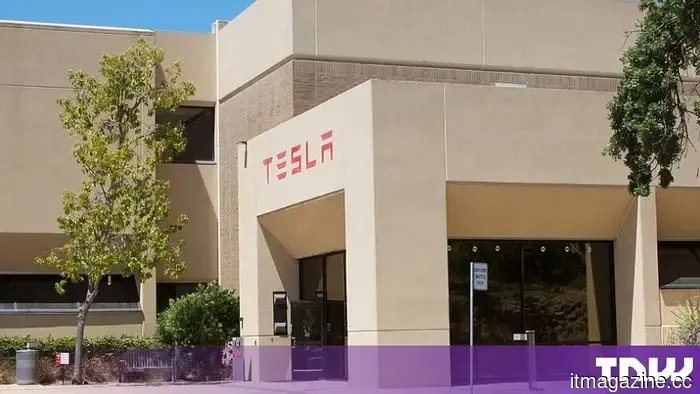 Tesla concluded Sweden's longest strike by purchasing the contracts of all striking workers.
The strike at Tesla Sweden concludes after 1,021 days. IF Metall reports that Tesla has negotiated buyouts for approximately 80 members who were on strike, resulting in a lack of participants for the strike.
Tesla concluded Sweden's longest strike by purchasing the contracts of all striking workers.
The strike at Tesla Sweden concludes after 1,021 days. IF Metall reports that Tesla has negotiated buyouts for approximately 80 members who were on strike, resulting in a lack of participants for the strike.
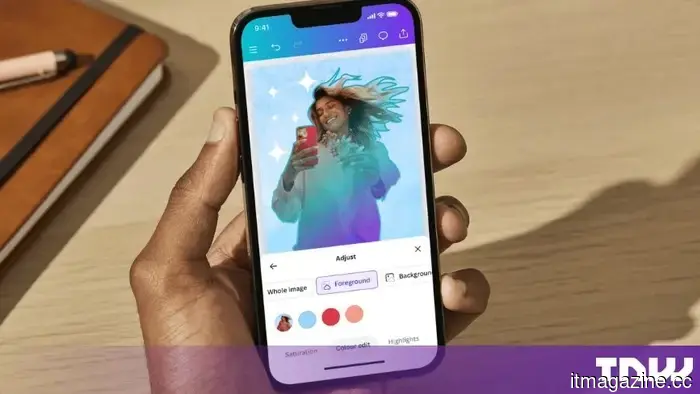 Canva's investors reduced its valuation by $7.1 billion, while its internal appraiser made an even larger cut.
Blackbird and Airtree have reduced Canva's valuation to $34.9 billion, and the company's internal assessment has declined further following a revenue downgrade due to AI expenses.
Canva's investors reduced its valuation by $7.1 billion, while its internal appraiser made an even larger cut.
Blackbird and Airtree have reduced Canva's valuation to $34.9 billion, and the company's internal assessment has declined further following a revenue downgrade due to AI expenses.
Tesla concluded Sweden's longest strike by purchasing out all of the remaining strikers.
The strike at Tesla Sweden concludes after 1,021 days. IF Metall reports that Tesla has bought out approximately 80 striking members, resulting in no one left to continue the strike.