
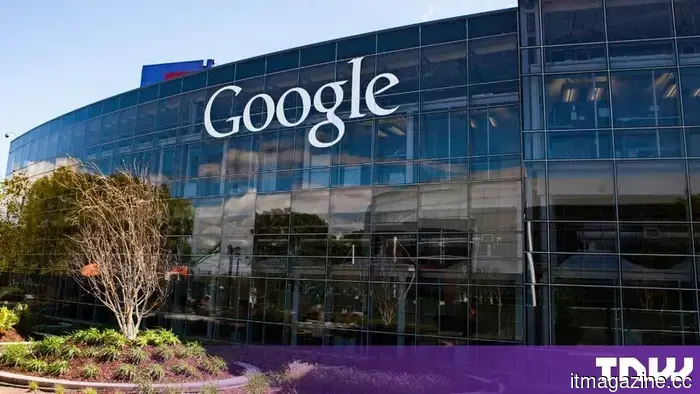
A judge has instructed Google to ease the installation of competing app stores.
The hearing took place on 13 August in a courtroom in San Francisco, as reported first by The Verge. This session was a compliance check, rather than a new case. Nearly three years ago, a jury unanimously decided that Google maintained an illegal monopoly over Android apps. Judge Donato established the remedy in October 2024.
This remedy requires Google to include rival Android app stores within Google Play and to provide those competitors complete access to its entire app catalog for several years. Google began implementing this on 22 July, and this hearing assessed its effectiveness.
During the search demonstration, Epic’s lawyer, Yonatan Even, searched Google Play for “store for apps.” The search yielded no third-party stores, only physical ones. Donato responded from the bench, questioning the appearance of Walmart and commenting, “That’s not good.” He ruled firmly that this was unacceptable and needed to be corrected, insisting he wanted every reasonable variation to be at least “70 percent properly phrased.”
Google's legal team agreed to address this issue, which pertains to the Play search experience for third-party stores, according to MLex. The specificity of the 70% standard is unusual for an injunction, providing both parties with a measurable outcome rather than abstract principles to argue over. This also indicates the court's perception of the issue—not merely the ranking of a single search query, but the way every reasonable variation of a query is managed.
The second issue involved the installation process. To install a third-party store, users had to click a View button before the Install button appeared, which differs from the standard app installation process where Install is the primary button, requiring only one tap to initiate.
Donato expressed his displeasure with this discrepancy, stating that this would also change, with third-party stores being treated more like regular apps, where the Install button would replace the View button, as reported by 9to5Google. He also criticized an interstitial message asking “are you looking for,” calling it unnecessary friction.
The core issue regarding search functionality was that Google had defined the terms for users to discover third-party stores, stating that they would need either a direct link or specific search terms. This was contrasted with a search for “store for apps” yielding Walmart, which highlighted the issue: a store that users cannot easily find is included but effectively not promoted.
Epic’s argument during this hearing focused on bridging that gap rather than analyzing the wording of the injunction; Google was adhering to the text. Android Authority reported that the court characterized the additional steps as intentionally anti-competitive friction meant to dissuade ordinary users.
Google defended these points of friction by claiming they protect users and devices, noting that installing another store requires system permissions, which comes with warnings. However, the court did not completely dismiss that argument; instead, it rejected the idea of using safety concerns as a justification for maintaining market dominance, according to Android Authority's report on the ruling.
This distinction is significant because it doesn't prohibit Google from warning users but rather instructs them to avoid unnecessary warnings that have no real function. Google has a week to implement these changes, with a deadline set for 20 August, and the company has not indicated whether it will appeal.
In a separate development, new sideloading regulations will take effect on 30 September, introducing a verification process for developers. Installing an app from an unverified developer will involve a 24-hour waiting period. This differs from the current case focused on how stores are integrated within Play; sideloading refers to installing apps outside of any storefront.
Both scenarios will impact the same user base within six weeks—one aspect will become easier due to the court's order, while the other will become more difficult as a result of company policy. Google markets both changes as user protection, although the court has recently scrutinized the legitimacy of this framing.
Aptoide Games, based in Lisbon, became the first competing store in the US Play Store on 10 August. Aptoide has been developing Android storefronts since 2009, predating the current legal case. It has around 25 million active users monthly and provides access to over 400,000 apps, with the US being its largest market. Gaining access required meeting specific criteria, including a $5,000 annual review fee and maintaining a malware threshold of 1%.
However, Aptoide's inclusion has been inconsistent. The Verge inquired two days later whether readers could find a rival store on US Play at all. It became apparent that years of operating outside of Play had equipped these companies with the experience necessary to navigate the added friction.
Meanwhile, Epic is challenging both platform owners at different stages. Apple recently faced a contempt ruling for its 27% commission on external payment links, which is expected to increase as the Supreme Court agreed to hear Apple's appeal in June.
Google took a different route, proposing a settlement with Epic in March, which was subsequently withdrawn in July, leading to the current
Other articles
 The co-founder of Arm states that AI will generate more value than any previous revolution and predicts it will be a thrilling ride.
Hermann Hauser, co-founder of Arm, believes that AI will generate greater value than any previous revolution, though he cautions that certain valuations have become overly inflated.
The co-founder of Arm states that AI will generate more value than any previous revolution and predicts it will be a thrilling ride.
Hermann Hauser, co-founder of Arm, believes that AI will generate greater value than any previous revolution, though he cautions that certain valuations have become overly inflated.
 Tesla concluded Sweden's longest strike by purchasing out all of the remaining strikers.
The strike at Tesla Sweden concludes after 1,021 days. IF Metall reports that Tesla has bought out approximately 80 striking members, resulting in no one left to continue the strike.
Tesla concluded Sweden's longest strike by purchasing out all of the remaining strikers.
The strike at Tesla Sweden concludes after 1,021 days. IF Metall reports that Tesla has bought out approximately 80 striking members, resulting in no one left to continue the strike.
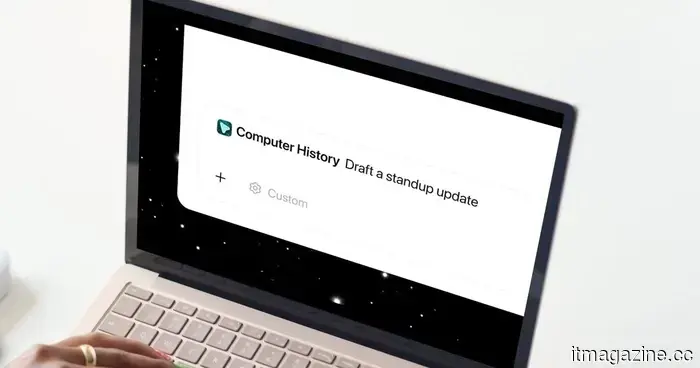 Bid farewell to Chronicle. ChatGPT's new Computer History feature surpasses it.
The desktop app for ChatGPT has introduced Computer History, a more private, screenshot-free enhancement to Chronicle that transforms your everyday activities into a searchable timeline.
Bid farewell to Chronicle. ChatGPT's new Computer History feature surpasses it.
The desktop app for ChatGPT has introduced Computer History, a more private, screenshot-free enhancement to Chronicle that transforms your everyday activities into a searchable timeline.
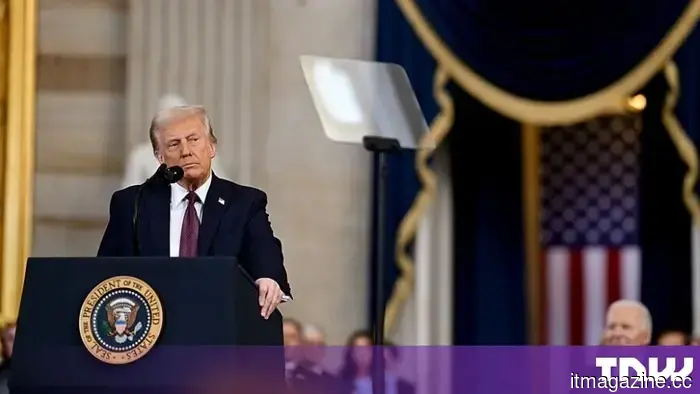 Trump's drone tariffs hit 100%, while Europe is limited to 15%.
Tariffs on drones over 25kg and on thermal imaging models have been set at 100% by Trump. The European Union's tariffs will be limited to 15%, while the United Kingdom's will be set at 10%, effective from September 3rd.
Trump's drone tariffs hit 100%, while Europe is limited to 15%.
Tariffs on drones over 25kg and on thermal imaging models have been set at 100% by Trump. The European Union's tariffs will be limited to 15%, while the United Kingdom's will be set at 10%, effective from September 3rd.
 ASU's degree in content creation evaluates your follower count.
Arizona State's content creation program requires students to build an audience in order to graduate. Interestingly, the university's careers page does not mention the term influencer.
ASU's degree in content creation evaluates your follower count.
Arizona State's content creation program requires students to build an audience in order to graduate. Interestingly, the university's careers page does not mention the term influencer.
 The co-founder of Arm asserts that AI will generate greater value than any prior revolution and will be a thrilling ride.
Hermann Hauser, a co-founder of Arm, asserts that AI will generate more value than any prior revolution, but he cautions that certain valuations have become inflated.
The co-founder of Arm asserts that AI will generate greater value than any prior revolution and will be a thrilling ride.
Hermann Hauser, a co-founder of Arm, asserts that AI will generate more value than any prior revolution, but he cautions that certain valuations have become inflated.
A judge has instructed Google to ease the installation of competing app stores.
The compliance order from Epic v Google allows Google one week to eliminate the additional taps and warning screens that hinder the installation of competing Android app stores.