

The ban on social media for individuals under 15 in France has been overturned just two weeks prior to its implementation.
The ruling came approximately two weeks before the planned ban was set to take effect, as reported by Bloomberg. Platforms were to halt account creation for users under 15 starting September 1. The law received final approval from Parliament on July 21, a vote that was covered extensively at the time.
What the Council decided
The Council overturned the ban citing freedom of expression. They determined that the restriction constituted “une atteinte qui n’est pas adaptée, nécessaire et proportionnée,” which translates to an infringement that is neither appropriate, necessary, nor proportionate to its intended goal, according to Brut. They highlighted the extensive reach of the ban, pointing out that it applied to services where "les risques pour la santé et la sécurité des mineurs (…) ne sont pas établis," indicating that the risks to minors’ health and safety were not substantiated. The second reason for the ruling was privacy; the Council ruled that the lawmakers did not provide sufficient legal safeguards to protect personal privacy regarding age verification.
What the law intended to achieve
Article 1 encompassed a broad range of services including TikTok, Snapchat, X, Instagram, YouTube’s social features, messaging applications like WhatsApp and Messenger, as well as certain online games. The extensive reach of this article allowed for the Council's ruling, as it needed to justify itself across platforms with significantly different safety records, and the Council found that the evidence did not support such broad application. The law did not specify any particular platform but applied to services classified as social networks under France's 2004 digital confidence legislation. LCP, the parliamentary channel, noted that the timeline had two critical dates: the prohibition of new accounts beginning September 1 and a four-month transition period for existing accounts running until January 1, 2027. However, exemptions were made for online encyclopedias, educational directories, and open-source educational software.
Aspects unaffected by the ruling
The ruling does not impact schools. The smartphone ban for lycées is still set to take effect on September 1. This outcome is procedural rather than rooted in substance, as the Council was only asked to assess Article 1, not the entire law. The education minister advocated for this provision based on grounds of focus and concentration. Existing bans in primary and secondary schools would now extend to the sixth form.
Who initiated the legal challenge
La France Insoumise brought the law before the Council in July, as reported by Generation-NT. The party highlighted two constitutional arguments. The first concerned freedom of expression and communication, claiming that the blanket nature of the ban made it an unreasonable restriction. The second was a privacy issue outlined in the 1789 Declaration, both arguments were acknowledged in the decision. LFI also contended that the ban unfairly grouped dissimilar entities together. They argued that social platforms are vital for social interaction, access to information, and civic participation, which poses varying risks.
Changes prior to the Council's review
The law reviewed by the Council was already less stringent than its original form. Parliament had removed the age-verification requirement prior to the final vote, as per TechTimes. The initial stipulation mandated that platforms submit verification proposals to Arcom, the audiovisual authority, by September 1. This requirement, along with Arcom’s authority to impose sanctions on non-compliant platforms, was eliminated. A section amending the penal code regarding parental negligence was also discarded. The enacted law imposes no penalties, leaving verification to the discretion of platforms, pending approval from CNIL, the privacy authority. No specific method was defined, allowing for various approaches, such as document checks or facial age estimation.
The government’s position
Ministers framed the law as a measure for child protection rather than a regulation of speech. The administration positioned the ban as a central element of its digital policy for the school year. The argument included polling, with an Arcom study from July indicating that over two-thirds of 10 to 14-year-olds were in favor of the ban, as per reports on the ruling. French media characterized the decision as a setback for Emmanuel Macron, who publicly supported the measure and had advocated for the September implementation date.
Context of similar international bans
Australia often serves as a reference point for such regulations, especially regarding penalties. Its ban for those under 16 includes fines up to A$49.5 million, yet a study conducted six months post-implementation found that 85% of the demographic continued using the platforms. France was planning a similar initiative without including fines in the legislation. Enforcement was intended to rely on the EU Digital Services Act, which permits fines up to 6% of global revenue. However, this pathway has yet to yield any penalties for child safety, as TechTimes noted. The European Commission has initiated cases without concluding in established compliance orders for this cause.
Australia has since shifted the focus to device manufacturers, with Meta advocating for operating systems to provide age verification instead of the platforms themselves. In the
Other articles
 Samsung is said to be utilizing Claude to accelerate the chip design process.
Samsung is said to be utilizing Anthropic's Claude Code to enhance the speed of chip design and verification.
Samsung is said to be utilizing Claude to accelerate the chip design process.
Samsung is said to be utilizing Anthropic's Claude Code to enhance the speed of chip design and verification.
 A judge has instructed Google to ease the installation of competing app stores.
The compliance order from Epic v Google allows Google one week to eliminate the additional taps and warning screens that hinder the installation of competing Android app stores.
A judge has instructed Google to ease the installation of competing app stores.
The compliance order from Epic v Google allows Google one week to eliminate the additional taps and warning screens that hinder the installation of competing Android app stores.
 SpaceX has finalized its $60 billion deal with Cursor, which had acquired a company the day prior.
The acquisition of Cursor by SpaceX was finalized on 14 August. Cursor claims to now have access to the world's largest fleet of GPUs, along with more affordable models.
SpaceX has finalized its $60 billion deal with Cursor, which had acquired a company the day prior.
The acquisition of Cursor by SpaceX was finalized on 14 August. Cursor claims to now have access to the world's largest fleet of GPUs, along with more affordable models.
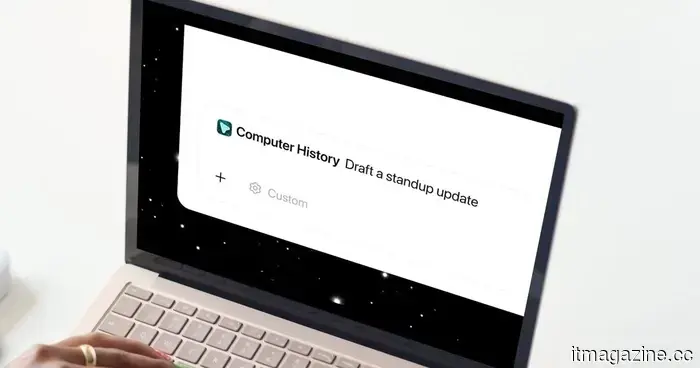 Bid farewell to Chronicle. ChatGPT's new Computer History feature outperforms it.
The desktop app for ChatGPT has introduced Computer History, a more private and screenshot-free enhancement of Chronicle that transforms your daily activities into a searchable timeline.
Bid farewell to Chronicle. ChatGPT's new Computer History feature outperforms it.
The desktop app for ChatGPT has introduced Computer History, a more private and screenshot-free enhancement of Chronicle that transforms your daily activities into a searchable timeline.
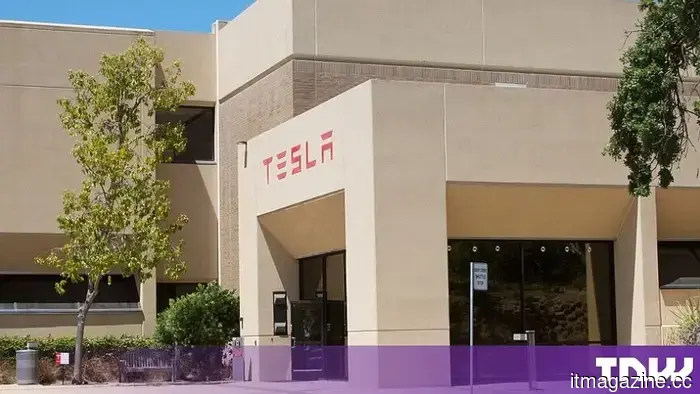 Tesla concluded Sweden's longest strike by purchasing out all of the remaining strikers.
The strike at Tesla Sweden concludes after 1,021 days. IF Metall reports that Tesla has bought out approximately 80 striking members, resulting in no one left to continue the strike.
Tesla concluded Sweden's longest strike by purchasing out all of the remaining strikers.
The strike at Tesla Sweden concludes after 1,021 days. IF Metall reports that Tesla has bought out approximately 80 striking members, resulting in no one left to continue the strike.
 SpaceX has finalized its $60 billion deal with Cursor, which had acquired a company the day prior.
The acquisition of Cursor by SpaceX was finalized on 14 August. Cursor claims it now has access to the world's largest fleet of GPUs, including more affordable models.
SpaceX has finalized its $60 billion deal with Cursor, which had acquired a company the day prior.
The acquisition of Cursor by SpaceX was finalized on 14 August. Cursor claims it now has access to the world's largest fleet of GPUs, including more affordable models.
The ban on social media for individuals under 15 in France has been overturned just two weeks prior to its implementation.
France's prohibition on social media access for individuals under 15 has been overturned by the Constitutional Council, just two weeks before it was set to be implemented. However, the ban on phones in schools remains intact.