
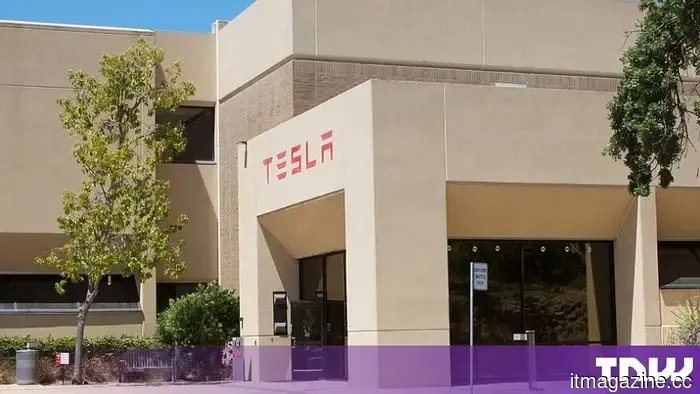
Tesla concluded Sweden's longest strike by purchasing the contracts of all striking workers.
The union made its announcement on 13 August, stating that the strike would conclude at one minute past midnight on Wednesday, 19 August. The strike commenced on 27 October 2023, involving approximately 120 mechanics across seven workshops in Sweden, as noted by Electrek. It became the longest labor dispute in modern Swedish history.
Tesla never entered into a collective bargaining agreement, which was the main issue that prompted the mechanics to strike.
As for the conclusion of the strike, IF Metall cites one primary reason: mathematics. Tesla managed to buy out its striking employees until none remained. This number was around 80 individuals. Malmö had no strikers left, while only a few stayed in Stockholm and Uppsala as of this month.
Simon Petersson, the union's agreement secretary, stated clearly that Tesla is so opposed to collective agreements that it would prefer to buy out its workers rather than provide them with secure employment conditions. A strike requires strikers; once the final member agreed to a buyout, the action lost any leverage it had.
On the union's perspective of the defeat, chair Marie Nilsson did not mince words, declaring, “Det är klart vi har misslyckats” to the union magazine Dagens Arbete, meaning "of course, we have failed." She acknowledged that the union did not win this round, which is a notably candid remark from a union leader on the day the action concluded. However, in her address to members, she referred to them as "fackliga hjältar," or union heroes.
The union maintains that its objectives remain unchanged. IF Metall is still prepared to advocate for collective agreements “oavsett var eller när,” regardless of where or when. Petersson emphasized a significant historical point, stating that systematic strikebreaking like this has not been seen in the Swedish labor market since the 1930s.
Tesla, however, has never accepted this premise. Its communications manager told Sweden Herald that employment at Tesla is compliant with all standard terms and conditions laid out in Swedish laws and regulations. These terms include occupational pensions, working hours, and safe working conditions, with the assertion that Swedish law already provides what such an agreement would.
Tesla did not respond to Reuters regarding the conclusion of the strike. Elon Musk has previously described the action as insane. Investors interpreted the outcome positively, as Tesla shares rose nearly 4% on Thursday and an additional 1% after hours.
In Sweden, there is no statutory minimum wage. Salaries, working hours, and pensions are determined by collective agreements between unions and employer federations, which encompass most of the labor market. This arrangement is not a quirk; it reflects the system in place. Parliament delegated these terms to the industries involved, with the agreement functioning in place of wage laws seen in other regions.
This is why a localized dispute escalated as it did. The agreement serves as the regulation, making refusal to adhere a concern that extends beyond a private issue between an employer and 120 mechanics. Sympathy actions are permissible in Sweden and arose swiftly, as dockworkers declined to unload Tesla vehicles at ports in Malmö, Gothenburg, and others. Unions in Denmark, Norway, and Finland joined the port blockade, while postal workers halted the delivery of number plates, electricians ceased service on chargers, and cleaners stopped maintaining showrooms.
A blockade concerning the number plates resulted in an unusual legal conflict. Tesla initiated legal action against the Swedish Transport Agency and PostNord over undelivered plates, winning a temporary ruling in November 2023 but subsequently losing on appeal in December. The plates remained blocked.
Sweden has a history of ruling against large American tech companies, as evidenced when a Stockholm court ordered Google to pay nearly $2 billion to Klarna’s PriceRunner unit in July. However, none of this altered the outcome here; the courts were never going to force a signature, and it was only the strike that could effect change.
The union points out the reason for Tesla's actions directly. Veli-Pekka Säikkälä from the Swedish trade union confederation (LO) stated that Tesla has “gigantiska ekonomiska resurser” (huge financial resources) and deployed these to buy out the strikers. The disparity between the company's financial scale and the scope of the dispute tells the whole story. Tesla reported $28.24 billion in revenue just in the second quarter, while operating income decreased by 57% to $398 million due to investments in AI and robotics. Even with that reduced amount, the cost of buying out 80 employees is merely a minor expense. The expense related to enduring the strike was never an obstacle.
Regarding its future in Europe, Tesla is not withdrawing from the continent. The Netherlands approved its FSD Supervised software in April, marking it as the first European nation to do so. The market for electric vehicles has been expanding, with electric sales surpassing a quarter of total European sales for the first
Other articles
 A judge has instructed Google to cease complicating the installation of competing app stores.
The compliance order from Epic v. Google allows Google one week to eliminate the additional taps and warning screens that hinder the installation of competing Android app stores.
A judge has instructed Google to cease complicating the installation of competing app stores.
The compliance order from Epic v. Google allows Google one week to eliminate the additional taps and warning screens that hinder the installation of competing Android app stores.
 A judge has instructed Google to cease making it difficult to install competing app stores.
The compliance order from Epic v Google requires Google to eliminate the additional taps and warning screens that hinder the installation of competing Android app stores within a week.
A judge has instructed Google to cease making it difficult to install competing app stores.
The compliance order from Epic v Google requires Google to eliminate the additional taps and warning screens that hinder the installation of competing Android app stores within a week.
 Five of Europe's largest companies have just acquired computing resources that Mistral has not developed.
ASML, Amadeus, Capgemini, Caisse des Dépôts, and CMA CGM are supporting the expansion of the Mistral data center by purchasing multi-year computing units that are not yet available.
Five of Europe's largest companies have just acquired computing resources that Mistral has not developed.
ASML, Amadeus, Capgemini, Caisse des Dépôts, and CMA CGM are supporting the expansion of the Mistral data center by purchasing multi-year computing units that are not yet available.
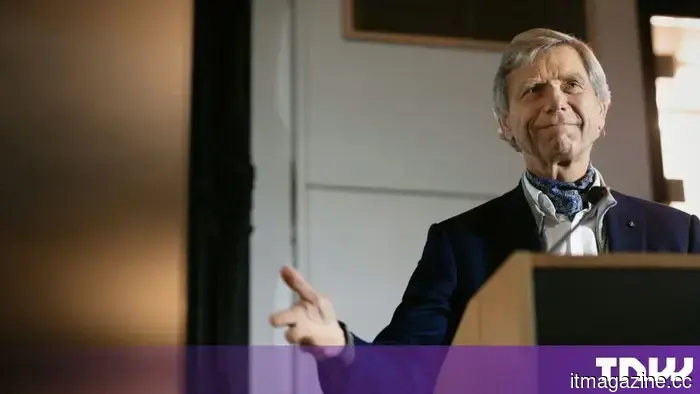 The co-founder of Arm believes that AI will generate more value than any previous revolution and will be an exciting ride.
Hermann Hauser, a co-founder of Arm, states that AI will generate greater value than any previous revolution, but cautions that some valuations have become overly optimistic.
The co-founder of Arm believes that AI will generate more value than any previous revolution and will be an exciting ride.
Hermann Hauser, a co-founder of Arm, states that AI will generate greater value than any previous revolution, but cautions that some valuations have become overly optimistic.
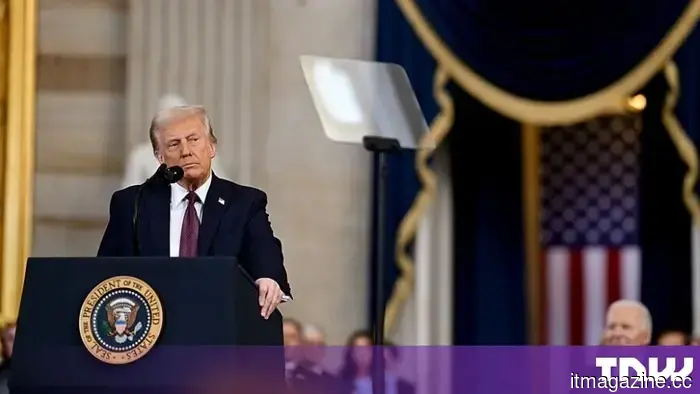 Trump's drone tariffs hit 100%, while Europe is limited to 15%.
Tariffs on drones over 25kg and on thermal imaging models have been set at 100% by Trump. The European Union's tariffs will be limited to 15%, while the United Kingdom's will be set at 10%, effective from September 3rd.
Trump's drone tariffs hit 100%, while Europe is limited to 15%.
Tariffs on drones over 25kg and on thermal imaging models have been set at 100% by Trump. The European Union's tariffs will be limited to 15%, while the United Kingdom's will be set at 10%, effective from September 3rd.
 SpaceX has finalized its $60 billion deal with Cursor, which had acquired a company the day prior.
The acquisition of Cursor by SpaceX was finalized on 14 August. Cursor claims to now have access to the world's largest fleet of GPUs, along with more affordable models.
SpaceX has finalized its $60 billion deal with Cursor, which had acquired a company the day prior.
The acquisition of Cursor by SpaceX was finalized on 14 August. Cursor claims to now have access to the world's largest fleet of GPUs, along with more affordable models.
Tesla concluded Sweden's longest strike by purchasing the contracts of all striking workers.
The strike at Tesla Sweden concludes after 1,021 days. IF Metall reports that Tesla has negotiated buyouts for approximately 80 members who were on strike, resulting in a lack of participants for the strike.