

Canva's investors reduced its valuation by $7.1 billion, while its internal appraiser made an even larger cut.
Emma Rapaport and Paul Smith reported the markdown for the Australian Financial Review on August 14. The figure is presented in two ways, both of which are accurate: it is $7.1 billion in US dollars and A$10 billion, the latter being the figure most headlines highlighted. This adjustment reduces Blackbird and Airtree’s valuation from $42 billion to $34.9 billion, reflecting a 17% decrease. Both firms are among Canva’s longstanding supporters.
The more significant reduction originated internally. Canva’s own independent valuation has shifted more than that of its investors. The AFR points out that this internal downgrade exceeds that of the investors. This figure is important because it represents a concrete value: it is the price at which employees can sell shares, which has dropped from $38.9 billion to $31 billion over the last year. Thus, the write-down registers as $7.1 billion by one measure and $7.9 billion by another, with two separate valuers indicating the same trend. However, neither figure constitutes a transaction; no one has bought or sold Canva at these prices, and this distinction is crucial for what follows.
The markdown was triggered by an earlier downgrading. A week prior, on August 3, the AFR reported that Canva had reduced its expected growth rate by a third, down to 20%. The headline of that report pointed directly to the reason: Canva experienced a significant increase in AI costs. The company struggled to implement AI tools due to the soaring expenses associated with using advanced models. Although second-quarter revenue reached $921.9 million, a 25.2% increase, it fell short of internal guidance.
Melanie Perkins stated that demand was the issue, not a lack of it. The interest in the new AI features "significantly exceeded" expectations.
Perkins discussed the decision to slow the rollout. In an email to Fortune, she provided clear insight into the events and was unusually open about the sequence of actions. She explained that the launch confirmed demand but also indicated the need to decrease the costs of AI tasks to enable a broader rollout. Thus, the decision was made: "Instead of launching a product broadly before the underlying economics were ready, we opted to slow the rollout while we restructured the architecture, lowered unit costs, and strengthened the business model." She noted that the cost per task has since dropped nearly 90% since the launch of Canva AI 2.0 in April, stating that users are creating three times more designs, meaning the savings are not as straightforward as the percentage suggests.
The underlying issue was detailed by Derek Hernandez, a senior research analyst at Pitchbook who focuses on SaaS and AI. He explained that the economics of software have been impacted. "AI is making SaaS no longer a zero marginal cost solution, which has been a significant part of software's appeal until now," he said. His analogy illustrates this well: building a Ford F-150 represents training, while gas and mechanics represent inference, as they are the actual usage costs of the product. Previously, serving an additional user of a design tool incurred minimal costs, but each AI-assisted image now comes with a compute expense.
The connection to public markets was also noted by Hernandez. "Canva and Figma encountered the same issue about five days apart, although they reported it differently," he remarked. Figma, which experienced a 48% growth and raised its outlook, saw its stock drop 16% due to margins. Its free cash flow margin decreased to 14% in the second quarter from 27% in the first quarter, and it has guided third-quarter growth down to 36% from 48%. One of these companies is public and faced an immediate revaluation, while the other is private and was repriced by its shareholders, highlighting the same challenge.
Other large buyers are encountering similar issues. For instance, Amazon faced an unexpected budget overrun of 860% before a project failed. Responses to these challenges are beginning to align. Microsoft has imposed spending limits on internal AI usage, while EY created an AI router to delegate tasks to less expensive models rather than automatically using the most advanced ones. This aligns closely with Perkins' idea of reengineering the system.
Rory O’Driscoll from Scale Venture Partners pointed out the timing aspect during the 20VC podcast. "Many will be paying the price in 2026 and 2027 for hesitance in 2023 and 2024," he stated.
Canva cannot afford to sit out the AI revolution, as it is central to its growth strategy. The company is expanding beyond design into enterprise workflows, including tools like Canva Code. Perkins mentioned to Fortune in 2023 that the AI market was too fragmented, leading to a strategy focused on integrating those components onto a single platform. This presents a dilemma for the industry, as companies cannot miss out on the AI boom, but embracing it can compromise their financial
Other articles
 ASU's degree in content creation evaluates your follower count.
Arizona State's content creation program requires students to build an audience in order to graduate. Interestingly, the university's careers page does not mention the term influencer.
ASU's degree in content creation evaluates your follower count.
Arizona State's content creation program requires students to build an audience in order to graduate. Interestingly, the university's careers page does not mention the term influencer.
 Canva's supporters have reduced its valuation by $7.1 billion, while its internal valuator made an even larger cut.
Blackbird and Airtree reduced Canva's valuation to $34.9 billion, and Canva's internal assessment also dropped further, following a revenue downgrade due to AI expenses.
Canva's supporters have reduced its valuation by $7.1 billion, while its internal valuator made an even larger cut.
Blackbird and Airtree reduced Canva's valuation to $34.9 billion, and Canva's internal assessment also dropped further, following a revenue downgrade due to AI expenses.
 Five of Europe's largest companies have just acquired computing resources that Mistral has not developed.
ASML, Amadeus, Capgemini, Caisse des Dépôts, and CMA CGM are supporting the expansion of the Mistral data center by purchasing multi-year computing units that are not yet available.
Five of Europe's largest companies have just acquired computing resources that Mistral has not developed.
ASML, Amadeus, Capgemini, Caisse des Dépôts, and CMA CGM are supporting the expansion of the Mistral data center by purchasing multi-year computing units that are not yet available.
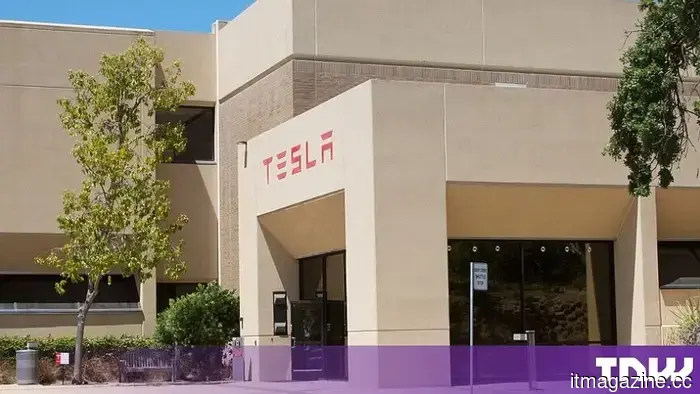 Tesla concluded Sweden's longest strike by purchasing out all of the remaining strikers.
The strike at Tesla Sweden concludes after 1,021 days. IF Metall reports that Tesla has bought out approximately 80 striking members, resulting in no one left to continue the strike.
Tesla concluded Sweden's longest strike by purchasing out all of the remaining strikers.
The strike at Tesla Sweden concludes after 1,021 days. IF Metall reports that Tesla has bought out approximately 80 striking members, resulting in no one left to continue the strike.
 Bid farewell to Chronicle. ChatGPT's new Computer History feature outperforms it.
The desktop app for ChatGPT has introduced Computer History, a more private and screenshot-free enhancement of Chronicle that transforms your daily activities into a searchable timeline.
Bid farewell to Chronicle. ChatGPT's new Computer History feature outperforms it.
The desktop app for ChatGPT has introduced Computer History, a more private and screenshot-free enhancement of Chronicle that transforms your daily activities into a searchable timeline.
 Joshua Kushner's Thrive Capital Reveals $215 Million Investment in Amazon
Thrive Capital, led by Joshua Kushner, has purchased $215 million in Amazon shares just days after announcing the sale of a portion of its stake in OpenAI.
Joshua Kushner's Thrive Capital Reveals $215 Million Investment in Amazon
Thrive Capital, led by Joshua Kushner, has purchased $215 million in Amazon shares just days after announcing the sale of a portion of its stake in OpenAI.
Canva's investors reduced its valuation by $7.1 billion, while its internal appraiser made an even larger cut.
Blackbird and Airtree have reduced Canva's valuation to $34.9 billion, and the company's internal assessment has declined further following a revenue downgrade due to AI expenses.