
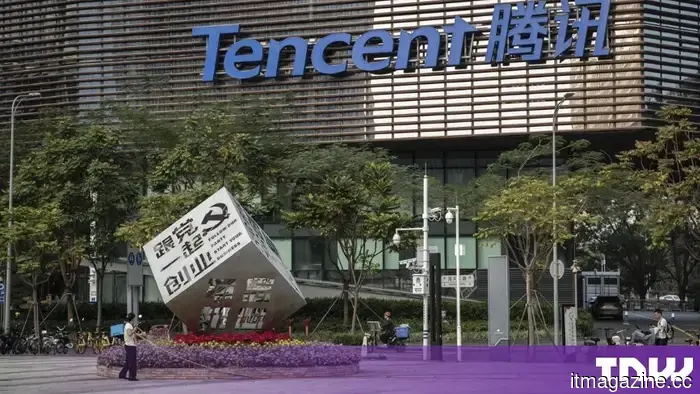
Tencent's expenses for AI computing have surpassed its cash flow, leading to a contingency plan that involves becoming a landlord.
On Wednesday, Tencent announced its second-quarter earnings, reporting a revenue of 204.8 billion yuan ($30.4 billion), which represents an 11% increase and surpasses forecasts. The net profit stood at 56 billion yuan, below the anticipated 61.8 billion, according to CNBC. Capital expenditure surged by 176% year over year to 52.8 billion yuan, approximately $7.8 billion. Free cash flow shifted to a deficit of 13.8 billion yuan.
These figures indicate a single decision by the company: it is utilizing its profits for computing investments while advising investors to remain patient.
To illustrate the financial situation, consider the two cash figures. Tencent’s capital expenditure for the quarter was 52.8 billion yuan, while free cash flow registered at minus 13.8 billion yuan, as reported by Bloomberg. This suggests that operational revenue was insufficient to cover both infrastructure expenses and other expenditures. Essentially, the combined revenues from WeChat, gaming, advertising, and cloud services fell short of covering compute costs. For a company that has consistently generated cash for the last twenty years, it has now spent more than its earnings.
Two ways to interpret the same statistic are presented here. The 176% figure reflects a year-over-year increase, highlighted by the South China Morning Post, whereas compared to the previous quarter, capital expenditure grew by 65%. Both figures stem from the same press release. Most media coverage chose to focus on one of these figures, leaving the discrepancy between them to underscore the quick rate of this acceleration.
Operating expenses increased by 22.6% during the quarter, according to Bloomberg Intelligence, with adjusted operating profit growth easing to 9.2%. Adjusted net income rose to 68.4 billion yuan, a 9% increase that aligns closely with expectations.
During the earnings call, analysts inquired about returns, with specific answers provided. Chief Strategy Officer James Mitchell indicated that Tencent could achieve a “decent return in an immediate timeframe” by opting to lease out all its computing capacity. Instead, the company is choosing to develop its own models for what he termed “superior economic returns in the long run.”
President Martin Lau echoed this sentiment, stating that in the worst-case scenario, which the company does not foresee, infrastructure could be leased out at cost recovery, adding that “there is also clear downside protection.”
Interpreted plainly, the downside scenario regarding a $7.8 billion quarterly computing expense suggests that Tencent could transition into a neocloud provider. This would represent a significant shift from its current business model focused on selling game skins and advertising.
The dilemma for Tencent lies in its spending. Alibaba has committed over $50 billion in AI infrastructure over three years, while Tencent has refrained from establishing a multi-year investment target, stating only that its investment in AI products will double this year.
Consequently, the market seems to benefit from both perspectives. Tencent’s stock has decreased by 26% this year, resulting in a loss of about $170 billion in market value. This is attributed partly to perceptions that its spending appears reckless and partly to concerns that spending is inadequate. Notably, Tencent is the only one among China’s major tech players without a leading model at the cutting edge.
Competitors have been vocal. Moonshot’s Kimi K3 has matched industry leaders with far fewer resources, while Alibaba’s Qwen3.8-Max has topped various charts. To mitigate risks, Tencent joined DeepSeek’s inaugural funding round and integrated its V4 model across its products.
On a positive note, Tencent’s operating business performed well in the last quarter. Domestic gaming revenues rose by 17% to 47.3 billion yuan, driven by games like Delta Force and Valorant, a significant increase from just 6% growth in the first quarter. Marketing services saw a 22% rise to 43.6 billion yuan, attributed to AI-enhanced ad targeting. Cloud services also experienced low twenty-percent growth, with price increases implemented.
International gaming revenues declined 0.8% due to currency effects, though grew by 4% in constant terms. The users of WeChat and Weixin reached 1.44 billion monthly, a 2% increase, while QQ Mobile dipped 2% to 520 million. Tencent has also been reducing studio investments in Japan and cutting staff at LightSpeed and TiMi.
While its AI products are still in their early stages, they are showing promise. WorkBuddy has become China’s leading AI office tool, with 21 million monthly visits in June. Meanwhile, Xiaowei, the assistant integrated into WeChat, is currently undergoing what Tencent describes as a small-scale prototype test.
The results of this quarter had an impact on a European stock. Prosus, the Amsterdam-listed company with a significant stake in Tencent, fell by 6% on that day. A quarterly report from Shenzhen is treated as a significant event in
Other articles
 Datamaxxing is the newest trend in AI, and this time, it may actually benefit your health objectives.
Datamaxxing allows AI to access health data from wearables, enabling it to clarify patterns that your smartwatch may not fully explain. Studies indicate that this concept holds potential, but providing medical advice still poses significant risks.
Datamaxxing is the newest trend in AI, and this time, it may actually benefit your health objectives.
Datamaxxing allows AI to access health data from wearables, enabling it to clarify patterns that your smartwatch may not fully explain. Studies indicate that this concept holds potential, but providing medical advice still poses significant risks.
 Datamaxxing is the newest trend in AI, and this time, it might actually benefit your health objectives.
Datamaxxing provides AI with access to wearable health information, allowing it to clarify patterns that your smartwatch may not fully explain. Studies indicate that the concept holds potential, but offering medical advice is a risky boundary to traverse.
Datamaxxing is the newest trend in AI, and this time, it might actually benefit your health objectives.
Datamaxxing provides AI with access to wearable health information, allowing it to clarify patterns that your smartwatch may not fully explain. Studies indicate that the concept holds potential, but offering medical advice is a risky boundary to traverse.
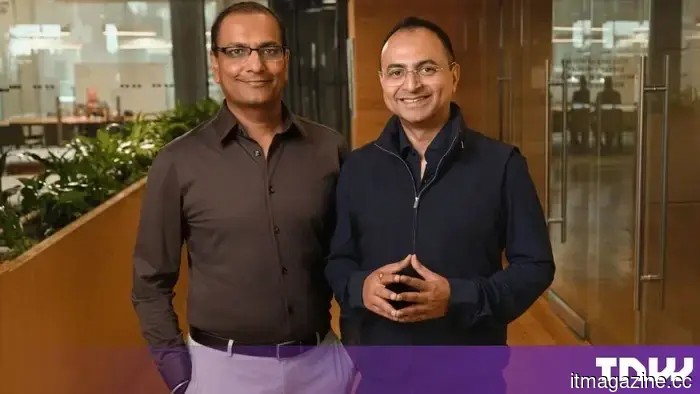 Skan AI secures $63 million to observe the actual work patterns of office employees and subsequently create agents that replicate their behaviors.
Skan AI secured $63 million to document employee activities on screens and subsequently create agents that can perform those same tasks. Seven out of the top ten largest banks in the US are among its clients.
Skan AI secures $63 million to observe the actual work patterns of office employees and subsequently create agents that replicate their behaviors.
Skan AI secured $63 million to document employee activities on screens and subsequently create agents that can perform those same tasks. Seven out of the top ten largest banks in the US are among its clients.
 Sony's Wolverine PS5 features actual claw marks carved into its exterior.
Sony's Marvel's Wolverine hardware collection adds a significant touch of claw damage to the PS5 and DualSense, along with an Adamantium-inspired metallic design for PS5 Pro users.
Sony's Wolverine PS5 features actual claw marks carved into its exterior.
Sony's Marvel's Wolverine hardware collection adds a significant touch of claw damage to the PS5 and DualSense, along with an Adamantium-inspired metallic design for PS5 Pro users.
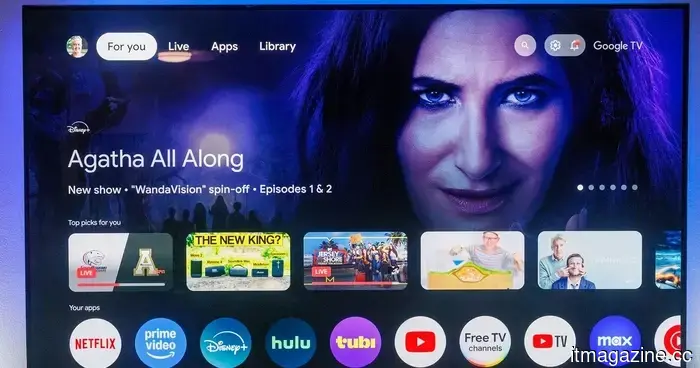 Google TV now offers 10,000 free movies and shows available for you to enjoy.
Google TV Freeplay now provides over 10,000 movies and TV shows available on demand, in addition to its expanding selection of free live channels.
Google TV now offers 10,000 free movies and shows available for you to enjoy.
Google TV Freeplay now provides over 10,000 movies and TV shows available on demand, in addition to its expanding selection of free live channels.
 Rogbid's smart glasses priced at $70, boasting a 39-day battery life, seem almost unbelievable.
Rogbid's VisionW smart glasses, priced at $69.99, feature interchangeable designs, support for ChatGPT and Grok, open-ear audio, UV protection, and an impressive battery life claim of 39 days.
Rogbid's smart glasses priced at $70, boasting a 39-day battery life, seem almost unbelievable.
Rogbid's VisionW smart glasses, priced at $69.99, feature interchangeable designs, support for ChatGPT and Grok, open-ear audio, UV protection, and an impressive battery life claim of 39 days.
Tencent's expenses for AI computing have surpassed its cash flow, leading to a contingency plan that involves becoming a landlord.
Tencent's capital expenditure increased by 176% to 52.8 billion yuan, and free cash flow became negative. Executives mentioned that the alternative is to rent out the computing resources at cost recovery.