
Skan AI secures $63 million to observe the actual work patterns of office employees and subsequently create agents that replicate their behaviors.
Skan AI announced on Wednesday that it has secured $63 million in funding, co-led by Cathay Innovation and Dell Technologies Capital. This investment is aimed at acquiring not a model, but a detailed record of how employees at large corporations perform their tasks, which Skan compiles by observing their work.
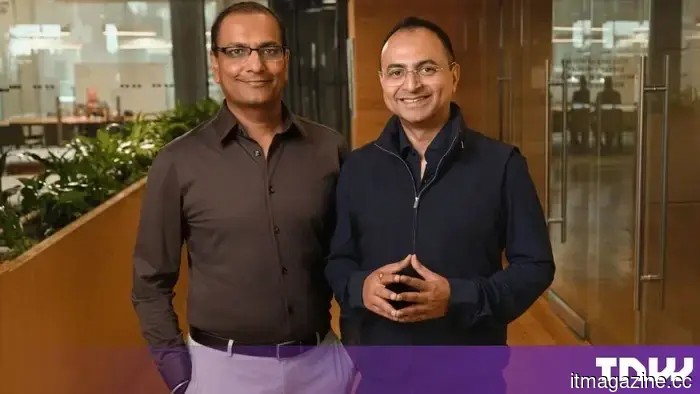
Avinash Misra, the co-founder and CEO, used a metaphor to illustrate his point, stating that while everyone is focused on creating a superior model, the more significant challenge lies elsewhere. “Everyone is fixated on building a better car,” he noted. “We believe the real opportunity is in developing a better navigation system.”
The specifics of what the software observes are crucial. Skan installs software on employees' desktops to take screenshots, which are processed locally and not sent outside the machine. Only anonymized, abstracted metadata is shared with the analytics platform, according to the company’s privacy guidelines.
Instead of recording, the software generates a list that includes application usage, switching behaviors, time spent on processes, as well as workflow sequences and decision-making paths. Employee identifiers are replaced with tokens before the data is transmitted. Skan's security information clarifies that personal messages and passwords are excluded from data capture.
The company's growth numbers are significant and self-reported. Skan claims a year-on-year revenue increase of over 300%, with a net dollar retention rate averaging 150%. It has processed more than 25 billion work signals and counts a quarter of the Fortune 50 as clients, including seven of the ten largest US banks and three out of the five biggest insurance companies.
An example from the banking sector details how Skan monitored 11.2 million context switches among 1,500 finance professionals, identifying $37 million in operational inefficiencies. Agents developed from these insights are reported to have reduced transaction costs by 32% and increased throughput by 41%, resulting in $18 million in annual savings.
The observation phase serves as the training phase for the AI. One statement in the release encapsulates the company’s entire operation, though no executive explicitly states it: “What began as 11.2 million observations of human work became the foundation for AI to carry out that work.”
This creates a cycle: observe employees, convert observations into a job model, and then deploy an agent to execute the model. The employees provide the specifications, while the agent handles the implementation.
This approach does not introduce a new category but rather presents a novel perspective on an existing one. For the past decade, process and task mining have been utilized for enterprise visibility, with UiPath establishing itself by automating the insights derived from such visibility. The main distinction now is that the outcome is an agent rather than a simple script.
Skan identifies a market gap highlighted by Gartner, which states that only eight percent of enterprises currently have agents in production. Furthermore, it indicates that 95% of early implementations will require a complete redesign. However, this report is only available through a subscription, leaving external verification difficult.
Misra describes the overarching issue as one of data rather than modeling. In a blog post, he argued, “You cannot fix a source data problem downstream. Better models will not solve it. Better prompts will not solve it.”
Notably, all the figures mentioned are sourced from the company itself. Skan claims to have achieved $500 million in cumulative customer value, yet it does not specify an auditor. Reports of AI productivity improvements have historically faced scrutiny, with one frequently cited study revealing that 95% of organizations saw no measurable returns.
A significant absence in the announcement is the straightforward acknowledgment of what this entails: banks and insurers are buying extensive monitoring of their employees. TD Bank in Canada rolled back its surveillance initiative following employee concerns, while Meta halted a keystroke collection program for AI training in June.
Europe will be a crucial test ground for this approach. Two participants in the funding round are of European origin; Cathay Innovation, one of the co-leads, is French, and Mitie, a British facilities company with 75,000 employees, provided a customer testimonial. Its Chief Technology Officer, Cijo Joseph, attributed "unprecedented operational visibility" to Skan.
Europe also poses significant challenges related to consent. Skan’s privacy guidelines mention Allianz in Munich as a deployment that received full works council approval, directly addressing potential objections. However, this account comes from Skan and not Allianz, which has recently announced 1,800 job cuts.
The verifiable evaluation of this approach is still a year off. Skan claims that agents based on observed work are already operational at major banks. By this time next year, we will see whether these agents remain in service or fall into the 95% that require complete reconstruction. Another pressing question remains unanswered: how will employers utilize a comprehensive record of their staff's work once the agents have assimilated it?
Other articles
 Upwork reduces its full-year outlook due to the impact of AI on its marketplace.
Revenue and margins exceeded expectations. Guidance was lowered, active clients decreased by 4%, and the market adjusted for AI disintermediation.
Upwork reduces its full-year outlook due to the impact of AI on its marketplace.
Revenue and margins exceeded expectations. Guidance was lowered, active clients decreased by 4%, and the market adjusted for AI disintermediation.
 South Korea aims for a Moon landing by 2030 through a seven-part technology strategy.
President Lee Jae-myung introduced seven strategic technology initiatives, ranging from small modular reactors to a robotic lander for the Moon.
South Korea aims for a Moon landing by 2030 through a seven-part technology strategy.
President Lee Jae-myung introduced seven strategic technology initiatives, ranging from small modular reactors to a robotic lander for the Moon.
 Sony's Wolverine PS5 features actual claw marks carved into its exterior.
Sony's Marvel's Wolverine hardware collection adds a significant touch of claw damage to the PS5 and DualSense, along with an Adamantium-inspired metallic design for PS5 Pro users.
Sony's Wolverine PS5 features actual claw marks carved into its exterior.
Sony's Marvel's Wolverine hardware collection adds a significant touch of claw damage to the PS5 and DualSense, along with an Adamantium-inspired metallic design for PS5 Pro users.
 Forget about the Pixel 11; I can't take my eyes off these PixelSnap accessories.
Google's latest PixelSnap accessories enhance the functionality of your Pixel, making it a more valuable desk companion.
Forget about the Pixel 11; I can't take my eyes off these PixelSnap accessories.
Google's latest PixelSnap accessories enhance the functionality of your Pixel, making it a more valuable desk companion.
 Forget about the Pixel 11; I can't stop admiring these PixelSnap accessories.
Google's latest PixelSnap accessories transform your Pixel into a significantly more practical desk companion.
Forget about the Pixel 11; I can't stop admiring these PixelSnap accessories.
Google's latest PixelSnap accessories transform your Pixel into a significantly more practical desk companion.
 Tencent's expenses for AI computing have surpassed its cash flow, leading to a contingency plan that involves becoming a landlord.
Tencent's capital expenditure increased by 176% to 52.8 billion yuan, and free cash flow became negative. Executives mentioned that the alternative is to rent out the computing resources at cost recovery.
Tencent's expenses for AI computing have surpassed its cash flow, leading to a contingency plan that involves becoming a landlord.
Tencent's capital expenditure increased by 176% to 52.8 billion yuan, and free cash flow became negative. Executives mentioned that the alternative is to rent out the computing resources at cost recovery.
Skan AI secures $63 million to observe the actual work patterns of office employees and subsequently create agents that replicate their behaviors.
Skan AI secured $63 million to document employee activities on screens and subsequently create agents that can perform those same tasks. Seven out of the top ten largest banks in the US are among its clients.