

Amazon's $5 million effort against Mamdani's delivery bill serves as the strongest case for its approval.
Amazon is investing $5 million to defeat a specific bill in New York City, and the size of that check is the most transparent indication of the company's concerns about the legislation. The proposed law, known as the Delivery Protection Act, has the support of Mayor Zohran Mamdani and has garnered majority backing in the City Council. If enacted, it would require Amazon to directly hire the couriers who deliver its packages, something the company has long sought to avoid.
Amazon portrays this bill as a threat to jobs and prices, but it is really a risk to the convenient fiction that separates the company’s branding from the employment status of the couriers. The legislation, introduced by Council Member Tiffany Cabán and endorsed by Mamdani, aims to mandate that any company operating last-mile delivery services in the city directly employs its delivery personnel.
While Amazon is the primary focus, companies like FedEx and several regional delivery services would also be affected. The measure should be approved, and other cities should adopt it as is.
To understand the need for this bill, consider how the current delivery model operates. Amazon initiated its Delivery Service Partner program in 2018, leading to a situation where a driver wearing an Amazon vest, using an Amazon-branded van, and guided by Amazon's routing system, is frequently not an Amazon employee. In New York, the delivery work is handled by more than 40 local contractors. While Amazon employs the staff in yellow vests within its warehouses, the drivers in blue who collect the packages are not officially employed by the company, creating a shift in liability as soon as a package is handed off.
This arrangement is a skillful maneuver similar to what Uber attempted to protect by not reclassifying its drivers as employees, with the ultimate objective being plausible deniability, rather than ensuring local expertise, as the contractors often claim.
The implications of this arrangement are tangible, despite Amazon's disputes over specific claims. Drivers interviewed by Bloomberg reported issues like defective brakes, being urged to continue working despite injuries, and suffering in sweltering heat in vans that only cool the driver’s cabin—risk factors that have also been highlighted independently by New York’s delivery workforce.
As Cabán articulated, “When packages are left scattered on the street or a van collides with someone, Amazon can shrug it off and say it’s not their issue, not their employee.” This reflects a company with record profits, headed by the third-richest individual globally, which has structured its delivery network to ensure accountability falls on others.
This situation is not unique to New York, and it’s crucial that the global community takes note. Economist David Weil, who oversaw wage enforcement during Barack Obama's presidency and authored a fundamental study on what he terms the “fissured workplace,” characterizes the bill as an attempt to establish a clear employer-employee relationship with Amazon.
Similar arguments regarding gig work have emerged across the world, from New York courts mandating benefits for Uber and Lyft to the UK Supreme Court's significant ruling against Uber, to new regulations for the 200 million platform workers in China.
While technology evolves, the strategy of creating a workforce that can be easily disclaimed remains constant: establish a controllable workforce and deny the responsibility that incurs costs.
Amazon's response has been to launch a reported $5 million campaign against the proposed legislation, claiming it would lead to mass job losses and slower deliveries. These concerns are valid; the approximately 5,000 drivers rightfully seek job stability. However, the bill includes a one-year implementation period, prioritizing current workers for hiring. Demand for home delivery is unlikely to diminish, and the loudest warnings stem from contractors whose entire business model relies on maintaining the status quo.
Skepticism should also accompany threats of abandoning the city. An industry-backed study predicts a typical household might face an extra $664 annually if Amazon withdraws, yet the company’s core promise revolves around speed—something that necessitates proximity to customers, hence the establishment of around 15 hubs throughout the five boroughs is not for sentimental reasons.
Moreover, direct employment is not just about post-incident accountability; it also pertains to the daily conditions and benefits these workers receive. Employees of contractors, such as one Brooklyn firm, may pay $266 monthly for the most basic health insurance plan, covering 43% of its cost, compared to a national average of 16% for employee contributions. Amazon provides significantly more for its warehouse workers, offering plans starting at $20 monthly. Bringing drivers under direct employment will naturally enhance their protections.
Liability coverage illustrates a similar trend: smaller delivery firms typically maintain around $1 million in coverage, while UPS, which directly employs its drivers, carries about fivefold that amount. Enhanced responsibility and coverage go hand in hand—this is the crux of the issue.
It's essential to acknowledge that the situation is not black and white. Some contractors, like the Brooklyn operator who exceeds minimum pay standards and offers vacation, benefits, and retirement
Other articles
 Vingroup's VinSpace partners with SpaceX to launch Vietnam's inaugural domestically produced satellites.
VinSpace, a subsidiary of Vingroup established a year ago, has entered into a launch agreement with SpaceX to deploy Vietnam's inaugural self-developed satellites into orbit in 2027.
Vingroup's VinSpace partners with SpaceX to launch Vietnam's inaugural domestically produced satellites.
VinSpace, a subsidiary of Vingroup established a year ago, has entered into a launch agreement with SpaceX to deploy Vietnam's inaugural self-developed satellites into orbit in 2027.
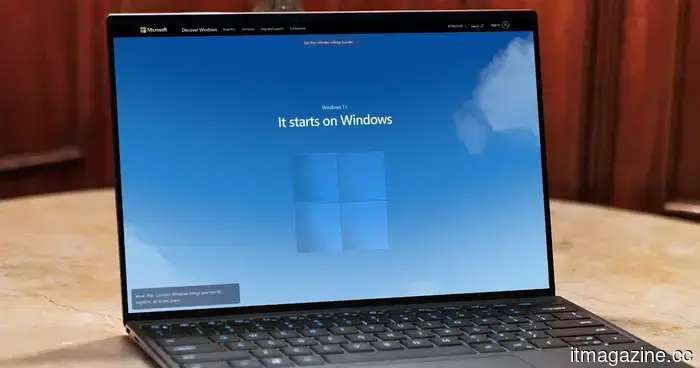 Microsoft has discovered yet another method to increase the cost of PCs, as if they weren't already expensive enough.
The costs of PCs are rising once more. Microsoft has recently increased Windows licensing fees by as much as 10%, adding to the already higher prices of memory and CPUs.
Microsoft has discovered yet another method to increase the cost of PCs, as if they weren't already expensive enough.
The costs of PCs are rising once more. Microsoft has recently increased Windows licensing fees by as much as 10%, adding to the already higher prices of memory and CPUs.
 HSBC Asset Management has made an investment in Model ML's 'agentic operating system' designed for banks.
HSBC Asset Management has acquired a share in Model ML, the London-based startup developing an agentic operating system for the financial services sector, as part of its primary venture-capital initiative.
HSBC Asset Management has made an investment in Model ML's 'agentic operating system' designed for banks.
HSBC Asset Management has acquired a share in Model ML, the London-based startup developing an agentic operating system for the financial services sector, as part of its primary venture-capital initiative.
 Amazon's $5 million effort against Mamdani's delivery bill serves as a strong case for its approval.
New York's Delivery Protection Act would require Amazon to hire the couriers who currently display its logo. The company's own subcontracting approach strongly supports this requirement.
Amazon's $5 million effort against Mamdani's delivery bill serves as a strong case for its approval.
New York's Delivery Protection Act would require Amazon to hire the couriers who currently display its logo. The company's own subcontracting approach strongly supports this requirement.
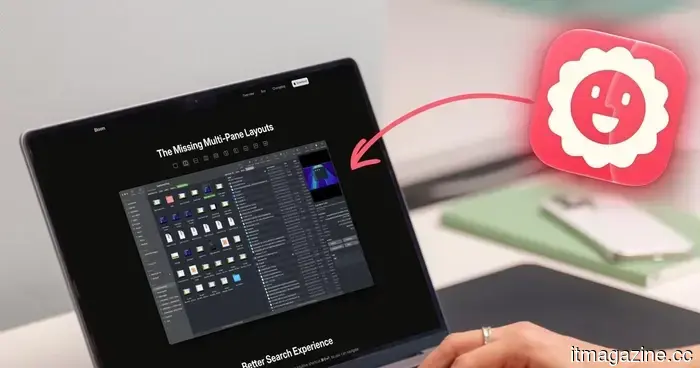 I didn't notice how much Finder was hindering my productivity until I made the switch to Bloom.
Finder never caused me any trouble until I started using Bloom. The multi-pane layouts, a floating Portal, and more efficient search made me recognize how much time I had been quietly wasting each day.
I didn't notice how much Finder was hindering my productivity until I made the switch to Bloom.
Finder never caused me any trouble until I started using Bloom. The multi-pane layouts, a floating Portal, and more efficient search made me recognize how much time I had been quietly wasting each day.
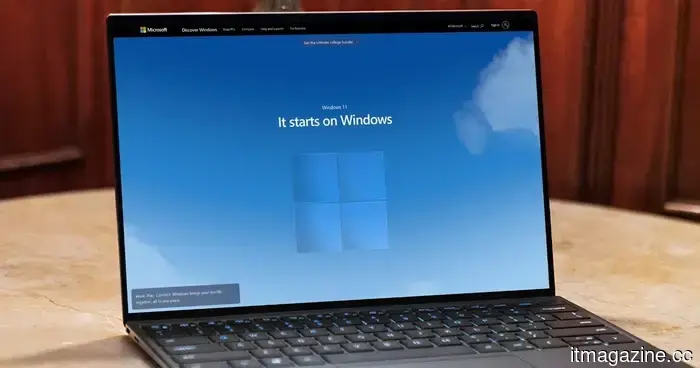 Microsoft has discovered yet another method to increase the cost of PCs, as if they weren't already expensive enough.
PC prices are on the rise again. Microsoft recently increased Windows licensing fees by as much as 10%, which adds to the higher costs of memory and CPUs.
Microsoft has discovered yet another method to increase the cost of PCs, as if they weren't already expensive enough.
PC prices are on the rise again. Microsoft recently increased Windows licensing fees by as much as 10%, which adds to the higher costs of memory and CPUs.
Amazon's $5 million effort against Mamdani's delivery bill serves as the strongest case for its approval.
New York's Delivery Protection Act would require Amazon to hire the couriers who currently display its logo. The fact that Amazon uses its own subcontracting model strongly supports the case for this requirement.