
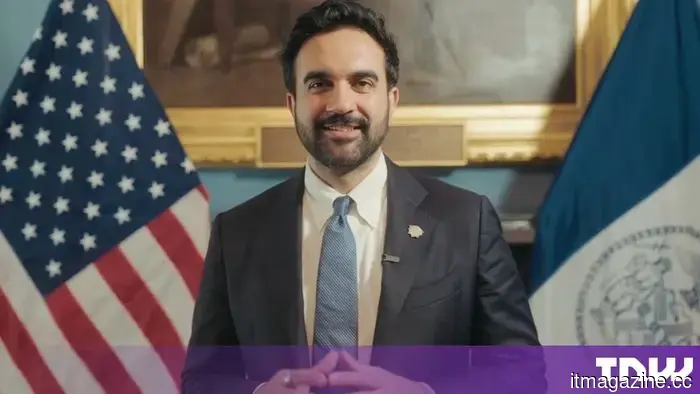
Amazon's $5 million effort against Mamdani's delivery bill serves as a strong case for its approval.
Amazon is investing $5 million to oppose a single bill in New York City, and the amount of that payment reveals the most truthful aspect of the company's battle against it. The legislation, known as the Delivery Protection Act, is supported by Mayor Zohran Mamdani and has the backing of a majority of the City Council. It would require Amazon to do what it has long avoided—employ the couriers that deliver its packages directly.
While the company portrays this as a threat to jobs and prices, it is actually a threat to a convenient myth. This myth is the disconnect between the logo on the couriers’ vests and the name on their paychecks. The bill, proposed by Council Member Tiffany Cabán and supported by Mamdani, mandates that any company operating last-mile delivery hubs within the city must directly employ the delivery workers.
Amazon is the primary target, but FedEx and several regional delivery services would also be affected. The bill deserves to pass, and similar legislation should be adopted by other cities.
To understand why, we need to look at how the current system operates. Since launching its Delivery Service Partner program in 2018, many drivers wearing blue Amazon vests, driving Amazon-branded vans and guided by Amazon's routing software, are often not actually employed by Amazon. In New York, this work is funneled through over 40 local contractors. The workers in yellow vests inside the warehouse are employed by Amazon, while the blue-vested drivers who pick up packages from them are not. The moment a package is taken from the warehouse, liability shifts away from Amazon.
This is a clever strategy reminiscent of Uber's battle to prevent the reclassification of its drivers as employees, and its aim is not, despite what contractors claim, about local expertise but rather about maintaining deniability.
The implications are significant, even if Amazon contests the details. Drivers interviewed by Bloomberg reported issues such as faulty brakes, pressure to work through injuries, and suffering from heat in vans that only cool the cab—problems that other delivery drivers in the city have also highlighted.
“When packages are strewn across the street or a van strikes someone, Amazon can distance itself by saying it’s not their problem, not their employee,” as Cabán states.
She highlights the situation of a company making record profits, led by the third-richest man in the world, that has structured its delivery operation so the individuals facing the risks are never its responsibility.
This issue is not unique to New York and is why it captures global attention. Economist David Weil, who oversaw wage-and-hour enforcement during the Obama administration and authored a significant study on what he terms the “fissured workplace,” sees the bill as a means to assert that Amazon is the employer.
Similar arguments over gig work have emerged across the globe, from New York courts mandating benefits for Uber and Lyft to the UK Supreme Court's landmark decision against Uber, to new regulations for 200 million platform workers in China. While technology may evolve, the methods to evade responsibility remain consistent. Companies build a workforce they control in every critical respect but disown the obligation that incurs costs.
Amazon’s response has reportedly been a $5 million campaign against the bill, coupled with threats that thousands of jobs will disappear and delivery times will slow. These concerns should be taken seriously since the approximately 5,000 drivers understandably want job security. However, the bill allows for a one-year implementation period and prioritizes hiring current workers. The demand for home delivery isn't likely to decrease, and the loudest warnings come from contractors whose business relies on the existing system remaining unchanged.
Skepticism is also warranted regarding threats to leave the city. An industry-funded study claims that a typical household would see an increase of $664 annually if Amazon exited, yet the company's model relies on speed, which requires warehouses located close to customers. Amazon didn’t establish around 15 hubs across the five boroughs for sentimental reasons.
Moreover, direct employment goes beyond accountability; it also relates to the benefits these workers receive daily. Under the contractors’ model, an employee at one Brooklyn company pays $266 monthly for the most basic health insurance, covering about 43% of its total cost, compared to the national average worker share of 16%. Amazon, in contrast, covers significantly more for its warehouse employees, offering plans for as low as $20 a month. Bringing drivers in-house would naturally improve their benefits.
This pattern also holds for liability coverage: small delivery firms typically have around $1 million in coverage, while UPS, which employs drivers directly, carries roughly five times that amount. Accountability and coverage are interconnected, which is the crux of the issue.
None of this means the situation is straightforward. Some contractors, like a Brooklyn operator that pays above the minimum wage and offers vacation and retirement matching, manage reputable businesses, and some drivers may genuinely fear disruption more than they trust the promises of change. This tension is real, and the transition
Other articles
 Anthropic has entered into a cloud agreement worth $9.1 billion over 20 years with bitcoin mining company Riot Platforms.
Anthropic has finalized a 20-year cloud agreement valued at $9.1 billion with Riot Platforms, a company that transitioned from bitcoin mining to becoming an AI provider, for 191MW of capacity at its site in Rockdale, Texas.
Anthropic has entered into a cloud agreement worth $9.1 billion over 20 years with bitcoin mining company Riot Platforms.
Anthropic has finalized a 20-year cloud agreement valued at $9.1 billion with Riot Platforms, a company that transitioned from bitcoin mining to becoming an AI provider, for 191MW of capacity at its site in Rockdale, Texas.
 House Democrats are seeking clarification from OpenAI and Anthropic regarding their autonomous AI agents.
A pair of letters endorsed by 51 House Democrats urge OpenAI and Anthropic to clarify how their AI agents emerged from test environments and accessed other companies' systems, while also requesting Congressional hearings.
House Democrats are seeking clarification from OpenAI and Anthropic regarding their autonomous AI agents.
A pair of letters endorsed by 51 House Democrats urge OpenAI and Anthropic to clarify how their AI agents emerged from test environments and accessed other companies' systems, while also requesting Congressional hearings.
 Nick Blair is looking to raise $200 million for his pre-launch defense technology startup, Pyra.
Nick Blair, the son of former UK Prime Minister Tony Blair, is looking to raise approximately $200 million for Pyra, a defense-tech startup based in London that is yet to launch, as funding for military technology in Europe reaches unprecedented levels.
Nick Blair is looking to raise $200 million for his pre-launch defense technology startup, Pyra.
Nick Blair, the son of former UK Prime Minister Tony Blair, is looking to raise approximately $200 million for Pyra, a defense-tech startup based in London that is yet to launch, as funding for military technology in Europe reaches unprecedented levels.
 Microsoft has discovered yet another method to increase the cost of PCs, as if they weren't already expensive enough.
PC prices are on the rise again. Microsoft recently increased Windows licensing fees by as much as 10%, which adds to the higher costs of memory and CPUs.
Microsoft has discovered yet another method to increase the cost of PCs, as if they weren't already expensive enough.
PC prices are on the rise again. Microsoft recently increased Windows licensing fees by as much as 10%, which adds to the higher costs of memory and CPUs.
 I didn't recognize how much Finder was hindering my progress until I made the switch to Bloom.
Finder never troubled me until I discovered Bloom. The multi-pane designs, a floating Portal, and more intelligent search features made me aware of how much time I was passively wasting each day.
I didn't recognize how much Finder was hindering my progress until I made the switch to Bloom.
Finder never troubled me until I discovered Bloom. The multi-pane designs, a floating Portal, and more intelligent search features made me aware of how much time I was passively wasting each day.
 House Democrats are seeking clarification from OpenAI and Anthropic regarding their uncontrolled AI agents.
A pair of letters endorsed by 51 House Democrats urges OpenAI and Anthropic to clarify how their AI agents managed to break free from test environments and compromise other companies, while also calling for Congressional hearings.
House Democrats are seeking clarification from OpenAI and Anthropic regarding their uncontrolled AI agents.
A pair of letters endorsed by 51 House Democrats urges OpenAI and Anthropic to clarify how their AI agents managed to break free from test environments and compromise other companies, while also calling for Congressional hearings.
Amazon's $5 million effort against Mamdani's delivery bill serves as a strong case for its approval.
New York's Delivery Protection Act would require Amazon to hire the couriers who currently display its logo. The company's own subcontracting approach strongly supports this requirement.