

Vingroup's VinSpace partners with SpaceX to launch Vietnam's inaugural domestically produced satellites.
VinSpace, a Vietnamese space startup that was established less than a year ago, has signed a contract with SpaceX to launch its first self-made satellites into orbit in 2027. The company, which is part of the extensive Vingroup conglomerate, will participate in one of SpaceX’s Transporter rideshare missions, which functions like a shared taxi in space where many customers share the expenses of a single Falcon 9 launch.
Details regarding the contract's value and the specifications or number of satellites have not been revealed, and VinSpace has only stated that the mission aims to test its technology in orbit and lay the foundation for future commercial opportunities. The company will not only develop but also operate the spacecraft itself, indicating its desire to develop capabilities rather than merely outsource services from abroad.
“Dependable access to space is crucial for transforming satellite innovation into operational missions,” remarked VinSpace's CEO, Thu Vu, succinctly expressing why a nascent company would secure a launch spot years in advance. The engagement of a real estate and retail conglomerate in orbital hardware reflects the funding behind Vietnam’s space ambitions.
Vingroup, the largest privately-owned enterprise in the country, was founded by tycoon Pham Nhat Vuong and has interests spanning real estate, healthcare, education, tourism, electric vehicles through VinFast, artificial intelligence, and robotics. Space, officially launched as a venture in November 2025, represents the next frontier for a company that seeks to be at the forefront of emerging industries.
This startup is part of a wider national initiative. In March 2026, Vietnam opened a significant space science center in Hanoi’s Hoa Lac High-Tech Park, with the government aiming to establish itself as a mid-level space power in Southeast Asia by 2030. The country has prior experience in space, having launched telecommunications satellites in 2008 and 2012, although recent activities have accelerated significantly.
Vietnam also embraced Elon Musk’s orbital ventures this year by approving SpaceX’s Starlink service in February, breaking away from years of hesitance regarding foreign-controlled communication infrastructure. All of this is occurring in a larger context, as emerging economies increasingly rely on SpaceX for affordable, reliable access to space, given the prohibitively high costs of developing domestic rocket programs, which are limited in alternatives.
The surge of space startups launching via Falcon 9 rockets now includes national champions funded by private conglomerates instead of state agencies, marking a noteworthy shift in who can access space and under what conditions. The rideshare model is what allows the economics to work. On a single Transporter mission, SpaceX can deploy numerous small satellites simultaneously, a strategy that previously enabled it to launch 143 satellites on one rocket, setting a record while significantly lowering the per-kilogram cost of reaching orbit, making it feasible for first-timers like VinSpace.
For Vietnam, the motivation extends beyond commercial interests to geopolitical ones. The regional competition in space is quietly escalating, with countries like Indonesia and the Philippines striving for their own orbital presence, and securing a launch contract with the busiest rocket company in the world provides a relatively inexpensive means for Hanoi to demonstrate its seriousness to both competitors and investors.
It remains to be seen whether VinSpace’s inaugural satellites will prove to be a genuine technological advancement or simply a well-financed test case, as clarity will only come once they are in orbit around the Earth in 2027. Currently, the company has accomplished the simpler task of obtaining a launch slot; the more challenging work of constructing spacecraft worthy of the ride lies ahead.
Other articles
 Amazon's $5 million effort against Mamdani's delivery bill serves as a strong case for its approval.
New York's Delivery Protection Act would require Amazon to hire the couriers who currently display its logo. The company's own subcontracting approach strongly supports this requirement.
Amazon's $5 million effort against Mamdani's delivery bill serves as a strong case for its approval.
New York's Delivery Protection Act would require Amazon to hire the couriers who currently display its logo. The company's own subcontracting approach strongly supports this requirement.
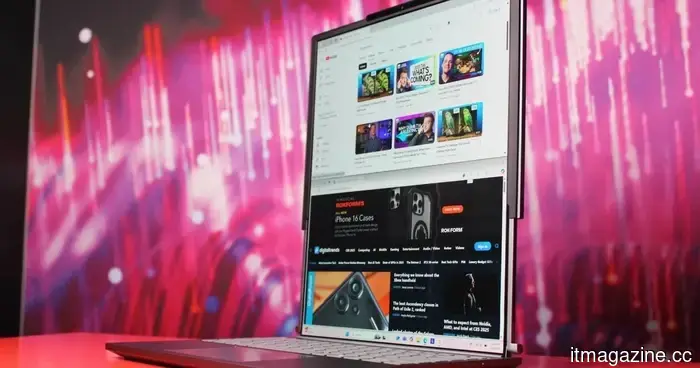 Lenovo's upcoming ThinkBook may expand horizontally into a portable ultrawide configuration.
A recently revealed Lenovo design suggests a ThinkBook featuring a horizontally extending display, which could introduce the company's ultrawide rollable innovations into its laptop lineup aimed at productivity.
Lenovo's upcoming ThinkBook may expand horizontally into a portable ultrawide configuration.
A recently revealed Lenovo design suggests a ThinkBook featuring a horizontally extending display, which could introduce the company's ultrawide rollable innovations into its laptop lineup aimed at productivity.
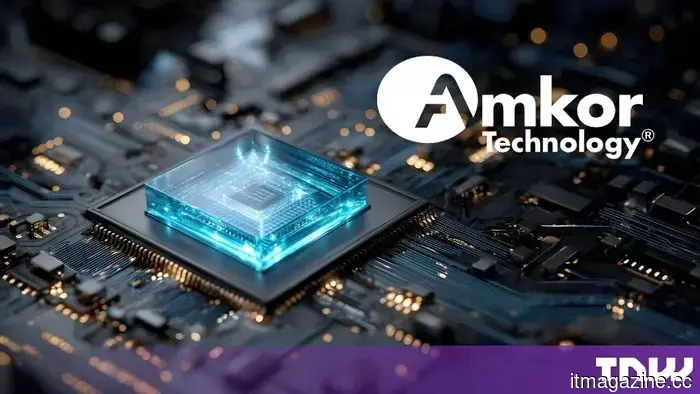 Amkor is considering a stake sale of over $1 billion in its chip division in China.
Amkor Technology is considering selling a stake in its chip packaging division in China, valued between $1 billion and $1.5 billion, as it shifts its focus to Nvidia and Arizona.
Amkor is considering a stake sale of over $1 billion in its chip division in China.
Amkor Technology is considering selling a stake in its chip packaging division in China, valued between $1 billion and $1.5 billion, as it shifts its focus to Nvidia and Arizona.
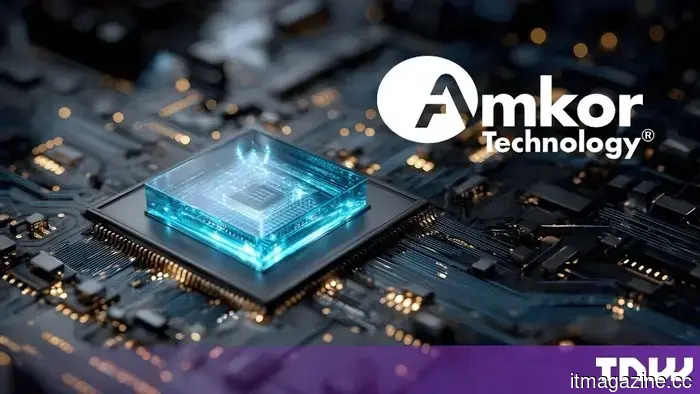 Amkor is considering a stake sale of over $1 billion in its Chinese chip division.
Amkor Technology is considering selling a stake in its chip packaging division in China, valuing the unit between $1 billion to $1.5 billion, as it shifts its focus and investment towards Nvidia and Arizona.
Amkor is considering a stake sale of over $1 billion in its Chinese chip division.
Amkor Technology is considering selling a stake in its chip packaging division in China, valuing the unit between $1 billion to $1.5 billion, as it shifts its focus and investment towards Nvidia and Arizona.
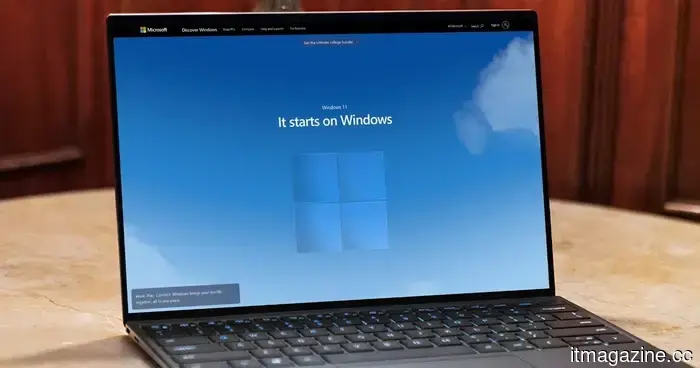 Microsoft has discovered yet another method to increase the cost of PCs, as if they weren't already expensive enough.
PC prices are on the rise again. Microsoft recently increased Windows licensing fees by as much as 10%, which adds to the higher costs of memory and CPUs.
Microsoft has discovered yet another method to increase the cost of PCs, as if they weren't already expensive enough.
PC prices are on the rise again. Microsoft recently increased Windows licensing fees by as much as 10%, which adds to the higher costs of memory and CPUs.
 HSBC Asset Management has made an investment in Model ML's 'agentic operating system' designed for banks.
HSBC Asset Management has acquired a share in Model ML, the London-based startup developing an agentic operating system for the financial services sector, as part of its primary venture-capital initiative.
HSBC Asset Management has made an investment in Model ML's 'agentic operating system' designed for banks.
HSBC Asset Management has acquired a share in Model ML, the London-based startup developing an agentic operating system for the financial services sector, as part of its primary venture-capital initiative.
Vingroup's VinSpace partners with SpaceX to launch Vietnam's inaugural domestically produced satellites.
VinSpace, a subsidiary of Vingroup established a year ago, has entered into a launch agreement with SpaceX to deploy Vietnam's inaugural self-developed satellites into orbit in 2027.