
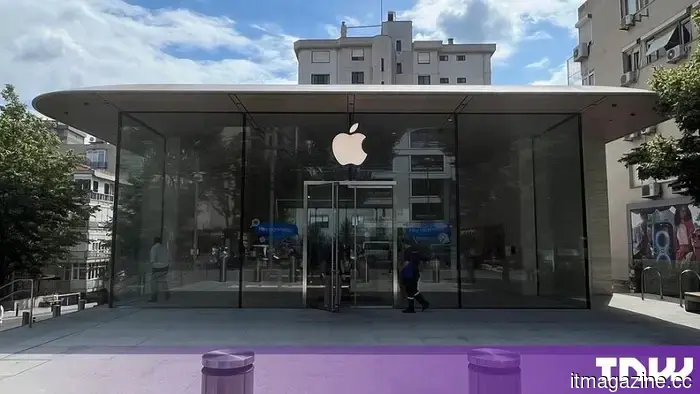
Apple challenges the UK's restricted iCloud backdoor directive.
Last year, Britain attempted to impose a backdoor into Apple’s encryption but was unsuccessful. However, the government has not relinquished its efforts. It has revised its demands and renewed them, bringing Apple back into a confidential court to contest the issue.
Apple has lodged a new challenge with the Investigatory Powers Tribunal, a closed UK court that deals with secret surveillance cases, as reported first by the Financial Times. The dispute centers around a “technical capability notice,” which is a secret directive that could compel a company to remove encryption from its products. While Apple has confirmed the filing, both the company and the Home Office are restricted from commenting further due to legal constraints. A hearing is scheduled for September.
The conflict started in early 2025 when the Home Office instructed Apple to dismantle the encryption on iCloud’s Advanced Data Protection, which secures a user’s photos and backups to the extent that not even Apple can access them. This order extended beyond the UK, affecting users globally, including those in the United States.
Instead of complying with the backdoor request, Apple opted to disable the feature for UK users in February 2025.
The situation subsequently escalated into a transatlantic dispute, with US officials, including Donald Trump and JD Vance, voicing objections to a foreign government undermining an American company's security.
In August of the same year, the UK withdrew its request for data from American users but maintained its demand for data from UK users. This revised request is what Apple is currently challenging.
Narrowing the demand may help ease diplomatic tensions but does not resolve the fundamental issue. A backdoor designed for British users still poses a risk. A lawyer from Withers remarked that limiting the notice to UK residents may alleviate the diplomatic clash, but it does not eliminate Washington's concerns about a foreign government compelling an American firm to compromise its encryption.
Moreover, British data often contains communications from Americans as well.
Apple’s stance remains unchanged: “We have never built a backdoor or master key to any of our products or services, and we never will," the company stated. Their argument is based on technical principles rather than emotional reasons, asserting that a door created for government access could also be exploited by malicious actors.
The Home Office presents its position as a matter of balance, claiming it “supports strong encryption,” but emphasizes the necessity for law enforcement to access communications in cases deemed "necessary and proportionate" for combating terrorism, serious crime, and child sexual abuse. According to them, the Investigatory Powers Act includes independent judicial oversight.
Rights organizations Liberty and Privacy International, both supporting Apple, characterize the same framework as a system of secret orders.
The crux of the conflict lies in the lack of transparency. The government issues these notices without public disclosure and argues them in a closed court, with neither side allowed to reveal specifics. However, the overarching trend is evident.
Britain is intent on gaining access to encrypted data but keeps receiving the same response: it cannot obtain such access without jeopardizing security for all. Nevertheless, it continues to ask in a more subdued manner. This has already led to UK iPhone users losing a key security feature, and the upcoming ruling will determine whether further costs will be incurred.
Other articles
 SpaceX is pushing competitors out of the market for the rockets they rely on.
As SpaceX increases the number of its Starlink satellites, it is pushing competing satellite companies out of the Falcon 9 launch schedule, with some reservations extending to 2028-2029.
SpaceX is pushing competitors out of the market for the rockets they rely on.
As SpaceX increases the number of its Starlink satellites, it is pushing competing satellite companies out of the Falcon 9 launch schedule, with some reservations extending to 2028-2029.
 Volvo's rumored EX50 might be the affordable surprise that no one anticipated.
Volvo might be preparing to introduce a new electric vehicle: the EX50, which is expected to be a larger and more affordable alternative to the EX40.
Volvo's rumored EX50 might be the affordable surprise that no one anticipated.
Volvo might be preparing to introduce a new electric vehicle: the EX50, which is expected to be a larger and more affordable alternative to the EX40.
 The U.S. is working on a prohibition against Chinese devices in data centers.
The Trump administration is working on a ban for data center equipment manufactured in China, furthering its efforts to isolate US AI infrastructure from Chinese technology.
The U.S. is working on a prohibition against Chinese devices in data centers.
The Trump administration is working on a ban for data center equipment manufactured in China, furthering its efforts to isolate US AI infrastructure from Chinese technology.
 Passkeys were promoted as a more secure future. However, hackers have found methods to compromise those synchronized with Google.
Researchers discovered three methods by which malware on a compromised Windows PC can seize Google-synced passkeys, circumvent user verification, and retrieve all private keys stored in the vault.
Passkeys were promoted as a more secure future. However, hackers have found methods to compromise those synchronized with Google.
Researchers discovered three methods by which malware on a compromised Windows PC can seize Google-synced passkeys, circumvent user verification, and retrieve all private keys stored in the vault.
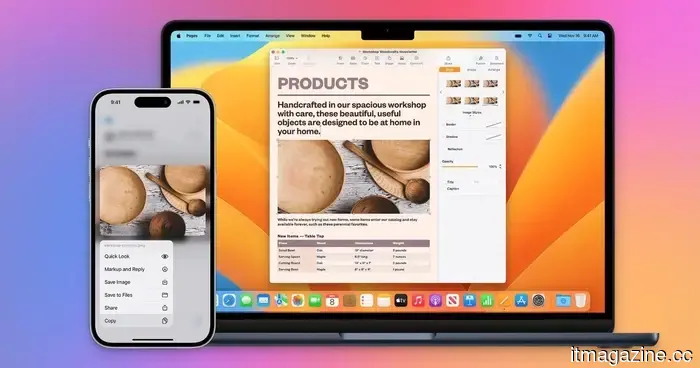 Apple is finally introducing one of my favorite Continuity features to Windows.
Apple is said to be developing a feature that will allow users to copy content on their iPhone and paste it on a Windows PC, following a request from Microsoft, but it may not be available until 2027 or beyond.
Apple is finally introducing one of my favorite Continuity features to Windows.
Apple is said to be developing a feature that will allow users to copy content on their iPhone and paste it on a Windows PC, following a request from Microsoft, but it may not be available until 2027 or beyond.
 Nvidia and Dell support AI cloud startup Volta, which is valued at $2.4 billion.
AI cloud startup Volta has secured $300 million in funding and arranged $5 billion in financing at a valuation of $2.4 billion, with support from a16z, Altimeter, Nvidia, and Michael Dell.
Nvidia and Dell support AI cloud startup Volta, which is valued at $2.4 billion.
AI cloud startup Volta has secured $300 million in funding and arranged $5 billion in financing at a valuation of $2.4 billion, with support from a16z, Altimeter, Nvidia, and Michael Dell.
Apple challenges the UK's restricted iCloud backdoor directive.
After losing the battle in 2025, Britain restricted its demand for an Apple backdoor to only UK users. Apple has gone back to a covert surveillance court to contest this.