
The U.S. is working on a prohibition against Chinese devices in data centers.
The Trump administration is pushing to remove Chinese hardware from American data centers. Officials are currently working on a ban targeting Chinese-made devices utilized in these data centers, as reported by Reuters, marking the latest effort to shield the infrastructure supporting AI development in the US from Chinese technology.
This draft continues a rapidly expanding campaign, following a ban introduced just days prior on new Chinese humanoid robots and power inverters, both deemed threats to critical infrastructure. That previous action set the precedent, as US regulators included foreign robots and inverters on a restricted list due to concerns that devices controlled by China could pose supply chain vulnerabilities or serve as points for remote access.
Data centers have become a logical next target, as they form the backbone of the AI economy, filled with servers, networking equipment, and power supplies. Washington increasingly views any Chinese component within these centers as a potential liability.
The underlying principle is control over the technology stack. The argument suggests that, since AI is a strategic asset, the systems that train and support it should not rely on parts manufactured by a rival capable of disrupting or surveilling them.
Implementing these bans is the challenging aspect. Such prohibitions often face obstacles from resellers, relabeled parts, and subsidiaries, making it essential to close these loopholes during the drafting process alongside identifying the specific devices.
The equipment most likely to be targeted includes the foundational elements of a data center: networking switches, servers, storage systems, and the management chips within them. Any of these could potentially provide a hidden connection to a foreign vendor.
However, untangling this web will not happen quickly. Many American operators continue to depend on Chinese components, and some networking and power equipment has limited non-Chinese alternatives available at the scale and cost required for the expansion.
Washington has also been encouraging allies to adopt similar measures. Countries like Britain are considering mirroring these restrictions, which would significantly impact the market for Chinese vendors immediately.
China has responded to this pressure with threats of retaliation regarding the US robot ban, including potential leverage over rare-earth minerals that are difficult for Western manufacturers to source from other places.
Both nations are now trading restrictions in a familiar pattern. Each ban triggers a counter-ban, leading to a gradual dismantling of a technology supply chain that was built over decades, section by section.
The core issue revolves around the AI competition. The administration frames hardware separation as a means of safeguarding American AI development, applying similar reasoning to justify export controls on chips being sent to China.
Hardware is only one side of the equation. The administration is also considering restrictions on Chinese AI models themselves, a move that startups have cautioned against, arguing that cutting off access to affordable open-weight models could harm American developers more than it would affect China.
Imposing these bans comes with a cost. Removing Chinese devices from data centers or prohibiting cheaper Chinese products raises expenses for operators striving to increase capacity, a concern the industry has raised, even while acknowledging the security rationale.
Meanwhile, China is working on its own solutions to similar issues. A Chinese laboratory recently established a large data center without using Nvidia products, indicating that both countries are seeking greater domestic control over their AI infrastructures.
Moving rapidly has its own costs. Quickly drafted rules may inadvertently target equipment for which there is no feasible non-Chinese substitute, forcing operators to choose between violating regulations or delaying their expansions.
The implications of these rules extend beyond the US. Vendors barred from American data centers would lose access to one of the largest markets in the world, and any actions taken by allies to follow suit could amplify the effects well beyond a single nation.
The draft is not finalized, and the specific list of prohibited devices is still being developed. However, the trajectory is clear: both superpowers are increasingly determined to independently establish their own AI technologies.
Other articles
 Xbox might have an unexpectedly clever strategy for preserving the existence of physical games.
A leaked roadmap from Microsoft reveals that a Disc-to-Digital rollout is planned for August, with an expanded original Xbox game catalog for PC set for October, and Xbox 360 support expected to start in 2027.
Xbox might have an unexpectedly clever strategy for preserving the existence of physical games.
A leaked roadmap from Microsoft reveals that a Disc-to-Digital rollout is planned for August, with an expanded original Xbox game catalog for PC set for October, and Xbox 360 support expected to start in 2027.
 SpaceX is pushing competitors out of the market for the rockets they rely on.
As SpaceX increases the number of its Starlink satellites, it is pushing competing satellite companies out of the Falcon 9 launch schedule, with some reservations extending to 2028-2029.
SpaceX is pushing competitors out of the market for the rockets they rely on.
As SpaceX increases the number of its Starlink satellites, it is pushing competing satellite companies out of the Falcon 9 launch schedule, with some reservations extending to 2028-2029.
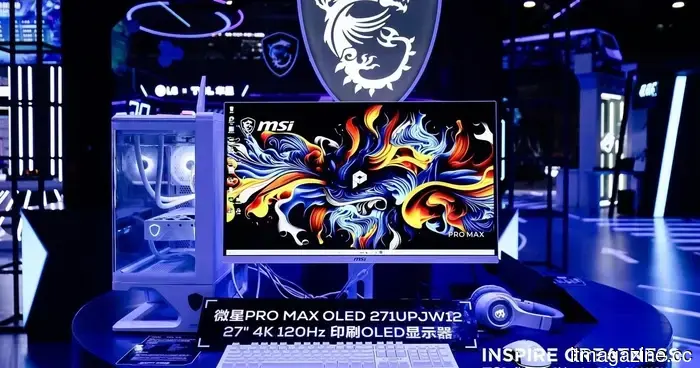 MSI's latest 4K 120Hz OLED monitor utilizes inkjet technology that has the potential to reduce the cost of high-end displays.
The first 27-inch 4K 120Hz inkjet-printed OLED monitor has been introduced, but MSI has not disclosed its price or when it will be released.
MSI's latest 4K 120Hz OLED monitor utilizes inkjet technology that has the potential to reduce the cost of high-end displays.
The first 27-inch 4K 120Hz inkjet-printed OLED monitor has been introduced, but MSI has not disclosed its price or when it will be released.
 Passkeys were promoted as a more secure future. However, hackers have found methods to compromise those synchronized with Google.
Researchers discovered three methods by which malware on a compromised Windows PC can seize Google-synced passkeys, circumvent user verification, and retrieve all private keys stored in the vault.
Passkeys were promoted as a more secure future. However, hackers have found methods to compromise those synchronized with Google.
Researchers discovered three methods by which malware on a compromised Windows PC can seize Google-synced passkeys, circumvent user verification, and retrieve all private keys stored in the vault.
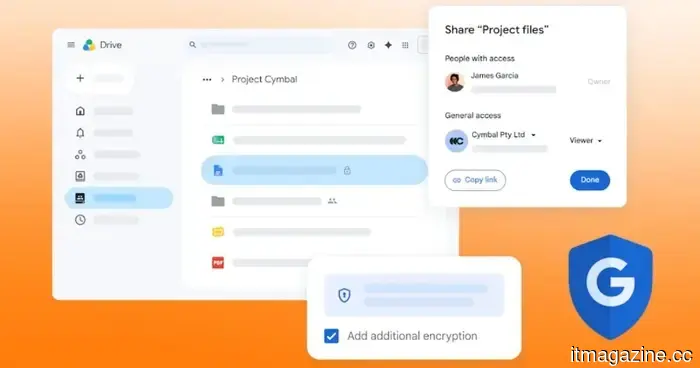 Google Drive enhances its video collaboration features by introducing timestamped comments.
Google Drive introduces timestamped video comments, allowing users to attach feedback to specific points in the timeline.
Google Drive enhances its video collaboration features by introducing timestamped comments.
Google Drive introduces timestamped video comments, allowing users to attach feedback to specific points in the timeline.
 The demand for AI is pushing data center developers to seek financing from banks.
As power has become the limiting factor for AI, data center developers are pursuing billions in bank financing commitments to secure electricity and facilitate construction.
The demand for AI is pushing data center developers to seek financing from banks.
As power has become the limiting factor for AI, data center developers are pursuing billions in bank financing commitments to secure electricity and facilitate construction.
The U.S. is working on a prohibition against Chinese devices in data centers.
The Trump administration is working on a ban for data center equipment manufactured in China, furthering its efforts to isolate US AI infrastructure from Chinese technology.