
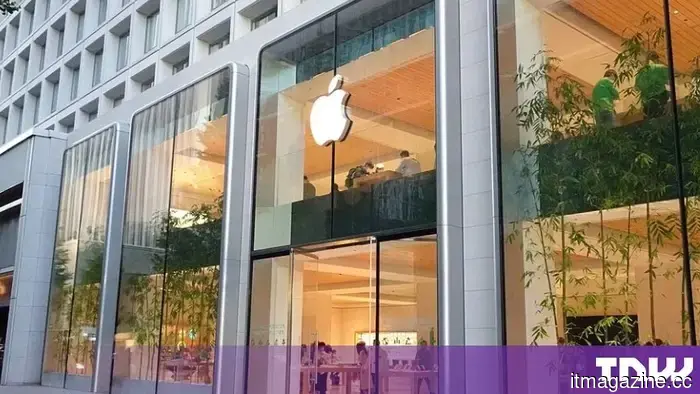
Apple requests a court to prevent OpenAI from accessing its trade secrets.
Apple has requested that a court impose strict restrictions on OpenAI. In a recent filing, the iPhone manufacturer sought a preliminary injunction aimed at preventing OpenAI and two former Apple employees from using what it claims are its trade secrets, intensifying an ongoing lawsuit between the two companies.
The injunction would prohibit the defendants from accessing, acquiring, utilizing, or revealing the confidential information that Apple asserts was taken. Additionally, Apple has asked for expedited discovery and depositions from OpenAI and io Products, the hardware division associated with Jony Ive.
This injunction request is part of a trade-secrets lawsuit Apple initiated in July, alleging that OpenAI has appropriated hardware secrets to accelerate its entry into consumer devices. In its initial complaint, Apple accused departing employees of bringing prototypes to job interviews as part of a “show and tell.”
The filing specifically identifies individuals involved, including Chang Liu, a former senior electrical engineer, and Tang Yew Tan, a former vice president of product design for the iPhone and Apple Watch, who are now with OpenAI.
OpenAI categorically disputes the assertion. "Apple’s request for a preliminary injunction is based on erroneous information and is entirely unnecessary since we do not possess, nor desire, any of their trade secrets," the company stated.
The central issue here concerns hardware. OpenAI has been collaborating with Ive to create a range of devices, including a screen-free speaker intended to feel interactive, and Apple’s lawsuit directly targets that objective.
The ongoing lawsuit is already impacting OpenAI’s hardware initiatives even before a ruling is reached, overshadowing a product line and a potential market introduction.
If granted, a preliminary injunction would represent an early and significant victory for Apple, placing restrictions on the defendants throughout the duration of the case rather than waiting for a trial that may span several years. The mere threat of such an injunction raises the stakes for OpenAI’s hardware development timeline.
Key figures in this conflict are not new to Apple. Jony Ive, who designed iconic products for the company, has shifted from collaborator to competitor with his new role at OpenAI.
However, the criteria for securing such an injunction are stringent. Apple must persuade the judge that it is likely to prevail in its case and that it faces irreparable harm, which is a more challenging hurdle than simply initiating a lawsuit.
Once collaborators, the two companies are now at odds. OpenAI has been engaged in numerous legal skirmishes with competitors throughout the year, and Apple's pursuit of OpenAI represents just one front in a growing array of legal battles within the industry.
For Apple, this lawsuit serves a dual purpose. It has been monitoring former employees and its ex-design leader regrouping at a firm now developing the kind of ambient hardware that Apple has historically protected, and litigation is a means to slow that momentum.
The court will now consider the request for an injunction and the proposal for accelerated discovery. If allowed, depositions from representatives of OpenAI and io Products could reveal details sooner than either party's legal teams anticipate.
This legal situation is particularly precarious for OpenAI, as it aims to redefine itself as a hardware manufacturer while simultaneously contending with a former founder turned competitor and courting public markets. A restriction on what its engineers can develop is not the positive coverage it sought.
Disputes over trade secrets typically hinge on the specifics: what was taken, whether it was truly secret, and if the new employer has utilized it. Apple’s push for expedited discovery seeks to clarify these issues ahead of OpenAI’s hardware launch.
Regardless of the judge's ruling, the filing solidifies a rapidly escalating rivalry between the two companies. Once allies on the stage for Siri, they are now entangled in federal court arguments over who will shape the future of desktop devices.
Other articles
 Get great savings on DJI creator equipment with these August offers from AliExpress.
Are you looking to enhance your content creation toolkit? The August promotion on AliExpress features discounts and exclusive Digital Trends coupon codes, offering significant savings on DJI's Osmo range.
Get great savings on DJI creator equipment with these August offers from AliExpress.
Are you looking to enhance your content creation toolkit? The August promotion on AliExpress features discounts and exclusive Digital Trends coupon codes, offering significant savings on DJI's Osmo range.
 The 'death zone': how independent Chinese models are undermining US AI.
Bloomberg refers to it as a ‘death zone’: China’s advanced, accessible open-source AI models are impacting the mid-market segment where US model developers operate.
The 'death zone': how independent Chinese models are undermining US AI.
Bloomberg refers to it as a ‘death zone’: China’s advanced, accessible open-source AI models are impacting the mid-market segment where US model developers operate.
 Google Health has enhanced Fitbit Air, making it more compatible for Apple Health users.
Google Health now allows iPhone users to synchronize data with Apple Health, share medical records, and experience improved fitness tracking.
Google Health has enhanced Fitbit Air, making it more compatible for Apple Health users.
Google Health now allows iPhone users to synchronize data with Apple Health, share medical records, and experience improved fitness tracking.
 Apple requests a court to prohibit OpenAI from accessing its trade secrets.
Apple has requested a preliminary injunction against OpenAI and two ex-Apple engineers as part of its trade-secrets lawsuit concerning OpenAI's hardware initiatives.
Apple requests a court to prohibit OpenAI from accessing its trade secrets.
Apple has requested a preliminary injunction against OpenAI and two ex-Apple engineers as part of its trade-secrets lawsuit concerning OpenAI's hardware initiatives.
 The US finalizes voluntary evaluations for the hacking capabilities of AI models.
The White House has completed a voluntary framework to evaluate the hacking abilities of advanced AI models from the US, just weeks after unauthorized agents infiltrated companies.
The US finalizes voluntary evaluations for the hacking capabilities of AI models.
The White House has completed a voluntary framework to evaluate the hacking abilities of advanced AI models from the US, just weeks after unauthorized agents infiltrated companies.
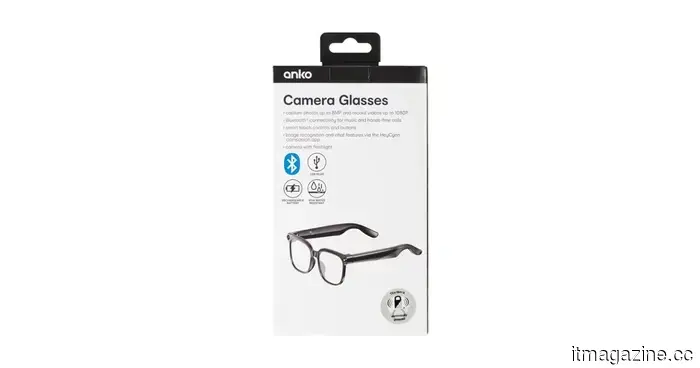 Australia has just established a troubling precedent for invasive behavior with the introduction of affordable smartglasses.
Kmart's affordable AI smart glasses are selling rapidly, but they are also sparking a renewed discussion about privacy, surveillance, and whether the presence of wearable cameras has become overly commonplace.
Australia has just established a troubling precedent for invasive behavior with the introduction of affordable smartglasses.
Kmart's affordable AI smart glasses are selling rapidly, but they are also sparking a renewed discussion about privacy, surveillance, and whether the presence of wearable cameras has become overly commonplace.
Apple requests a court to prevent OpenAI from accessing its trade secrets.
Apple has requested a preliminary injunction against OpenAI and two former Apple engineers in relation to its trade-secrets lawsuit concerning OpenAI's hardware initiatives.