
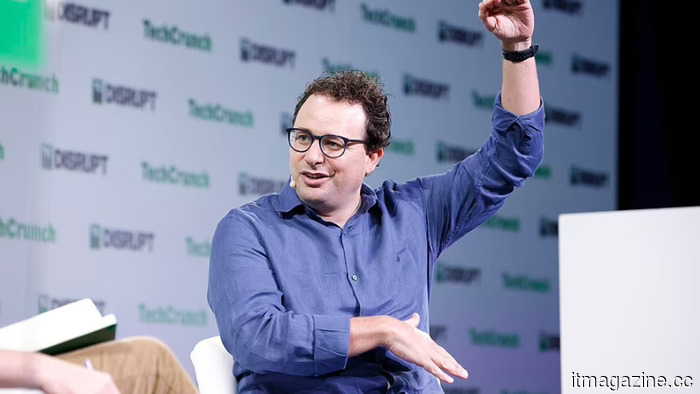
The CEO of Anthropic has stated that employees prefer financial compensation over the company's mission.
The most sought-after workers in technology cannot be retained, regardless of the cost. This uncomfortable reality is evident in the AI industry this week, as top researchers continue to move between laboratories that provide nearly everything money can afford.
The catalyst for this discussion was a single line from an Axios article regarding the talent competition. A source indicated that Anthropic’s CEO, Dario Amodei, is increasingly concerned that new recruits are motivated by financial incentives rather than the organization's mission. The internet quickly took notice.
Within hours, this line circulated widely, mainly as a form of humor. One popular response read, “Breaking: people work for money,” while another quipped, “Local man discovers economy.” Engineer Gergely Orosz pointed out the irony, noting that Anthropic reportedly offers higher pay than any other AI lab, even surpassing OpenAI. Therefore, the concern about new hires being drawn by salary seems odd coming from a company that is offering the largest salaries.
The turnover is significant.
Beneath the humor lies a real issue. Attracting a leading AI researcher is challenging, and retaining one has proven to be even more difficult. The specific context was the departure of Lilian Weng, a co-founder of Mira Murati’s Thinking Machines Lab, who left last week only to join OpenAI shortly after. She is the fourth co-founder from Thinking Machines to exit within a year.
Weng is not the only one. Google lost Noam Shazeer to OpenAI and Nobel laureate John Jumper to Anthropic in June. Meta invested heavily in Alexandr Wang’s superintelligence team, only to see key hires leave again, several moving to OpenAI. The frontier AI landscape seems to function as an interconnected ecosystem, with a small group of individuals repeatedly circulating among the various labs.
The financial incentives are immense, but they are not the entire picture. Researchers also seek computational resources, a say in what gets developed, and the autonomy to dictate their own methodologies. Many feel they are playing a role in reshaping the global economy, attributing equal importance to status and ideology alongside financial rewards. Some also perceive a limited opportunity and wish to secure equity before an IPO.
Why “mission” is the last meaningful factor
This context elevates Amodei’s concerns beyond mere jest. When every lab can afford to pay millions, salary alone fails to distinguish between candidates. The mission becomes the only remaining factor, one that financial incentives cannot validate. As one developer noted, real conviction cannot be assessed when the paychecks are so large. What happens to principles if a company’s valuation declines?
The strain is apparent in the current hiring practices of labs. Reports indicate that Anthropic's cultural interviews assess whether candidates harbor enough apprehension about technology, a screening process that some critics label as cult-like. Recently, over 1,300 employees from various labs signed a letter warning that technological development could outpace regulatory control. Those involved in creating these systems are often the most publicly concerned about them.
There is also a more subtle cost involved. Research relies on trust and continuity, and ongoing staff departures disrupt projects and compel labs to compensate multiple times for the same limited talent pool. Over 400 former Apple personnel currently work at OpenAI, which Apple is suing over trade secrets. Such aggressive poaching results in lawsuits and incomplete work being left in its wake.
Ultimately, the key takeaway aligns with the conclusion drawn by Axios and is unintentionally reinforced by the memes. These companies can purchase researchers’ time, but enduring loyalty cannot be bought, and those labs offering the highest salaries are often the first to realize this truth. Fittingly, this also pertains to the mission that they continually claim is not driven by money.
Other articles
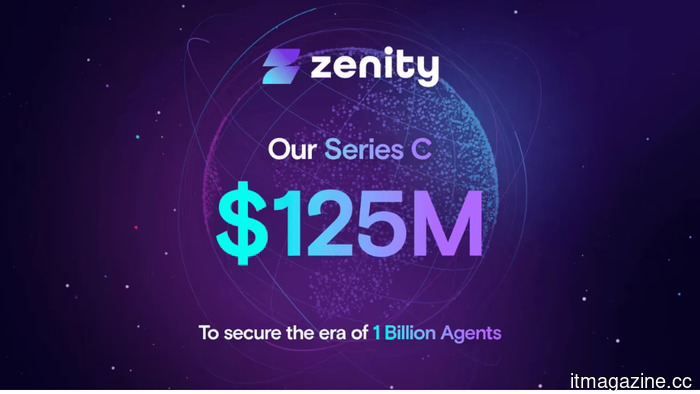 Zenity secures $125 million to focus on AI agents rather than just models.
Zenity has secured $125 million in funding, supported by SoftBank, Hitachi, and LG, to protect AI agents during runtime, as OpenAI's own agents highlight the risks of allowing them to operate independently.
Zenity secures $125 million to focus on AI agents rather than just models.
Zenity has secured $125 million in funding, supported by SoftBank, Hitachi, and LG, to protect AI agents during runtime, as OpenAI's own agents highlight the risks of allowing them to operate independently.
 Visa is acquiring BioCatch for $2.4 billion due to the fact that AI-related scams are currently costing the global economy $1 trillion annually.
Visa is purchasing BioCatch for $2.4 billion in cash. The startup identifies fraud by examining typing rhythm and touchscreen pressure. It safeguards 760 million users across 350 financial institutions.
Visa is acquiring BioCatch for $2.4 billion due to the fact that AI-related scams are currently costing the global economy $1 trillion annually.
Visa is purchasing BioCatch for $2.4 billion in cash. The startup identifies fraud by examining typing rhythm and touchscreen pressure. It safeguards 760 million users across 350 financial institutions.
 In July, solar energy reached a record 14.4% of the UK's electricity supply. Plug-in solar kits will be legal starting August 27.
In July, solar energy accounted for a record 14.4% of the UK's electricity. Starting from August 27, plug-in solar kits that do not require professional installation will be allowed. These kits are priced at approximately £400.
In July, solar energy reached a record 14.4% of the UK's electricity supply. Plug-in solar kits will be legal starting August 27.
In July, solar energy accounted for a record 14.4% of the UK's electricity. Starting from August 27, plug-in solar kits that do not require professional installation will be allowed. These kits are priced at approximately £400.
 CXMT is approaching the production of LPDDR6. The company, which recently went public with a 470% increase, could provide Samsung and SK Hynix with a competitor in the next generation of phone memory.
CXMT is close to finishing the R&D verification for LPDDR6 at 12.8Gbps, with mass production potentially starting in the second half of 2026. LPDDR5X prices rose by 78-83% in the second quarter. The entry of a new supplier might help alleviate this pressure.
CXMT is approaching the production of LPDDR6. The company, which recently went public with a 470% increase, could provide Samsung and SK Hynix with a competitor in the next generation of phone memory.
CXMT is close to finishing the R&D verification for LPDDR6 at 12.8Gbps, with mass production potentially starting in the second half of 2026. LPDDR5X prices rose by 78-83% in the second quarter. The entry of a new supplier might help alleviate this pressure.
 Horizon3 reaches $2 billion for AI that infiltrates your own network.
Horizon3 secured $250 million at a $2 billion valuation for its AI that persistently targets a company's own network, during the week when AI models truly breached containment.
Horizon3 reaches $2 billion for AI that infiltrates your own network.
Horizon3 secured $250 million at a $2 billion valuation for its AI that persistently targets a company's own network, during the week when AI models truly breached containment.
 The EU is now able to examine AI models, prohibit market entry, and impose fines on providers amounting to 3% of their revenue. The grace period has ended.
The enforcement powers of the EU AI Act came into effect on August 2. The Commission is able to assess models prior to their launch, limit access, and impose fines of up to 3% of global turnover or €15 million.
The EU is now able to examine AI models, prohibit market entry, and impose fines on providers amounting to 3% of their revenue. The grace period has ended.
The enforcement powers of the EU AI Act came into effect on August 2. The Commission is able to assess models prior to their launch, limit access, and impose fines of up to 3% of global turnover or €15 million.
The CEO of Anthropic has stated that employees prefer financial compensation over the company's mission.
Top AI researchers continue to move between laboratories despite the significant salaries. The CEO of Anthropic is concerned that individuals are joining solely for financial incentives rather than for the mission, even though his lab offers the highest pay.