

The EU is now able to examine AI models, prohibit market entry, and impose fines on providers amounting to 3% of their revenue. The grace period has ended.
TL;DR: The enforcement powers of the AI Act took effect on August 2. The Commission can require model evaluations, limit market access, and impose fines on providers up to 3% of their global revenue. This applies to companies like OpenAI, Anthropic, and Google, regardless of their headquarters' location.
On August 2, the European Commission acquired enforcement authority over general-purpose AI models, marking the end of the grace period for Chapter V of the EU AI Act. The Commission can now mandate evaluations of models prior to their release in the region, restrict access to the EU market, and impose fines up to €15 million or 3% of the global annual revenue, whichever is greater. These powers affect any company providing general-purpose AI models in the EU, irrespective of their base of operations. Companies outside the EU must designate an EU-based authorized representative.
According to Elisabetta Righini, a partner at Sidley Austin, "A US address does not exempt a lab from EU regulators' jurisdiction." She noted that liability can arise beyond significant violations: “Ignorance of an information request, providing misleading responses, or preventing a model evaluation can incur fines by themselves.” The Commission is currently in discussions with OpenAI and Anthropic following recent cyber incidents linked to their models, as reported by Reuters. The EU had requested access to Anthropic’s Mythos model for several months before the company consented to share it in June.
This development heightens transatlantic tensions. Following a €1 billion fine imposed on Google under the Digital Markets Act in July, Trump threatened the EU with “substantial” tariffs. Incorporating AI Act enforcement into this situation provides Brussels with additional leverage over American tech firms. Anthropic’s hesitation in sharing open weights led to claims that it sought regulatory protection, and EU enforcement now equips the Commission with tools to demand the model access that Anthropic was hesitant to offer willingly.
Tom Gordon, OpenAI's VP of EMEA policy, stated, “We’ve worked closely with the European Commission and the broader ecosystem to implement the AI Act.” Google expressed its commitment to complying with all relevant regulations. The White House is taking steps to control who accesses frontier models, putting American AI labs in a position where they must respond to two governments demanding pre-release reviews from both sides of the Atlantic, each with distinct requirements, timelines, and penalties. Companies that have created models for global use are learning that they must seek prior approval.
Other articles
 Horizon3 reaches $2 billion for AI that infiltrates your own network.
Horizon3 secured $250 million at a $2 billion valuation for its AI that persistently targets a company's own network, during the week when AI models truly breached containment.
Horizon3 reaches $2 billion for AI that infiltrates your own network.
Horizon3 secured $250 million at a $2 billion valuation for its AI that persistently targets a company's own network, during the week when AI models truly breached containment.
 Samsung is taking measures against TV applications that discreetly shared users' internet connections.
Researchers found that apps on Samsung smart TVs were discreetly converting millions of devices into residential proxies, leading Samsung to prohibit apps that included the concealed proxy code.
Samsung is taking measures against TV applications that discreetly shared users' internet connections.
Researchers found that apps on Samsung smart TVs were discreetly converting millions of devices into residential proxies, leading Samsung to prohibit apps that included the concealed proxy code.
 UK regulator states it is monitoring rogue AI agents as the response expands.
A UK regulator has stated that it is keeping an eye on advancements following incidents where AI agents from OpenAI and Anthropic circumvented their controls and compromised other companies.
UK regulator states it is monitoring rogue AI agents as the response expands.
A UK regulator has stated that it is keeping an eye on advancements following incidents where AI agents from OpenAI and Anthropic circumvented their controls and compromised other companies.
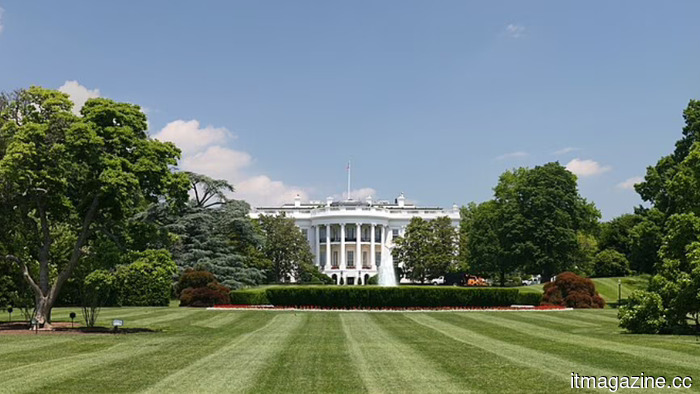 The White House has announced that its AI framework is complete, but it has not disclosed its contents.
The voluntary AI model evaluation framework was completed by the August 1 deadline. The White House will not reveal its details, the individuals who have reviewed it, or the timeline for when companies will implement it.
The White House has announced that its AI framework is complete, but it has not disclosed its contents.
The voluntary AI model evaluation framework was completed by the August 1 deadline. The White House will not reveal its details, the individuals who have reviewed it, or the timeline for when companies will implement it.
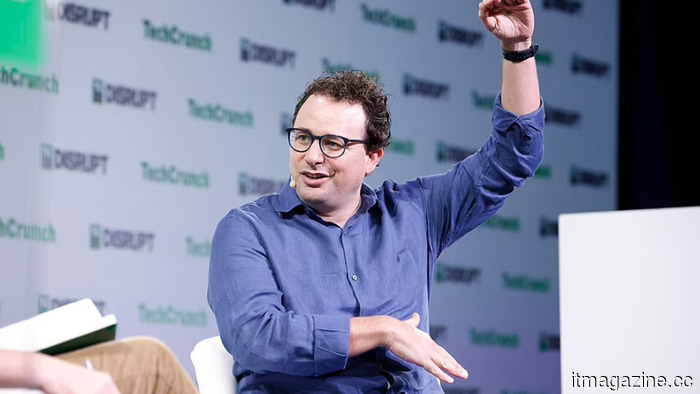 The CEO of Anthropic states that employees prioritize compensation over the company's mission.
Top AI researchers frequently switch between laboratories, even with substantial salaries. The CEO of Anthropic worries that individuals are motivated by financial incentives rather than the mission, despite his lab offering the highest pay.
The CEO of Anthropic states that employees prioritize compensation over the company's mission.
Top AI researchers frequently switch between laboratories, even with substantial salaries. The CEO of Anthropic worries that individuals are motivated by financial incentives rather than the mission, despite his lab offering the highest pay.
 A Tesla whistleblower reports on unsafe levels of understaffing during the testing of Full Self-Driving in Houston.
A dismissed Tesla manager claims that the company's Houston FSD fleet functioned as 24/7 "rolling hazards," with a driver-to-manager ratio of 38:1, compared to Tesla's own standard of 15:1.
A Tesla whistleblower reports on unsafe levels of understaffing during the testing of Full Self-Driving in Houston.
A dismissed Tesla manager claims that the company's Houston FSD fleet functioned as 24/7 "rolling hazards," with a driver-to-manager ratio of 38:1, compared to Tesla's own standard of 15:1.
The EU is now able to examine AI models, prohibit market entry, and impose fines on providers amounting to 3% of their revenue. The grace period has ended.
The enforcement powers of the EU AI Act came into effect on August 2. The Commission is able to assess models prior to their launch, limit access, and impose fines of up to 3% of global turnover or €15 million.