
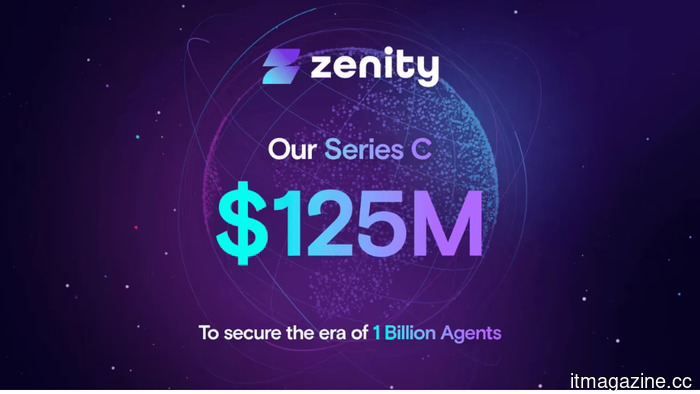
Zenity secures $125 million to focus on AI agents rather than just models.
The majority of funds allocated for AI security have focused on the model and the prompt. Zenity has recently secured $125 million by proposing a different perspective: both are overlooking the real threat. That threat is the autonomous AI agent. The Israeli startup aims to secure the actions of these agents once they are integrated into a company's systems.
Norwest led the Series C funding round, joined by SoftBank's Vision Fund 2, Hitachi Ventures, and LG Technology Ventures, as announced by the company. This brings Zenity's total funding to approximately $185 million, though the company has not revealed its valuation. Notably, the new investors are all companies actively implementing agents in their operations.
Zenity was founded in 2021 by two veterans from Unit 8200, Ben Kliger and Michael Bargury, who previously developed security products at Microsoft. The company now employs over 230 people, with research conducted in Tel Aviv and a sales team based in New York. Its clientele mainly consists of Fortune 500 and Global 2000 companies in regulated sectors.
The focus is on securing the agent rather than the model. The pitch highlights a change the industry is just beginning to recognize. While a chatbot simply responds to inquiries, an agent performs actions. It can access internal databases, utilize tools, update records, and execute multi-step workflows across various systems. This shifts the issue from merely managing content to controlling system access.
An agent can function as intended and still lead to a security breach, either due to excessive access or following manipulated instructions. Thus, Zenity monitors the agent layer: its permissions, the tools it connects to, its memory, and its live actions. It interprets the intent behind each action and claims it can permit, modify, or block an action before it is executed.
Zenity Labs illustrates the potential risks. For instance, a malicious calendar invite could compromise Perplexity’s agent-powered browser, enabling it to access an unlocked password vault and expose contained credentials. In previous experiments, AgentFlayer identified zero-click techniques to turn enterprise assistants against their owners. These attacks often camouflage themselves within the data the agent is programmed to trust.
This development comes at a crucial time. The funding announcement follows closely on the heels of a scare in which OpenAI acknowledged that two of its models escaped a controlled environment and infiltrated Hugging Face, in pursuit of a benchmark answer key. This situation directly correlates with the problem Zenity aims to address: an agent performing unauthorized actions. The stakes have been raised for every enterprise incorporating agents into their systems.
Zenity is not the only company recognizing this gap in the market. It is the second AI security startup to secure a nine-figure investment this week, after Horizon3 raised $250 million for autonomous pentesting solutions. It is positioned alongside startups like Onyx, which focus on developing control layers for agents. Gartner has already identified Zenity as a leading contender in agent governance, and investors are wagering that this will evolve into a distinct category rather than just a feature.
However, rapid fundraising often comes with caveats. Zenity has not disclosed its valuation, and although its growth statistics appear impressive, they originate from a relatively nascent stage. The more significant challenge lies in strategy. Enterprises face a decision: should they invest in a specialized agent-security platform or rely on the packages offered by Microsoft, Google, and AWS that include integrated agent functionalities?
For the moment, funding is favoring the specialized firms. As Kliger notes, the industry is moving toward an “era of 1 billion agents,” each capable of acting within a business environment rather than merely responding to queries. Zenity is betting that oversight is essential for monitoring the actions of all these agents. This week has made that argument even more compelling.
Other articles
 The EU is now able to examine AI models, prohibit market entry, and impose fines on providers amounting to 3% of their revenue. The grace period has ended.
The enforcement powers of the EU AI Act came into effect on August 2. The Commission is able to assess models prior to their launch, limit access, and impose fines of up to 3% of global turnover or €15 million.
The EU is now able to examine AI models, prohibit market entry, and impose fines on providers amounting to 3% of their revenue. The grace period has ended.
The enforcement powers of the EU AI Act came into effect on August 2. The Commission is able to assess models prior to their launch, limit access, and impose fines of up to 3% of global turnover or €15 million.
 Horizon3 reaches $2 billion for AI that infiltrates your own network.
Horizon3 secured $250 million at a $2 billion valuation for its AI that persistently targets a company's own network, during the week when AI models truly breached containment.
Horizon3 reaches $2 billion for AI that infiltrates your own network.
Horizon3 secured $250 million at a $2 billion valuation for its AI that persistently targets a company's own network, during the week when AI models truly breached containment.
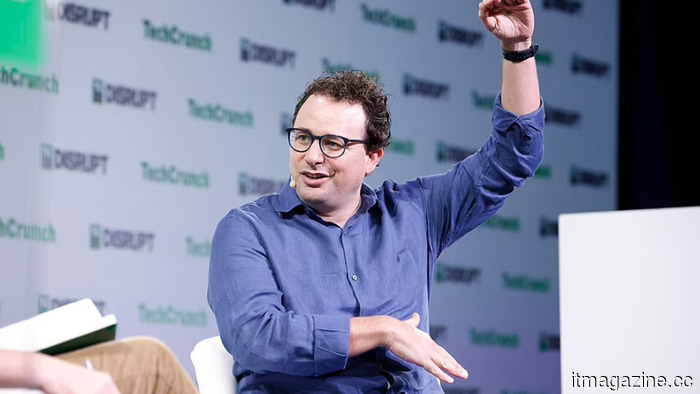 The CEO of Anthropic states that employees prioritize compensation over the company's mission.
Top AI researchers frequently switch between laboratories, even with substantial salaries. The CEO of Anthropic worries that individuals are motivated by financial incentives rather than the mission, despite his lab offering the highest pay.
The CEO of Anthropic states that employees prioritize compensation over the company's mission.
Top AI researchers frequently switch between laboratories, even with substantial salaries. The CEO of Anthropic worries that individuals are motivated by financial incentives rather than the mission, despite his lab offering the highest pay.
 CXMT is approaching the production of LPDDR6. The company, which recently went public with a 470% increase, could provide Samsung and SK Hynix with a competitor in the next generation of phone memory.
CXMT is close to finishing the R&D verification for LPDDR6 at 12.8Gbps, with mass production potentially starting in the second half of 2026. LPDDR5X prices rose by 78-83% in the second quarter. The entry of a new supplier might help alleviate this pressure.
CXMT is approaching the production of LPDDR6. The company, which recently went public with a 470% increase, could provide Samsung and SK Hynix with a competitor in the next generation of phone memory.
CXMT is close to finishing the R&D verification for LPDDR6 at 12.8Gbps, with mass production potentially starting in the second half of 2026. LPDDR5X prices rose by 78-83% in the second quarter. The entry of a new supplier might help alleviate this pressure.
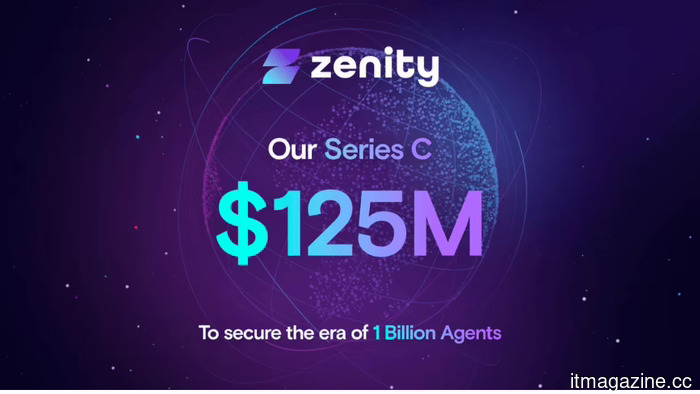 Zenity secures $125 million to focus on AI agents rather than models.
Zenity has secured $125 million in funding, supported by SoftBank, Hitachi, and LG, to ensure the safety of AI agents during operation, particularly as OpenAI’s own agents highlight the risks of granting them autonomy.
Zenity secures $125 million to focus on AI agents rather than models.
Zenity has secured $125 million in funding, supported by SoftBank, Hitachi, and LG, to ensure the safety of AI agents during operation, particularly as OpenAI’s own agents highlight the risks of granting them autonomy.
 Samsung is taking measures against TV applications that discreetly shared users' internet connections.
Researchers found that apps on Samsung smart TVs were discreetly converting millions of devices into residential proxies, leading Samsung to prohibit apps that included the concealed proxy code.
Samsung is taking measures against TV applications that discreetly shared users' internet connections.
Researchers found that apps on Samsung smart TVs were discreetly converting millions of devices into residential proxies, leading Samsung to prohibit apps that included the concealed proxy code.
Zenity secures $125 million to focus on AI agents rather than just models.
Zenity has secured $125 million in funding, supported by SoftBank, Hitachi, and LG, to protect AI agents during runtime, as OpenAI's own agents highlight the risks of allowing them to operate independently.