
The EU has approved the $55 billion Saudi-led acquisition of EA in accordance with its subsidy regulations.
The European Commission has sanctioned the PIF-led privatization of Electronic Arts under its Foreign Subsidies Regulation, eliminating one of the remaining obstacles to what will be the largest leveraged buyout in history. The European Union has given the green light to the $55 billion acquisition of Electronic Arts by a Saudi-led consortium, clearing one of the last regulatory challenges for this unprecedented transaction.
On July 31, the European Commission approved the deal under foreign-subsidies rules, mere days after granting approval on competition grounds, navigating a regulatory process similar to that which Microsoft encountered with its Activision Blizzard acquisition a few years prior. The buyers consist of a powerful trio: Saudi Arabia's Public Investment Fund, the private equity firm Silver Lake, and Affinity Partners, led by Jared Kushner, who are set to take EA private in September 2025.
The scale of the deal is historic, amounting to $55 billion, making it the largest take-private transaction ever, financed through a combination of equity from the consortium and significant debt, with PIF expected to own approximately 93% of the company upon completion. The review concerning subsidies was particularly sensitive. The EU's Foreign Subsidies Regulation aims to prevent external state funding from disrupting competition when a foreign-backed entity acquires a business in Europe.
PIF is precisely the type of buyer the regulation aims to scrutinize. As a sovereign wealth fund with a value around $1 trillion, its financial backing raised concerns about potential competition distortion, highlighting the importance of the clearance. However, the Commission determined that the deal would not pose competition issues and cleared it under both merger and subsidy regulations, allowing the transaction to proceed within the European Union.
For EA, this marks a significant shift in ownership. The creator of franchises such as The Sims, Battlefield, Apex Legends, and its longstanding football series will transition from public markets to the ownership of a sovereign fund and its partners. This acquisition is also a strategic move for EA’s monetization approach, as the publisher has been aggressively broadening its revenue sources, recently establishing a comprehensive advertising platform within its games targeting over 100 million players.
The strategic rationale behind this acquisition is based in Riyadh. This purchase forms a key element of Saudi Arabia's ambition to establish itself as a global gaming hub, as part of a larger strategy to diversify its economy away from oil dependency. For years, PIF has been investing in this sphere through its Savvy Games division, acquiring stakes in various studios and esports companies worldwide, and EA represents its most significant asset to date.
The political implications are significant. Jared Kushner's involvement, the use of Saudi state funds, and the control over games enjoyed by millions have attracted attention from human rights advocates and lawmakers concerned about the kingdom's intentions in terms of soft power.
However, Europe is not the only regulatory body overseeing the deal. It still faces scrutiny in other regions, particularly in the United States, where the Committee on Foreign Investment is examining foreign ownership of American firms. This US review presents a substantial uncertainty, considering that foreign ownership of a major American publisher, especially one backed by a Gulf state and related to a president's son-in-law, falls under CFIUS's purview.
Regulators globally are increasingly cautious regarding large technology deals. Tensions between the US and Europe concerning the regulation of technology have escalated, with American lawmakers advocating for a trade investigation into European tech regulations, even as Brussels approves this particular deal.
The gaming industry has encountered similar trends before, with consolidation becoming prevalent across the sector, from speculation regarding Microsoft’s future acquisitions to its purchase of Activision, with EA's sale now reflecting that significant scale and substantial financial resources dictate the new norms.
EA shareholders have already expressed their approval, voting overwhelmingly in support of the takeover, thus leaving regulators as the primary hindrance, a barrier that Europe has now removed. What remains is to cross the final threshold. With the EU's approval secured, the consortium will now direct its attention to obtaining remaining authorizations and ponder the implications of a sovereign-owned EA for the players who had no say in the matter.
Other articles
 The Chrome extension for ChatGPT can now access your tabs, YouTube videos, and selected text.
OpenAI has enhanced the ChatGPT Chrome extension and desktop application by introducing tab awareness, support for YouTube, the ability to search through browsing history, and a new Activity view to monitor chats.
The Chrome extension for ChatGPT can now access your tabs, YouTube videos, and selected text.
OpenAI has enhanced the ChatGPT Chrome extension and desktop application by introducing tab awareness, support for YouTube, the ability to search through browsing history, and a new Activity view to monitor chats.
 The chips that connect GPUs are now the sought-after commodity. Xsight has secured $300 million to offer an open version.
The surge in artificial intelligence has brought GPUs into the spotlight. Meanwhile, the unassuming chips that connect thousands of these GPUs are quietly increasing in value. Xsight Labs, an Israeli semiconductor company, announced on Thursday that it has secured over $300 million at a valuation of $2.8 billion.
The chips that connect GPUs are now the sought-after commodity. Xsight has secured $300 million to offer an open version.
The surge in artificial intelligence has brought GPUs into the spotlight. Meanwhile, the unassuming chips that connect thousands of these GPUs are quietly increasing in value. Xsight Labs, an Israeli semiconductor company, announced on Thursday that it has secured over $300 million at a valuation of $2.8 billion.
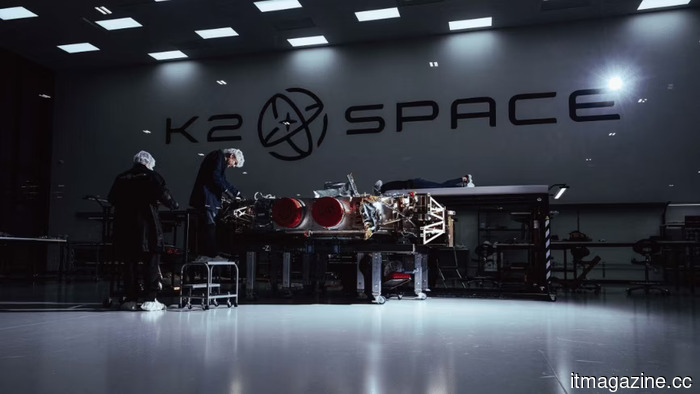 While others are reducing the size of satellites, K2 has secured $500 million to create large satellites and deploy AI in space.
While most satellite startups are competing to develop smaller systems, K2 Space is intentionally taking a different approach by focusing on larger designs. The company recently secured $500 million from investors to continue its expansion. K2 announced on Thursday that it raised a $500 million Series D round at a valuation of $6.8 billion.
While others are reducing the size of satellites, K2 has secured $500 million to create large satellites and deploy AI in space.
While most satellite startups are competing to develop smaller systems, K2 Space is intentionally taking a different approach by focusing on larger designs. The company recently secured $500 million from investors to continue its expansion. K2 announced on Thursday that it raised a $500 million Series D round at a valuation of $6.8 billion.
 Microsoft aims to optimize Windows to perform effectively with only 8GB of RAM. This is something we urgently require.
Optimizing memory usage is the next major objective for Windows. Let's hope Microsoft fulfills this commitment.
Microsoft aims to optimize Windows to perform effectively with only 8GB of RAM. This is something we urgently require.
Optimizing memory usage is the next major objective for Windows. Let's hope Microsoft fulfills this commitment.
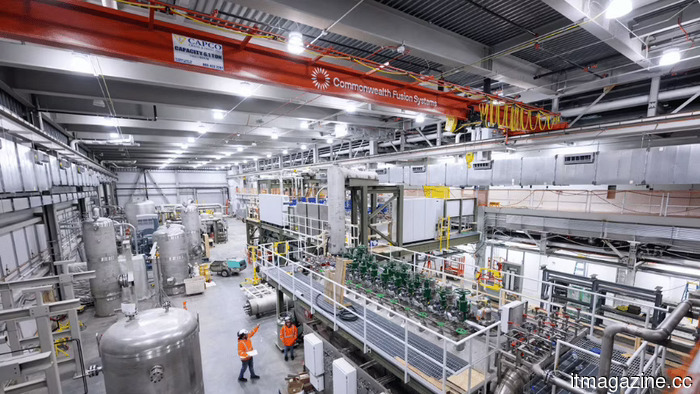 Fusion's most well-capitalized investment secured an additional $1 billion and recruited the banker responsible for Moderna's initial public offering.
The surge in AI requires enormous quantities of electricity. This demand has shifted fusion, long derided as "30 years away," into one of the most promising investments in technology. The most well-funded company has recently secured an additional $1 billion in funding. Commonwealth Fusion Systems, based
Fusion's most well-capitalized investment secured an additional $1 billion and recruited the banker responsible for Moderna's initial public offering.
The surge in AI requires enormous quantities of electricity. This demand has shifted fusion, long derided as "30 years away," into one of the most promising investments in technology. The most well-funded company has recently secured an additional $1 billion in funding. Commonwealth Fusion Systems, based
 Oracle integrated its competitor's AI into its business applications, leading to an 8% increase in its stock.
Oracle has recently integrated its cloud competitor's AI into the software used by its customers to operate their businesses. This move was well-received by investors. On Thursday, the company announced that it is enhancing its partnership with Google Cloud to incorporate Gemini into Oracle’s enterprise offerings.
Oracle integrated its competitor's AI into its business applications, leading to an 8% increase in its stock.
Oracle has recently integrated its cloud competitor's AI into the software used by its customers to operate their businesses. This move was well-received by investors. On Thursday, the company announced that it is enhancing its partnership with Google Cloud to incorporate Gemini into Oracle’s enterprise offerings.
The EU has approved the $55 billion Saudi-led acquisition of EA in accordance with its subsidy regulations.
The European Commission has authorized the PIF-led acquisition of Electronic Arts under its Foreign Subsidies Regulation, eliminating one of the final obstacles to what would be the largest leveraged buyout in history. The European Union has approved the $55 billion takeover.