

The EU approves the $55 billion acquisition of EA by a Saudi-led consortium in accordance with its subsidy regulations.
The European Commission has granted approval for the Saudi-led consortium, which includes PIF, to take Electronic Arts private under its Foreign Subsidies Regulation, clearing one of the final obstacles to the largest leveraged buyout in history. The $55 billion acquisition of Electronic Arts by this consortium has been sanctioned by the European Union, eliminating significant regulatory challenges to this record-setting deal. The Commission provided approval under its foreign-subsidies framework on July 31, just a few days after it had earlier affirmed the deal on competition grounds, navigating a regulatory landscape similar to the one Microsoft's Activision Blizzard transaction faced a few years back.
The buying group consists of three influential entities: Saudi Arabia's Public Investment Fund, the private equity firm Silver Lake, and Affinity Partners, led by Jared Kushner, all of whom reached an agreement to take EA private by September 2025. This deal is unprecedented in scale, amounting to $55 billion, making it the largest take-private transaction to date, financed through a combination of consortium equity and substantial debt, with PIF expected to hold about 93% of the company upon completion.
The review process regarding subsidies was particularly delicate. The EU's Foreign Subsidies Regulation is designed to prevent external state funding from distorting competition in cases where a foreign-backed buyer acquires a European business. PIF is the type of buyer that these rules aim to scrutinize. As a sovereign wealth fund valued at approximately $1 trillion, the financial backing from PIF raised concerns about potential distortions in competition, highlighting the significance of the clearance.
The Commission determined there would be no issues regarding competition and authorized the deal under both merger and subsidy regulations, allowing the transaction to move forward in the EU. For EA, this represents a significant shift in ownership. The company, known for titles such as The Sims, Battlefield, Apex Legends, and its long-standing football franchise, will transition from public market control to that of a sovereign fund and its partners.
This acquisition also reflects a strategic bet on EA's revenue generation. The publisher has been actively enhancing its monetization efforts, notably establishing a comprehensive advertising platform within its games to engage over 100 million players. The strategic reasoning for this purchase is rooted in Riyadh, as it is a key element of Saudi Arabia's strategy to establish itself as a leading gaming hub while diversifying its economy away from oil dependency.
PIF has been steadily increasing its presence in the gaming sector over the years. Through its Savvy Games division, it has acquired interests in various studios and esports companies worldwide, with EA representing its most significant acquisition to date.
The political implications are significant. The involvement of Kushner, the infusion of Saudi state capital, and the control over games enjoyed by millions have attracted attention from human rights organizations and legislators concerned about the kingdom's influence.
However, Europe is not the only entity overseeing the deal. It is still subject to review in other jurisdictions, particularly in the United States, where the Committee on Foreign Investment evaluates foreign control of American companies. This U.S. review presents a substantial unknown. The foreign ownership of a major U.S. publisher, supported by a Gulf state and the president's son-in-law, is squarely within the realm CFIUS is designed to examine.
Regulators globally are increasingly cautious about large technology transactions. Tensions have grown regarding how Europe regulates tech, with U.S. lawmakers advocating for a trade investigation into EU tech regulations even as Brussels approved this deal.
This trend of consolidation is not new to the gaming sector, which has seen significant mergers and acquisitions, from speculation about Microsoft's next target to its purchase of Activision, with EA's sale serving as the latest indication that size and financial muscle are defining industry dynamics.
Shareholders have already given their approval, as EA's investors overwhelmingly supported the acquisition, leaving regulatory bodies as the primary barrier, a hurdle now cleared in Europe. What remains is reaching the finish line. With EU approval secured, the consortium will now concentrate on obtaining the necessary remaining approvals and consider what a sovereign-owned EA will entail for players who were not afforded a vote in the matter.
Other articles
 GM is developing its own in-vehicle AI assistant since Google’s Gemini is unable to access the information that the car possesses.
TL;DRGM is set to introduce a proprietary AI assistant later this year that surpasses Gemini by incorporating OnStar, vehicle telemetry, and predictive maintenance features. The specific LLM provider has not been disclosed. Gemini will remain in service. General Motors will debut its in-vehicle AI assistant.
GM is developing its own in-vehicle AI assistant since Google’s Gemini is unable to access the information that the car possesses.
TL;DRGM is set to introduce a proprietary AI assistant later this year that surpasses Gemini by incorporating OnStar, vehicle telemetry, and predictive maintenance features. The specific LLM provider has not been disclosed. Gemini will remain in service. General Motors will debut its in-vehicle AI assistant.
 The chips that connect GPUs are now the sought-after commodity. Xsight has secured $300 million to offer an open version.
The surge in artificial intelligence has brought GPUs into the spotlight. Meanwhile, the unassuming chips that connect thousands of these GPUs are quietly increasing in value. Xsight Labs, an Israeli semiconductor company, announced on Thursday that it has secured over $300 million at a valuation of $2.8 billion.
The chips that connect GPUs are now the sought-after commodity. Xsight has secured $300 million to offer an open version.
The surge in artificial intelligence has brought GPUs into the spotlight. Meanwhile, the unassuming chips that connect thousands of these GPUs are quietly increasing in value. Xsight Labs, an Israeli semiconductor company, announced on Thursday that it has secured over $300 million at a valuation of $2.8 billion.
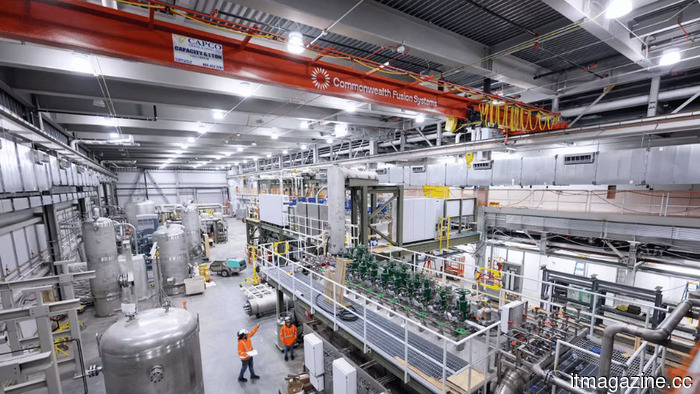 Fusion's most well-funded venture has secured an additional $1 billion and brought on board the banker responsible for taking Moderna public.
The surge in AI requires massive amounts of electricity, which has transformed fusion, long ridiculed as “30 years away,” into a highly sought-after investment in technology. The top-funded company has just secured an additional $1 billion. Commonwealth Fusion Systems, located
Fusion's most well-funded venture has secured an additional $1 billion and brought on board the banker responsible for taking Moderna public.
The surge in AI requires massive amounts of electricity, which has transformed fusion, long ridiculed as “30 years away,” into a highly sought-after investment in technology. The top-funded company has just secured an additional $1 billion. Commonwealth Fusion Systems, located
 GM is developing its own in-vehicle AI assistant since Google’s Gemini does not have access to the information available in the car.
TL;DR: GM is set to introduce a proprietary AI assistant later this year, which will surpass Gemini by incorporating OnStar, vehicle telemetry, and predictive maintenance. The specific LLM provider remains unnamed. Gemini will continue to be available. General Motors will roll out its in-vehicle AI assistant.
GM is developing its own in-vehicle AI assistant since Google’s Gemini does not have access to the information available in the car.
TL;DR: GM is set to introduce a proprietary AI assistant later this year, which will surpass Gemini by incorporating OnStar, vehicle telemetry, and predictive maintenance. The specific LLM provider remains unnamed. Gemini will continue to be available. General Motors will roll out its in-vehicle AI assistant.
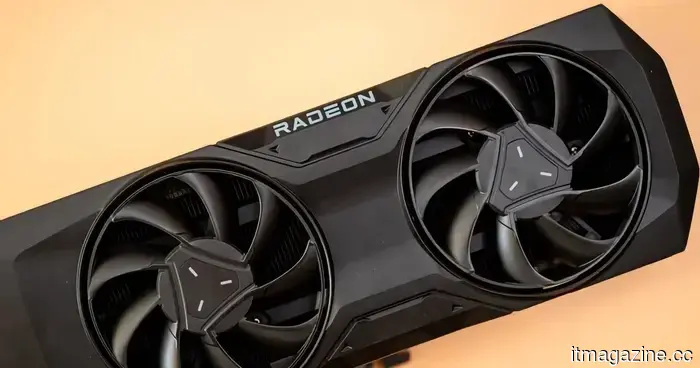 It seems that AMD is preparing to increase GPU prices soon after Nvidia's significant price increase.
AMD has allegedly informed its AIB partners about a planned minimum increase of 10% for GPU and memory bundles later this month, following Nvidia's lead.
It seems that AMD is preparing to increase GPU prices soon after Nvidia's significant price increase.
AMD has allegedly informed its AIB partners about a planned minimum increase of 10% for GPU and memory bundles later this month, following Nvidia's lead.
 Microsoft aims to optimize Windows to perform effectively with only 8GB of RAM. This is something we urgently require.
Optimizing memory usage is the next major objective for Windows. Let's hope Microsoft fulfills this commitment.
Microsoft aims to optimize Windows to perform effectively with only 8GB of RAM. This is something we urgently require.
Optimizing memory usage is the next major objective for Windows. Let's hope Microsoft fulfills this commitment.
The EU approves the $55 billion acquisition of EA by a Saudi-led consortium in accordance with its subsidy regulations.
The European Commission has given its approval for the take-private of Electronic Arts led by PIF, in accordance with its Foreign Subsidies Regulation, eliminating one of the final obstacles to the largest leveraged buyout in history. The European Union has authorized the $55 billion acquisition of