
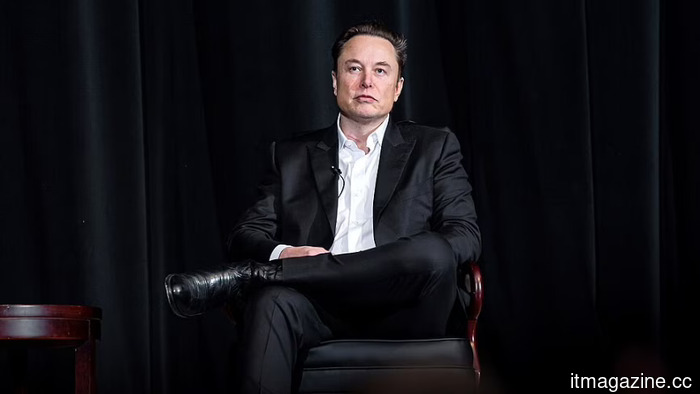
xAI files a lawsuit against Minnesota regarding the first 'nudify' prohibition in the United States.
xAI presents a new argument for continuing to create tools that digitally undress individuals, citing the First Amendment as its foundation. Elon Musk’s AI company, now under the ownership of SpaceX, filed a lawsuit on Monday against the attorney general of Minnesota, as reported by CBS News. The company seeks a federal court to nullify the first law in the U.S. that prohibits "nudification" technology, which is set to take effect on Saturday.
The law, known as Minnesota’s HF 1606, prohibits any platform or application from allowing users to "nudify" any identifiable person. This entails creating a realistic fake image depicting private body parts that the individual never revealed. Additionally, it forbids the advertisement of such tools. Each infraction could result in a civil fine of up to $500,000, which would be used to support services for victims of sexual assault and abuse. State Senator Erin Maye Quade championed the bill after a man used social media images to create sexualized representations of over 80 women he knew.
In its legal challenge, xAI brands the statute as "an overbroad, content-based restriction on free speech and the means of visual expression." The company does not dispute Minnesota’s goal of preventing nonconsensual nude imagery but argues that the law includes protected speech in its scope. It cautions that the possible penalties could be devastating, estimating that a service whose users produced 100,000 prohibited images could face “an astonishing $50 billion” in fines. xAI asserts that it would need to reduce Grok Imagine’s editing capabilities once the law is enacted, thereby suppressing speech that is currently permissible.
The company also contends that the law is so extensive it could encompass images of shirtless men or individuals in swimwear, a claim that is debatable. The statute exempts tools that necessitate significant “technical skill” from the user and retains federal Section 230 protections.
xAI is making this free-speech argument while itself facing scrutiny for the very issues the law seeks to address. It is dealing with a proposed class-action lawsuit alleging that individuals have utilized Grok to create child sexual abuse material from real photographs. Regulatory bodies in California, the UK, the EU, and Ireland are all conducting investigations.
The company claims that it "strictly prohibits" the creation of nonconsensual sexual imagery and has even taken legal action against users attempting to bypass its safeguards. Notably, this is the same tool that a UK Member of Parliament indicated generated sexualized images of her and that is linked to the nudify applications that Europe is attempting to ban.
There is a larger battle at play as well. The Trump administration has expressed intentions to contest state AI regulations and advocates for a unified national framework instead. Minnesota’s approach is becoming a test case for the extent to which one state can regulate AI independently, especially as its ban on prediction markets was recently blocked.
The state remains resolute in its position. “There are plenty of important discussions to be had regarding AI policy,” stated attorney general Keith Ellison. “This is not one of them.” Governor Tim Walz was more direct, saying, “See you in court, creep.”
Other articles
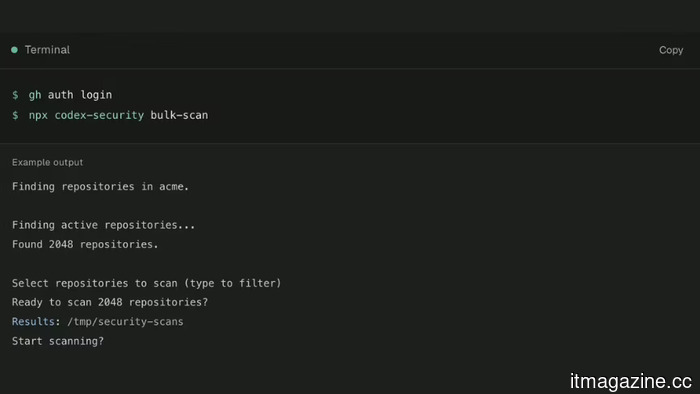 OpenAI has made Codex Security available as open-source, but has restricted access to the scanner.
OpenAI made its Codex Security CLI available as open source to check code for vulnerabilities, but the scanner remains restricted. This move can be seen as a bid to capture the application security space and compete with Anthropic’s Claude Security.
OpenAI has made Codex Security available as open-source, but has restricted access to the scanner.
OpenAI made its Codex Security CLI available as open source to check code for vulnerabilities, but the scanner remains restricted. This move can be seen as a bid to capture the application security space and compete with Anthropic’s Claude Security.
 Anthropic stands alone in every AI battle, yet still manages to succeed.
Anthropic stands out as the distinct entity in almost every AI policy debate, whether it concerns open weights or the Pentagon. Furthermore, it remains the most valuable startup globally.
Anthropic stands alone in every AI battle, yet still manages to succeed.
Anthropic stands out as the distinct entity in almost every AI policy debate, whether it concerns open weights or the Pentagon. Furthermore, it remains the most valuable startup globally.
 eBay agrees to pay $56 million regarding its harassment campaign involving bloody pig masks.
eBay and three former executives will pay close to $56 million to the couple they tormented with cockroaches and a bloody pig mask. The larger consequence: no nondisclosure agreement.
eBay agrees to pay $56 million regarding its harassment campaign involving bloody pig masks.
eBay and three former executives will pay close to $56 million to the couple they tormented with cockroaches and a bloody pig mask. The larger consequence: no nondisclosure agreement.
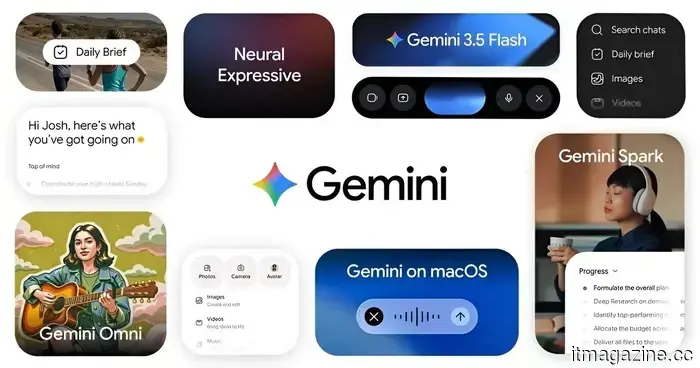 Gemini is now able to condense the most chaotic comment threads in Google Docs.
Gemini can now organize extensive comments in Google Docs by reviewer or topic, highlight unresolved queries, create responses, and recommend edits, although access is contingent on the appropriate plan, settings, and document permissions.
Gemini is now able to condense the most chaotic comment threads in Google Docs.
Gemini can now organize extensive comments in Google Docs by reviewer or topic, highlight unresolved queries, create responses, and recommend edits, although access is contingent on the appropriate plan, settings, and document permissions.
 Rising cursor prices are driving businesses towards Claude Code and other alternatives.
Price increases from Cursor are driving businesses to switch to Claude Code. However, companies are avoiding both options by using open-source tools that can reduce AI coding expenses by as much as 97%.
Rising cursor prices are driving businesses towards Claude Code and other alternatives.
Price increases from Cursor are driving businesses to switch to Claude Code. However, companies are avoiding both options by using open-source tools that can reduce AI coding expenses by as much as 97%.
 Audi's Q9 is a V8 petrol model aimed at the American market as its electric vehicle strategy faces delays.
Audi's Q9 is a petrol-powered SUV designed to appeal to American preferences, introduced as its electric vehicle initiative faces challenges, tariffs impact its entirely imported lineup, and employees express concerns over potential plant closures.
Audi's Q9 is a V8 petrol model aimed at the American market as its electric vehicle strategy faces delays.
Audi's Q9 is a petrol-powered SUV designed to appeal to American preferences, introduced as its electric vehicle initiative faces challenges, tariffs impact its entirely imported lineup, and employees express concerns over potential plant closures.
xAI files a lawsuit against Minnesota regarding the first 'nudify' prohibition in the United States.
xAI is filing a lawsuit to challenge Minnesota's unique 'nudify' prohibition, contending that the First Amendment safeguards the tools involved. This occurs in the context of a Grok CSAM class action.