

Rising cursor prices are driving businesses towards Claude Code and other alternatives.
The priciest aspect of AI coding is no longer the model itself but rather the software that surrounds it, and companies are beginning to take notice.
Currently, the primary concern revolves around pricing. The AI coding tool Cursor, which SpaceX plans to acquire for $60 billion, transitioned most of its clients to usage-based billing last year. Now, renewal bills are hitting hard, according to The Information.
The renewal shock has been significant. One IT consulting firm paid Cursor approximately $200,000 for 800 licenses for the year ending in May. However, at renewal, Cursor requested around $1.5 million for similar usage. The firm “negotiated firmly” and managed to reduce it to $250,000. Other firms have similar experiences, including the biopharma company Sanofi and the security provider Druva, both of which faced renewal costs approximately five times higher than the previous year.
“I might not renew with Cursor,” Sanofi’s chief digital officer Emmanuel Frenehard shared with The Information. “I can get a better deal with Claude Code.”
The immediate winner appears to be Claude Code. Anthropic’s Claude Code is tailored for its own models, and many companies are shifting their spending in that direction. The same IT consultancy anticipates that its Anthropic expenditures will increase to at least $10 million this year, whereas in 2025 it was almost negligible.
This situation reflects the opposite of Cursor's challenge. Cursor offers discounts to attract large-scale customers but charges steeply where clients feel trapped. Unlike Anthropic, it has less pricing leverage. However, data from the routing firm Weave reveals that Cursor's bills have increased less than those of Claude Code over the past six months.
Cursor has also begun providing a router that directs simpler tasks to less expensive models, indicating there is potential for multiple favorable players in the market.
However, even Claude Code might face competition. The crucial component today is the “harness,” the software that enables a model to write and edit code effectively. Claude Code utilizes Anthropic’s proprietary harness, but open-source alternatives serve the same function, integrating with routers that allocate simpler tasks to less costly open-weight or smaller models.
The savings generated from these alternatives can be substantial. Sapiom, a startup supported by Anthropic, has adopted the open-source OpenCode harness and anticipates a 25% reduction in AI expenses. Similarly, Codestrap, a coding consultancy, reports customer costs plummeted by 97% after developing its own platform that directs most tasks to smaller models from Google and OpenAI.
“It’s no longer just about the model,” Sapiom’s Ilan Zerbib stated to The Information. “It’s about the harness that surrounds the model.” Connor Deeks from Codestrap expressed it even more directly: “All the value is tied to the harness. The model itself is secondary.”
This shift is significant as it highlights how costs are tightening at the tool layer. Although per-token prices continue to decline, autonomous agents consume so many tokens that enterprise costs keep rising. Cursor is experiencing this pressure first. If the genuine value lies in the routing layer, similar concerns will likely extend to the premium tools built on top, including Claude Code.
Currently, Anthropic leads in coding, but its clients are beginning to question the balance between the model's value and the harness, which can be replicated by others.
Other articles
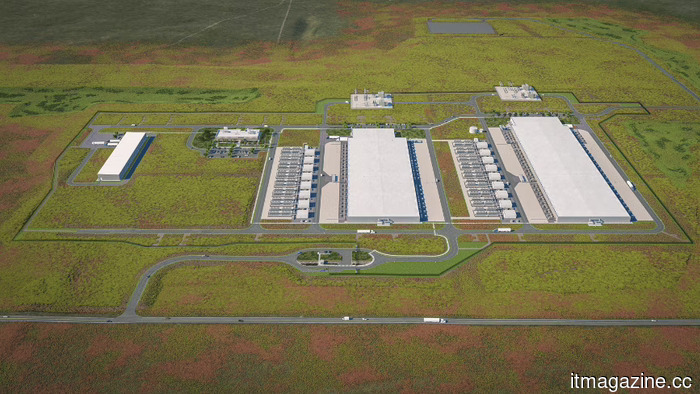 Trump grants exemptions from environmental regulations for data centers and rockets.
In a single day, the Trump administration took steps to exclude power plants at data centers from acid-rain regulations and to exempt rocket launches from environmental assessments.
Trump grants exemptions from environmental regulations for data centers and rockets.
In a single day, the Trump administration took steps to exclude power plants at data centers from acid-rain regulations and to exempt rocket launches from environmental assessments.
 Apple's new Upgrade plan won't impose restrictions for missed payments; however, three missed payments could terminate your lease.
Apple states that missed payments under its Klarna-supported Upgrade plan will not affect app access or device functionalities; however, three consecutive missed payments may lead to the termination of the lease.
Apple's new Upgrade plan won't impose restrictions for missed payments; however, three missed payments could terminate your lease.
Apple states that missed payments under its Klarna-supported Upgrade plan will not affect app access or device functionalities; however, three consecutive missed payments may lead to the termination of the lease.
 Shein reveals an FTC investigation as it seeks to go public.
Shein revealed an unspecified FTC consumer protection investigation in its IPO filing in Hong Kong. The agency regulates 'dark patterns,' which are the manipulative tactics used by Shein's app.
Shein reveals an FTC investigation as it seeks to go public.
Shein revealed an unspecified FTC consumer protection investigation in its IPO filing in Hong Kong. The agency regulates 'dark patterns,' which are the manipulative tactics used by Shein's app.
 Shein reveals that it is under investigation by the FTC while attempting to go public.
Shein revealed an unpublicized FTC consumer-protection investigation in its IPO filing in Hong Kong. The agency oversees 'dark patterns', which are the deceptive techniques utilized by Shein's app.
Shein reveals that it is under investigation by the FTC while attempting to go public.
Shein revealed an unpublicized FTC consumer-protection investigation in its IPO filing in Hong Kong. The agency oversees 'dark patterns', which are the deceptive techniques utilized by Shein's app.
 NextEra and Brookfield are planning a $100 billion data center campus in Kentucky.
Bloomberg reports that NextEra and Brookfield are planning a data-center campus in Kentucky, valued at as much as $100 billion, combining the largest utility in the U.S. with a $100 billion AI investment fund.
NextEra and Brookfield are planning a $100 billion data center campus in Kentucky.
Bloomberg reports that NextEra and Brookfield are planning a data-center campus in Kentucky, valued at as much as $100 billion, combining the largest utility in the U.S. with a $100 billion AI investment fund.
 xAI files a lawsuit against Minnesota regarding the first 'nudify' prohibition in the United States.
xAI is filing a lawsuit to challenge Minnesota's unique 'nudify' prohibition, contending that the First Amendment safeguards the tools involved. This occurs in the context of a Grok CSAM class action.
xAI files a lawsuit against Minnesota regarding the first 'nudify' prohibition in the United States.
xAI is filing a lawsuit to challenge Minnesota's unique 'nudify' prohibition, contending that the First Amendment safeguards the tools involved. This occurs in the context of a Grok CSAM class action.
Rising cursor prices are driving businesses towards Claude Code and other alternatives.
Price increases from Cursor are driving businesses to switch to Claude Code. However, companies are avoiding both options by using open-source tools that can reduce AI coding expenses by as much as 97%.