
Anthropic stands alone in every AI battle, yet still manages to succeed.
Six months ago, Anthropic was at the forefront of America's AI boom, excelling in model development and vocal about ethical considerations. However, this summer, the company finds itself increasingly isolated.
According to Axios, the creator of Claude is now the outlier in almost every significant AI policy debate. It holds the title of the world's most valuable startup while simultaneously being the most alone in the industry. These two situations are evidently linked.
The most notable indication came last week when Anthropic was the sole leading lab that chose not to sign an open letter urging Washington to avoid placing restrictions on open-weight models, which was spearheaded by Nvidia's Jensen Huang. Both Google and OpenAI, Anthropic's closest competitors, signed the letter, leaving Anthropic in the position of advocating for stricter regulations on the very business model that all three companies rely on.
Dario Amodei, the CEO of Anthropic, attempted to mitigate the controversy himself. In a blog post, he asserted that the company has never advocated for a ban on open models and referred to weaker models as "a public good." Nonetheless, he still refrained from signing the letter and maintained his position that there should be tighter control on hazardous components, particularly advanced chips that reach authoritarian regimes.
The trend of isolation continues in other areas as well. In February, the Pentagon blacklisted Anthropic following disagreements over whether Claude could be utilized for surveillance or autonomous weapons. A senior defense official remarked on Friday that there is “no AI company more hostile to the warfighter.”
On the safety front, Anthropic has been the most proactive, supporting state AI legislation and proposing an FAA-style regulatory body to evaluate models before their launch. However, when the White House identified a security vulnerability this summer, Anthropic contested the severity of the issue. This disagreement contributed to the implementation of export controls that temporarily took two of its models offline for nearly three weeks.
Moreover, Anthropic has accused Chinese labs of training cheaper models using Claude’s outputs in “industrial-scale” campaigns, as reported by the New York Times. Critics argue that distillation is a standard aspect of AI development and highlight the unfortunate timing, given that Anthropic had just reached a $1.5 billion settlement regarding copyright infringement over pirated books utilized to train its own models.
Nevertheless, Anthropic's isolation isn't absolute. It joined over 1,100 employees from competing labs this week in a petition urging Washington to help “deliberately pace” the advancement of frontier AI. The primary concern, that the technology is progressing faster than can be safely managed, is now a shared sentiment within the industry.
Despite the tensions, Anthropic is not suffering losses. Its models consistently rank highly in independent evaluations, and businesses continue to pay premium prices despite complaints regarding costs and restrictions. It achieved a valuation of $965 billion in May, surpassing OpenAI, and is moving towards an IPO that could potentially elevate its value even further.
The characteristics that contribute to its isolation in policy debates—caution and an unwillingness to compromise—are also the same traits that have allowed it to establish its leadership position. Anthropic prefers to be correct rather than popular, and for now, it is in a position where it can afford to maintain this stance.
Altri articoli
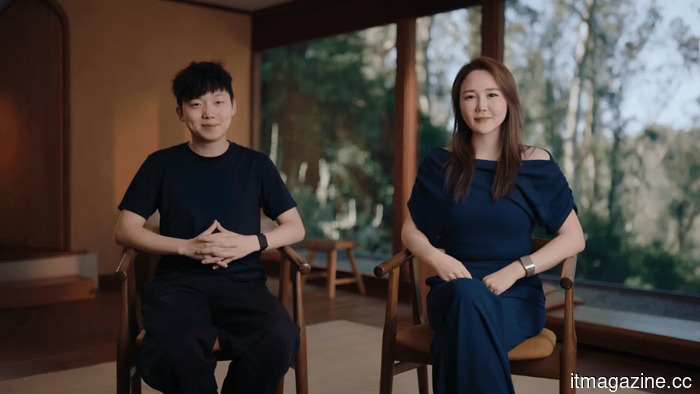 Fish Audio secures $52 million to offer voice AI for free while charging businesses.
Fish Audio secured $52 million for its voice AI, which it offers at no cost, while charging businesses for faster performance and higher uptime. Its library of 2 million voices serves as both its competitive advantage and a potential risk.
Fish Audio secures $52 million to offer voice AI for free while charging businesses.
Fish Audio secured $52 million for its voice AI, which it offers at no cost, while charging businesses for faster performance and higher uptime. Its library of 2 million voices serves as both its competitive advantage and a potential risk.
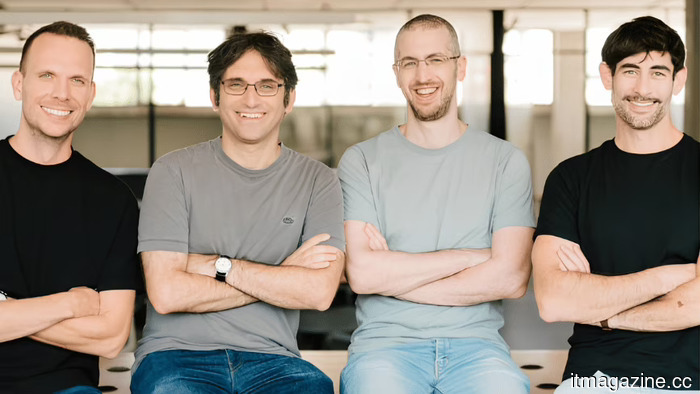 Act Security emerges from stealth mode with $60 million aimed at resolving the patch issue.
Act Security steps out of stealth mode with $60 million from the founders of Medigate. The wager: AI advances faster than patching, allowing for the elimination of dormant cloud access vulnerabilities.
Act Security emerges from stealth mode with $60 million aimed at resolving the patch issue.
Act Security steps out of stealth mode with $60 million from the founders of Medigate. The wager: AI advances faster than patching, allowing for the elimination of dormant cloud access vulnerabilities.
 AI agents have the capability to browse the internet. They now require a means to make payments for this service.
With AI agents beginning to engage in online transactions, traditional payment systems designed for humans are struggling to keep pace. The x402 Foundation, supported by Visa, Mastercard, Google, and Stripe, is developing a standard for machine-to-machine commerce, while blockchain initiatives such as Casper are establishing stablecoins as the foundation for settlement infrastructure.
AI agents have the capability to browse the internet. They now require a means to make payments for this service.
With AI agents beginning to engage in online transactions, traditional payment systems designed for humans are struggling to keep pace. The x402 Foundation, supported by Visa, Mastercard, Google, and Stripe, is developing a standard for machine-to-machine commerce, while blockchain initiatives such as Casper are establishing stablecoins as the foundation for settlement infrastructure.
 Anthropic remains isolated in every AI conflict, yet continues to succeed regardless.
Anthropic stands out as the anomaly in almost every debate surrounding AI policy, whether it's about open weights or matters involving the Pentagon. Furthermore, it remains the most valuable startup globally.
Anthropic remains isolated in every AI conflict, yet continues to succeed regardless.
Anthropic stands out as the anomaly in almost every debate surrounding AI policy, whether it's about open weights or matters involving the Pentagon. Furthermore, it remains the most valuable startup globally.
 Shein reveals that it is under investigation by the FTC while attempting to go public.
Shein revealed an unpublicized FTC consumer-protection investigation in its IPO filing in Hong Kong. The agency oversees 'dark patterns', which are the deceptive techniques utilized by Shein's app.
Shein reveals that it is under investigation by the FTC while attempting to go public.
Shein revealed an unpublicized FTC consumer-protection investigation in its IPO filing in Hong Kong. The agency oversees 'dark patterns', which are the deceptive techniques utilized by Shein's app.
 The need for verification in the trust crisis of recruitment
The use of AI-generated resumes has increased by 239% since the introduction of chatbots, and 67% of HR leaders indicate that this trend is delaying the hiring process. Ramu Donikana, founder of Invent Artificial, contends that what recruitment truly requires at this moment is verification, rather than improved screening methods.
The need for verification in the trust crisis of recruitment
The use of AI-generated resumes has increased by 239% since the introduction of chatbots, and 67% of HR leaders indicate that this trend is delaying the hiring process. Ramu Donikana, founder of Invent Artificial, contends that what recruitment truly requires at this moment is verification, rather than improved screening methods.
Anthropic stands alone in every AI battle, yet still manages to succeed.
Anthropic stands out as the distinct entity in almost every AI policy debate, whether it concerns open weights or the Pentagon. Furthermore, it remains the most valuable startup globally.