
As AI produces an increasing number of messages, the ability for humans to recognize them becomes more valuable.
As organizations adopt AI for quicker and broader communication, those maintaining trust are not simply increasing message quantity; they are fostering more meaningful human interactions. Artificial intelligence has transformed the way organizations communicate with their employees, allowing announcements to be created in a matter of seconds. Leadership updates can be automatically personalized, and internal newsletters, summaries, FAQs, and policy changes can be produced at unprecedented speeds. The outcome is clear efficiency. However, this also presents a new challenge. Employees are inundated with more internal communication than ever, leading to an increase in messages that tend to sound alike. While AI has simplified information production, it has not improved attention, trust, or a sense of belonging. As communication frequency rises, many organizations are finding that employees are becoming more adept at disregarding it. The challenge for leaders is no longer about increasing communication; it’s about ensuring that truly important messages resonate.
The solution may revolve less around AI and more around unique human experiences that technology cannot replicate. Traditionally, internal communication and employee recognition existed in separate systems. Announcements were made through email, Slack, or Microsoft Teams, while recognition occurred in its own space, if it occurred consistently at all. This separation is increasingly disadvantageous for organizations. Employees engage more where they feel connected to their colleagues and the company culture. Recognition fosters these connections as it celebrates achievements, milestones, and contributions that genuinely matter. Rather than directing employees to yet another communication channel, organizations are starting to integrate important company updates into environments where engagement naturally occurs. "When people gather to celebrate one another, they’re already focused,” says Scott Johnson, CEO of Motivosity. “That’s not something that can be faked or automated. It’s an ideal setting for leaders to engage, as it is rooted in trust, not just another interruption in someone's inbox." This shift signals a broader transformation in workplace communication.
Instead of viewing internal communications as one-way messages, progressive organizations are weaving them into the everyday fabric of the employee experience. The swift rise of AI has created an unexpected paradox. As content generation becomes easier, it also becomes harder to discern what deserves attention. Employees are becoming more aware of AI-generated patterns. While messages may be polished, consistent, and grammatically correct, they often lack the authenticity that drives action. However, this does not imply that AI has no role in internal communications. On the contrary, AI can significantly enhance drafting, organization, translation, and personalization. The key is in merging AI’s efficiency with human-centered experiences that foster emotional connections. Recognition fulfills this role perfectly. When employees acknowledge their teammates, commemorate milestones, or engage in shared cultural moments, they create genuine signals that AI cannot replicate. Internal communications are more effective when delivered within these trusted environments rather than competing with numerous other notifications.
Many organizations still depend on fragmented communication systems. Critical updates may come via email, department announcements may be found in Teams channels, and leadership messages often reside on intranets that employees seldom revisit after onboarding. Important information tends to be scattered across disconnected platforms. A developing alternative integrates communication into the same social settings where employees already interact through recognition and peer engagement. Designated communication spaces enable organizations to share company-wide updates, executive blogs, departmental announcements, and targeted messages for specific employee groups while promoting a sense of community within the broader workplace culture. Employees encounter relevant announcements alongside recognition from peers instead of sifting through various systems for information. Features such as scheduled announcements, engagement tracking, embedded resources, and achievement awards tied to communication spaces transform static announcements into participatory experiences for employees. The focus is not merely on increasing message distribution but on enhancing transparency while minimizing the burden on employees trying to stay informed.
Many organizations still compartmentalize recognition and internal communication. Recognition occurs on one platform, company announcements are made elsewhere, resources are stored on an intranet, and leadership blogs require a separate login. Employees are expected to navigate these disparate locations. This fragmented experience is becoming harder to justify. Platforms like Motivosity are reimagining internal communication by merging it into environments where employees already celebrate successes, recognize peers, and engage with company culture. Motivosity’s Employee Spaces allow organizations to develop dedicated communities for company-wide announcements, executive communications, departmental updates, employee resource groups, onboarding, wellness initiatives, or interest-based communities, all while maintaining connections to the overarching social recognition feed that employees frequently visit. Each Space features its own social feed, resources, scheduled announcements, engagement analytics, events, and the capability for leaders to share updates either as individuals or on behalf of the company. Employees can swiftly find relevant information without leaving the space where culture is already being cultivated.
The effect is subtle yet significant. Rather than asking employees to adopt another communication channel, organizations are engaging with them where interaction already flourishes. Recognition establishes the habit, benefitting communication in return. The future of internal communication will be centered on human experiences. As AI continues to evolve in the workplace, organizations will undoubtedly communicate more rapidly than ever. However, the standout companies
Other articles
 xAI files a lawsuit against Minnesota regarding the first 'nudify' prohibition in the United States.
xAI is filing a lawsuit to challenge Minnesota's unique 'nudify' prohibition, contending that the First Amendment safeguards the tools involved. This occurs in the context of a Grok CSAM class action.
xAI files a lawsuit against Minnesota regarding the first 'nudify' prohibition in the United States.
xAI is filing a lawsuit to challenge Minnesota's unique 'nudify' prohibition, contending that the First Amendment safeguards the tools involved. This occurs in the context of a Grok CSAM class action.
 Apple reaches a $5 trillion valuation by opting out of the AI investment competition.
Apple briefly reached a $5 trillion valuation, becoming the second company in history to do so, as investors moved away from the AI capital expenditure frenzy and into the one major company that stayed out of the competition.
Apple reaches a $5 trillion valuation by opting out of the AI investment competition.
Apple briefly reached a $5 trillion valuation, becoming the second company in history to do so, as investors moved away from the AI capital expenditure frenzy and into the one major company that stayed out of the competition.
 Trump grants exemptions from environmental regulations for data centers and rockets.
In a single day, the Trump administration took steps to exclude power plants at data centers from acid-rain regulations and to exempt rocket launches from environmental assessments.
Trump grants exemptions from environmental regulations for data centers and rockets.
In a single day, the Trump administration took steps to exclude power plants at data centers from acid-rain regulations and to exempt rocket launches from environmental assessments.
 Anthropic remains isolated in every AI conflict, yet continues to succeed regardless.
Anthropic stands out as the anomaly in almost every debate surrounding AI policy, whether it's about open weights or matters involving the Pentagon. Furthermore, it remains the most valuable startup globally.
Anthropic remains isolated in every AI conflict, yet continues to succeed regardless.
Anthropic stands out as the anomaly in almost every debate surrounding AI policy, whether it's about open weights or matters involving the Pentagon. Furthermore, it remains the most valuable startup globally.
 Audi's Q9 is a V8 petrol model aimed at the American market as its electric vehicle strategy faces delays.
Audi's Q9 is a petrol-powered SUV designed to appeal to American preferences, introduced as its electric vehicle initiative faces challenges, tariffs impact its entirely imported lineup, and employees express concerns over potential plant closures.
Audi's Q9 is a V8 petrol model aimed at the American market as its electric vehicle strategy faces delays.
Audi's Q9 is a petrol-powered SUV designed to appeal to American preferences, introduced as its electric vehicle initiative faces challenges, tariffs impact its entirely imported lineup, and employees express concerns over potential plant closures.
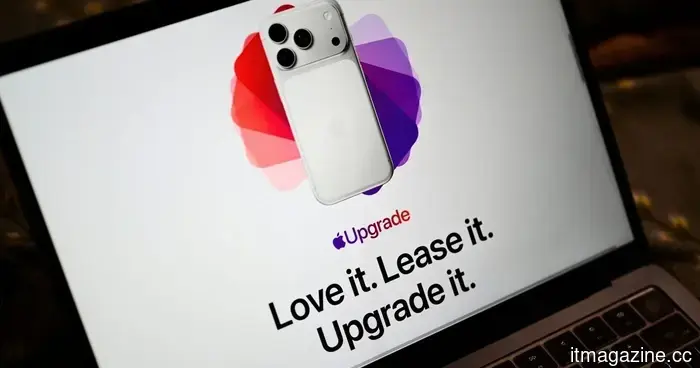 Apple's new Upgrade plan won't impose restrictions for missed payments; however, three missed payments could terminate your lease.
Apple states that missed payments under its Klarna-supported Upgrade plan will not affect app access or device functionalities; however, three consecutive missed payments may lead to the termination of the lease.
Apple's new Upgrade plan won't impose restrictions for missed payments; however, three missed payments could terminate your lease.
Apple states that missed payments under its Klarna-supported Upgrade plan will not affect app access or device functionalities; however, three consecutive missed payments may lead to the termination of the lease.
As AI produces an increasing number of messages, the ability for humans to recognize them becomes more valuable.
AI has accelerated internal communication, but it has also made it more difficult to trust. Motivosity suggests that integrating company updates into recognition platforms, where employees are already engaged, is the way for organizations to stand out amidst the clutter.