
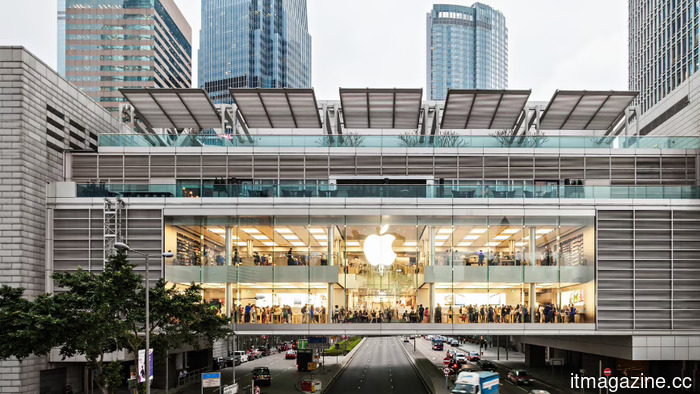
Apple reaches a $5 trillion valuation by opting out of the AI investment competition.
Apple has officially become the second company in history to achieve a valuation of $5 trillion, having reached this milestone by steering clear of significant investments in artificial intelligence. The iPhone manufacturer briefly hit a market value of $5.04 trillion on Tuesday, with shares peaking at $342.89 during the session before settling at $340.08, just shy of the $5 trillion mark, as reported by CNBC. Nvidia is the only other company to have crossed this threshold, which it did last October.
A day prior, Apple overtook Nvidia to regain the title of the world's most valuable company, a position Nvidia had maintained since June 2025.
The notable aspect of Apple’s success is attributed to its cautious approach. For two years, investors penalized Apple for not capitalizing on the AI surge, as its updates to Siri lagged and its internal AI models progressed slowly. However, this same cautiousness is now benefiting the company. In contrast, Alphabet, Amazon, Meta, and Microsoft have invested hundreds of billions into data centers.
Apple relies on Google’s technology for its AI capabilities while keeping its own expenditures minimal—analysts predict it will spend around $11 billion this year, compared to the over $100 billion each of its competitors is investing.
Apple’s stock has increased by approximately 25% in 2026, making it the best performer among the so-called Magnificent Seven, while Tesla, Microsoft, and Meta have all experienced declines this year. As noted by Business Insider, this rally is not a result of Apple's actions but rather a shift from a crowded AI sector to a consumer-oriented company that is not depleting cash reserves.
The catalyst for this transition is the substantial capital spending being reported elsewhere. Google unnerved investors last week by raising its capital expenditures forecast to as high as $205 billion, alongside announcing its first negative free cash flow, with a $5.9 billion loss in a single quarter, as reported by the Guardian.
Investor anxiety is mounting regarding the interdependent financing fueling the AI expansion, as these companies frequently fund each other’s computing needs. This concern has led to a significant downturn, with the Nasdaq 100 dropping over 10% from its June peak, meeting the technical criteria for a correction. Semiconductor stocks have suffered the most, with a primary ETF in this sector declining by 14% within a month, and a popular memory fund plummeting by 29%.
In Asia, both SK Hynix and Samsung saw their stock prices fall by more than 10% following reports that China had initiated mass production of its own chipmaking equipment and ongoing worries about less expensive Chinese AI models. As funds exit these markets, much of that capital has shifted towards Apple.
However, the issue lies in the very factor that keeps Apple's operational costs low, which also holds it back. Its revamped Siri is still in beta and is not expected to be fully launched until autumn, coinciding with the release of new iPhones. Additionally, its partnership with OpenAI has nearly collapsed, and Apple has filed a lawsuit against the company this month, citing theft of trade secrets.
While dependent on Google for AI capabilities is cost-effective now, it also means Apple is reliant on a direct competitor for crucial technology influencing its industry.
Signs indicate that this cautious approach may not persist. In its latest report, Apple discreetly removed its long-standing objective of maintaining equal amounts of cash and debt, potentially allowing greater funds for spending. Whether this spending occurs might depend on future leadership.
Thursday’s earnings call will mark Tim Cook’s final call as CEO, with John Ternus set to take over on September 1. Analysts anticipate a revenue increase of about 16% year-over-year. Cook will leave the company at the peak of its success, handing over a $5 trillion enterprise to his successor.
The more challenging question is how long Apple can continue to thrive without actively engaging in the market.
Other articles
 eBay agrees to pay $56 million regarding its harassment campaign involving bloody pig masks.
eBay and three former executives will compensate the couple they harassed with cockroaches and a bloody pig mask nearly $56 million. The more significant consequence: no non-disclosure agreement.
eBay agrees to pay $56 million regarding its harassment campaign involving bloody pig masks.
eBay and three former executives will compensate the couple they harassed with cockroaches and a bloody pig mask nearly $56 million. The more significant consequence: no non-disclosure agreement.
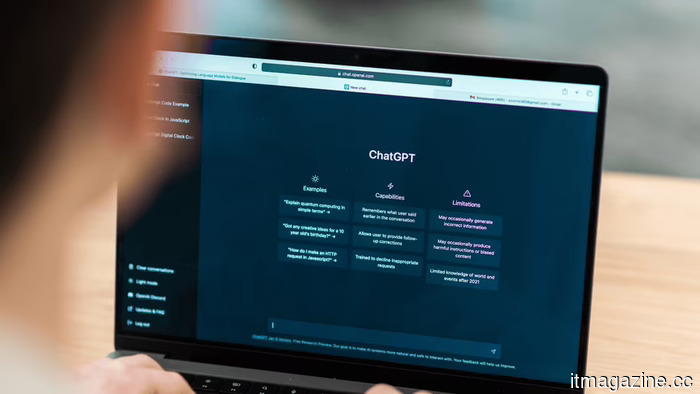 ChatGPT approaches 1 billion weekly users, albeit seven months behind schedule.
ChatGPT is on the verge of achieving 1 billion weekly active users, making it one of the quickest apps to do so, although this milestone comes seven months later than OpenAI had initially anticipated.
ChatGPT approaches 1 billion weekly users, albeit seven months behind schedule.
ChatGPT is on the verge of achieving 1 billion weekly active users, making it one of the quickest apps to do so, although this milestone comes seven months later than OpenAI had initially anticipated.
 Google's most expensive Pixel 11 might come with a smaller battery and a higher price tag.
A recent leak suggests that both Pixel 11 Pro models may feature smaller batteries, and the Pro XL might be priced £80 higher than last year's version.
Google's most expensive Pixel 11 might come with a smaller battery and a higher price tag.
A recent leak suggests that both Pixel 11 Pro models may feature smaller batteries, and the Pro XL might be priced £80 higher than last year's version.
 The necessity of verification amid the trust crisis in recruitment
The creation of AI-generated resumes has increased by 239% since the introduction of chatbots, with 67% of HR executives stating that it has hindered the hiring process. Ramu Donikana, the founder of Invent Artificial, contends that what recruitment truly requires now is verification rather than improved screening.
The necessity of verification amid the trust crisis in recruitment
The creation of AI-generated resumes has increased by 239% since the introduction of chatbots, with 67% of HR executives stating that it has hindered the hiring process. Ramu Donikana, the founder of Invent Artificial, contends that what recruitment truly requires now is verification rather than improved screening.
 Apple Upgrade offers the option to lease an iPhone starting at $17.99 per month.
Apple Upgrade enables US customers to lease an iPhone starting at $17.99 per month via Klarna, while discontinuing the 2015 iPhone Upgrade Program. It alters the perception of the price without changing the actual amount.
Apple Upgrade offers the option to lease an iPhone starting at $17.99 per month.
Apple Upgrade enables US customers to lease an iPhone starting at $17.99 per month via Klarna, while discontinuing the 2015 iPhone Upgrade Program. It alters the perception of the price without changing the actual amount.
 Wispr Flow has finally repaired its toolbar following complaints from hundreds of users.
Wispr Flow received over 700 responses from critics regarding what wasn't functioning properly. Its initial noticeable adjustment relocates the desktop Flow Bar, while additional reliability enhancements still need to demonstrate their effectiveness.
Wispr Flow has finally repaired its toolbar following complaints from hundreds of users.
Wispr Flow received over 700 responses from critics regarding what wasn't functioning properly. Its initial noticeable adjustment relocates the desktop Flow Bar, while additional reliability enhancements still need to demonstrate their effectiveness.
Apple reaches a $5 trillion valuation by opting out of the AI investment competition.
Apple briefly reached a $5 trillion valuation, becoming the second company in history to do so, as investors moved away from the AI capital expenditure frenzy and into the one major company that stayed out of the competition.