
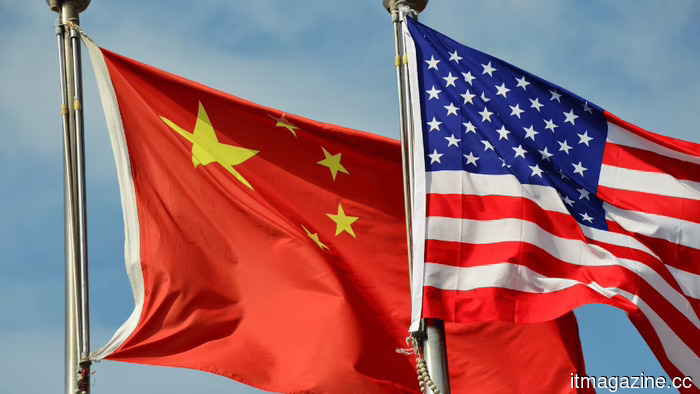
China has accused the United States of engaging in 'AI hegemonism' and has warned of potential counteractions.
On Monday, China's commerce ministry accused the United States of engaging in “AI hegemonism” and warned of retaliation, marking an escalation in a dispute that began with claims of imitation and has since involved chips, sanctions, and two high-ranking officials from the White House.
The ministry asserted that Washington was threatening Chinese enterprises with penalties based solely on accusations, framing the entire situation as an attempt to hinder China's technology sector rather than a legitimate concern over intellectual property.
The catalyst for this dispute was the practice of distillation, which involves training a weaker model using the outputs from a stronger one.
Michael Kratsios, director of the White House Office of Science and Technology Policy, alleged that the Beijing-based Moonshot AI had used distillation on Anthropic’s Claude to create its Kimi K3 system, reportedly doing this on an industrial scale through a specially designed internal platform aimed at evading detection.
The White House had already warned China about this practice, but enforcing any measures remains challenging. Treasury Secretary Scott Bessent further cautioned that companies involved in covert distillation could face financial sanctions or be added to the Commerce Department’s Entity List, which would prevent them from accessing American chips and software. It seems this threat of sanctions has incited Beijing's response.
The ministry's statement was measured yet resolute. An unnamed spokesperson said, “For any actions that cause significant harm to Chinese interests, China will take all necessary measures to firmly safeguard its legitimate rights and interests,” although the specifics of those measures were not articulated.
The ministry also refuted the core accusation, claiming that distillation is a commonly used technique and that the US has not provided adequate factual or legal justification for the threatened penalties.
The initial complaint originated from Anthropic, which earlier this year informed US lawmakers that three Chinese companies—DeepSeek, Moonshot, and MiniMax—had created over 16 million interactions with Claude using approximately 24,000 fraudulent accounts, extracting capabilities in reasoning, coding, and computer vision which they then integrated into their own systems.
It later identified Alibaba’s Qwen lab as the origin of an even larger distillation effort, using these findings to argue for stricter controls on chip exports, reasoning that limiting access to advanced semiconductors would restrict both direct training and the distillation that relies on it.
Moonshot has denied these allegations, stating that the advancements in Kimi K3 stemmed from its own architectural developments rather than from imitating a competitor, aligning with the broader Chinese narrative that accuses Washington of framing commercial protectionism as a security issue.
Whether US regulators will accept this defense is uncertain, and the Entity List does not necessitate them to respond before taking action.
The issue of chips underpins the entire situation. Over the past year, Washington has been actively closing loopholes that allowed Nvidia’s cutting-edge processors to reach Chinese buyers through overseas subsidiaries. Reports related to the Moonshot case indicate that the company was procuring Nvidia GB300 chips and routing operations through servers in Thailand.
Neither Beijing nor Washington has publicly confirmed these details, and Anthropic’s own assessment of the traffic it attributes to Moonshot has not undergone independent verification.
Importantly, there was no mention of a Section 301 trade investigation in Monday’s exchange, which is the tariff tool the US has employed against foreign technology regulations in other instances. This ongoing conflict is more focused and currently targets a limited number of Chinese AI laboratories and the models they have produced.
What happens next is procedural. Bessent's warning outlines a potential sanction rather than one that has already been enforced, and no company has been added to the Entity List regarding distillation thus far. The countermeasures from the ministry remain vague. For now, both sides have clearly defined their positions while also leaving room for maneuvering, which conveys its own message.
Other articles
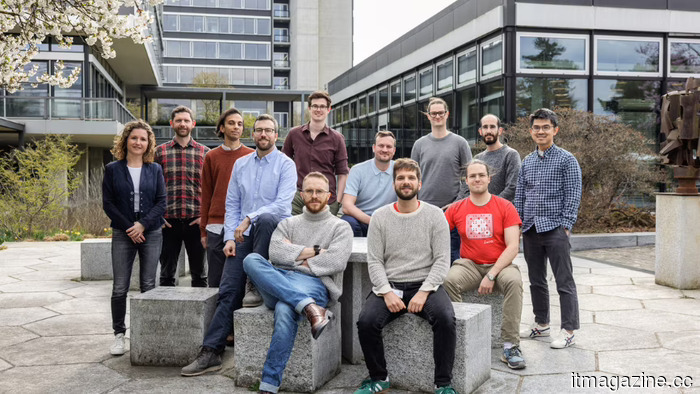 ZuriQ secures $25.5 million to expand its 2D quantum architecture.
The ETH Zürich spin-off ZuriQ has secured $25.5 million in a seed funding round to expand its trapped-ion quantum processors, which are designed with a native two-dimensional architecture.
ZuriQ secures $25.5 million to expand its 2D quantum architecture.
The ETH Zürich spin-off ZuriQ has secured $25.5 million in a seed funding round to expand its trapped-ion quantum processors, which are designed with a native two-dimensional architecture.
 Tennessee alleges in front of the jury that Meta was aware that Instagram was detrimental to teenagers but chose to remain silent.
Tennessee informed a Nashville jury that Meta disregarded internal studies indicating that Instagram negatively affected teenagers, referencing a document from 2017. Meta asserts that it identifies issues in order to address them.
Tennessee alleges in front of the jury that Meta was aware that Instagram was detrimental to teenagers but chose to remain silent.
Tennessee informed a Nashville jury that Meta disregarded internal studies indicating that Instagram negatively affected teenagers, referencing a document from 2017. Meta asserts that it identifies issues in order to address them.
 Taiwan has apprehended an Nvidia employee as its investigation into chip smuggling extends to the semiconductor manufacturer.
Prosecutors in Keelung, Taiwan, have arrested an Nvidia employee as part of the expanding investigation into AI servers that are reportedly being sent to China.
Taiwan has apprehended an Nvidia employee as its investigation into chip smuggling extends to the semiconductor manufacturer.
Prosecutors in Keelung, Taiwan, have arrested an Nvidia employee as part of the expanding investigation into AI servers that are reportedly being sent to China.
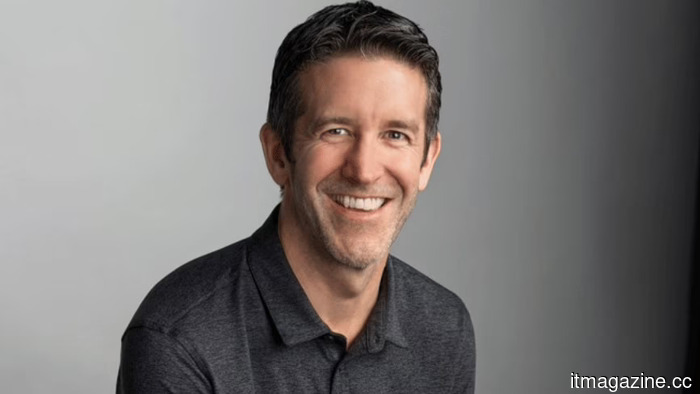 Apple's soon-to-be CEO aims to expand the company's ventures in film and television.
During the premiere of Ted Lasso, the new Apple CEO John Ternus indicated a commitment to maintaining continuity in a streaming division that, despite winning awards, continues to operate at a loss.
Apple's soon-to-be CEO aims to expand the company's ventures in film and television.
During the premiere of Ted Lasso, the new Apple CEO John Ternus indicated a commitment to maintaining continuity in a streaming division that, despite winning awards, continues to operate at a loss.
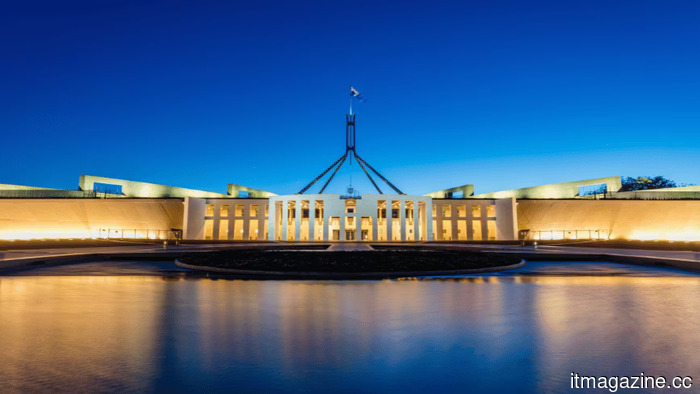 Australia's groundbreaking data centre regulations have encountered their initial issue: the necessary power supply is not available yet.
Australia's initiative to transform data centres into net producers of clean energy has encountered an initial feasibility issue: the pace of renewable energy deployment is insufficient.
Australia's groundbreaking data centre regulations have encountered their initial issue: the necessary power supply is not available yet.
Australia's initiative to transform data centres into net producers of clean energy has encountered an initial feasibility issue: the pace of renewable energy deployment is insufficient.
 Tennessee informs the jury that Meta was aware Instagram was detrimental to teenagers and chose not to speak up.
Tennessee presented a Nashville jury with evidence that Meta overlooked internal studies indicating that Instagram was detrimental to teenagers, referencing a document from 2017. In response, Meta claims that it identifies issues in order to address them.
Tennessee informs the jury that Meta was aware Instagram was detrimental to teenagers and chose not to speak up.
Tennessee presented a Nashville jury with evidence that Meta overlooked internal studies indicating that Instagram was detrimental to teenagers, referencing a document from 2017. In response, Meta claims that it identifies issues in order to address them.
China has accused the United States of engaging in 'AI hegemonism' and has warned of potential counteractions.
China's commerce ministry has accused Washington of promoting 'AI hegemonism' and has warned of potential counteractions in response to US investigations into the alleged imitation of Anthropic’s Claude.