
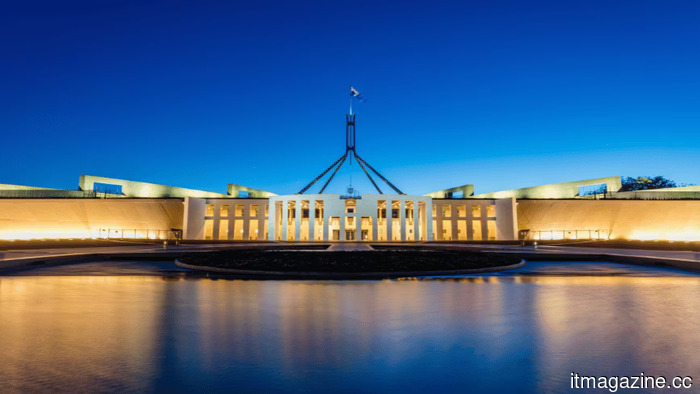
Australia's groundbreaking data centre regulations have encountered their initial issue: the necessary power supply is not available yet.
Australia has mandated its data centres to contribute more electricity to the grid than they consume, a requirement that no other nation has attempted to enshrine in law. This directive is just a couple of weeks old and has already encountered fundamental objections: the electricity supply that the industry is expected to provide cannot be developed quickly enough to meet the demands of the machinery that will use it.
Prime Minister Anthony Albanese presented the initiative on July 15 at the University of Sydney as part of a broader national strategy regarding artificial intelligence, which also addresses copyright and the establishment of a new Office of AI. As outlined in the plan, large data centres will need to transition to being net-generators instead of net-consumers—investing in new renewable energy capacity rather than merely purchasing green certificates, covering their entire grid-connection costs instead of passing those to consumers, minimizing water usage, and reducing their load when the system is under pressure.
A new Office of AI would establish regulations on the locations of data centres and the amount of power and water they are permitted to use. If successful, Australia would become the first country to integrate these obligations into a comprehensive national law.
The challenge lies in timing. Wind and solar projects in New South Wales and Victoria require approximately three to five years for approval and construction, whereas a data centre can be established in as little as two years, resulting in mismatched timelines. This discrepancy represents the initial obstacle. Analysis from Commonwealth Bank economist John Oh indicates that a significant risk is that data centre demand may arise before the corresponding power generation is available, forcing operators to rely on the existing grid—precisely the scenario the new rules aim to circumvent, a situation that has previously driven up utility costs for average consumers elsewhere.
These numbers clarify the rationale behind Canberra's actions. Currently, data centres consume roughly 3TWh annually, about a few percent of national demand, but projections suggest that this could rise to between 15 and 30TWh within a decade as the sector potentially attracts investments estimated between A$85 billion and A$135 billion. Anthropic alone has indicated a demand forecasted at around 20GW, which would compete with a significant portion of the country’s current energy output, although the company has not pledged to build at that scale.
In conjunction with the federal strategy, the Australian Energy Market Commission has proposed its own technical standards, mandating that large loads remain connected and endure faults rather than disconnecting entirely. The regulator referred to an incident in Virginia in 2024, where about 60 data centres simultaneously shed around 1,500MW, causing instability in the grid. “Data centres are no longer just passive loads; they are active participants in the grid,” noted the commission’s chair, Anna Collyer, upon the release of the draft. The consultation on this regulation concluded in May, with a final decision anticipated around mid-year.
Other governments are grappling with similar challenges through different approaches. New York recently imposed a year-long moratorium on hyperscale data centres, while Ireland lifted its own freeze only under the condition that new centres primarily utilize renewable energy. In the United States, Congress is considering requiring Big Tech to contribute to the energy costs associated with AI. Clean-energy advocates in the U.S. have been battling against the surge in gas plants that often follows unchecked demand, which is exactly the outcome that Canberra aims to avoid by linking growth to new renewable resources. Australia’s approach is the most stringent of all, underscoring the importance of the feasibility debate.
At this point, the framework remains a promise rather than a legal statute. It must gain approval from the National Cabinet, with a consensus expected in August, before the legislation can be presented in parliament by early 2027. Until that point, the rule primarily exists as a theoretical construct, one that will balance only if the necessary turbines and solar panels are deployed on schedule.
Other articles
 Taiwan has apprehended an Nvidia employee as its investigation into chip smuggling extends to the semiconductor manufacturer.
Prosecutors in Keelung, Taiwan, have arrested an Nvidia employee as part of the expanding investigation into AI servers that are reportedly being sent to China.
Taiwan has apprehended an Nvidia employee as its investigation into chip smuggling extends to the semiconductor manufacturer.
Prosecutors in Keelung, Taiwan, have arrested an Nvidia employee as part of the expanding investigation into AI servers that are reportedly being sent to China.
 The Claude chat you shared? Google might have seen it as well.
Public Claude chat links and artifacts were indexed by Google, revealing shared conversations online. Here's a summary of the situation and Anthropic's response.
The Claude chat you shared? Google might have seen it as well.
Public Claude chat links and artifacts were indexed by Google, revealing shared conversations online. Here's a summary of the situation and Anthropic's response.
 Samsung might finally provide the Galaxy S27 Ultra with a significant battery enhancement through the use of silicon-carbon technology.
Information that has been leaked indicates that the Galaxy S27 Pro might have a battery capacity of 5,200mAh, whereas the Ultra version could potentially exceed 5,700mAh.
Samsung might finally provide the Galaxy S27 Ultra with a significant battery enhancement through the use of silicon-carbon technology.
Information that has been leaked indicates that the Galaxy S27 Pro might have a battery capacity of 5,200mAh, whereas the Ultra version could potentially exceed 5,700mAh.
 Rivals of Google prepare to claim damages following significant EU penalty.
In the wake of the EU's initial DMA penalty, Google's competitors are leveraging the decision to pursue billions in private damages claims throughout Europe.
Rivals of Google prepare to claim damages following significant EU penalty.
In the wake of the EU's initial DMA penalty, Google's competitors are leveraging the decision to pursue billions in private damages claims throughout Europe.
 Tennessee alleges in front of the jury that Meta was aware that Instagram was detrimental to teenagers but chose to remain silent.
Tennessee informed a Nashville jury that Meta disregarded internal studies indicating that Instagram negatively affected teenagers, referencing a document from 2017. Meta asserts that it identifies issues in order to address them.
Tennessee alleges in front of the jury that Meta was aware that Instagram was detrimental to teenagers but chose to remain silent.
Tennessee informed a Nashville jury that Meta disregarded internal studies indicating that Instagram negatively affected teenagers, referencing a document from 2017. Meta asserts that it identifies issues in order to address them.
 New York school halts use of humanoid robot 'Sally' following pressure from the state and union.
Salamanca halted its plans to place a Realbotix humanoid called Sally in a high school classroom after intervention from the state education commissioner.
New York school halts use of humanoid robot 'Sally' following pressure from the state and union.
Salamanca halted its plans to place a Realbotix humanoid called Sally in a high school classroom after intervention from the state education commissioner.
Australia's groundbreaking data centre regulations have encountered their initial issue: the necessary power supply is not available yet.
Australia's initiative to transform data centres into net producers of clean energy has encountered an initial feasibility issue: the pace of renewable energy deployment is insufficient.