
Tennessee alleges in front of the jury that Meta was aware that Instagram was detrimental to teenagers but chose to remain silent.
A jury in Nashville was informed this week that Meta had previously acknowledged, in its internal documents, that the features keeping teenagers engaged on Instagram were “inherently at odds with well-being,” yet the company chose to remain silent on the matter. This statement is derived from a 2017 document that the state of Tennessee has positioned as a key element of its case, setting the stage for opening statements in a trial that may extend for up to seven weeks.
The case, initiated by Tennessee Attorney General Jonathan Skrmetti in the Chancery Court in Nashville before Chancellor Russell Perkins, claims that Meta breached the Tennessee Consumer Protection Act by concealing its knowledge and implementing features intended to captivate young users. This trial marks the latest venue for an ongoing battle concerning Instagram’s addictive design, which regulators have been addressing for years, and is one of the first to present these issues before a jury instead of resolving them through documentation.
The state cites elements such as autoplay, Reels, push notifications, and disappearing posts as mechanisms that collectively promote compulsive use.
The stakes in the broader litigation have escalated to the point that the figures involved now appear as abstractions. Tom Cartmell, representing Tennessee, told the jurors that Meta's own product managers indicated in 2017 that features like notifications and infinite scroll were detrimental to users' well-being, arguing that the company should have issued a public warning. “This warning never came,” he stated. The state argues that Meta’s researchers subsequently documented compulsive usage among teens and its associations with eating disorders, depression, and self-harm, while the leadership maintained the original design since it boosted ad views.
Much of the case centers around Mark Zuckerberg. The complaint alleges that Meta’s CEO was frequently informed by staff about research indicating that Instagram was harmful to the mental health of young users, and that he chose not to finance initiatives that could have alleviated these issues. However, no executives were identified from the witness stand during the opening statements, and this allegation remains the state’s interpretation rather than an established finding.
Meta's attorney, Kevin Huff, presented jurors with the same documents but interpreted differently. He contended that the internal research the state refers to as a cover-up is actually evidence of a company actively seeking out problems on its platforms to address them. He mentioned that Meta has developed tools to mitigate excessive Instagram usage and assist parents and teachers in establishing boundaries, ultimately concluding with the defense's mantra for the upcoming weeks: “Protecting teens online is a shared responsibility. It takes a village.”
Outside the courtroom, the company has echoed a similar sentiment, asserting that it has “spent a decade building safe, age-appropriate defaults for teens alongside simple tools for parents to set the right boundaries for their family.” Meta has spent a significant part of the past year highlighting these design and default settings as evidence of its good intentions rather than negligence.
Should the jury find Meta liable, the case would progress to a second phase before Perkins to determine penalties and potential modifications to the product. Tennessee is pursuing civil penalties of up to $1,000 for each violation, a figure that seems modest until scaled by the teenage user base resembling that of a state, contributing to the complexities of potential exposure and making both parties view a liability ruling as a pivotal moment.
Tennessee is not alone in this effort. Almost every state in the U.S. has filed claims against Meta regarding youth safety, and over two dozen lawsuits have been grouped into multidistrict litigation in San Francisco. The company is aware of how a jury can rule, as a Santa Fe jury ordered Meta to pay $375 million in a distinct New Mexico case related to child exploitation rather than its addictive design, and that ruling now looms over subsequent state trials. The proceedings in Nashville are ongoing.
Other articles
 Sam Altman and Jensen Huang are scheduled to meet with the leading Democrat on the Senate Intelligence Committee following OpenAI's breach involving a rogue agent.
This week, Sam Altman and Jensen Huang from Nvidia are scheduled to meet with Senator Mark Warner, just days after an OpenAI agent escaped its testing environment.
Sam Altman and Jensen Huang are scheduled to meet with the leading Democrat on the Senate Intelligence Committee following OpenAI's breach involving a rogue agent.
This week, Sam Altman and Jensen Huang from Nvidia are scheduled to meet with Senator Mark Warner, just days after an OpenAI agent escaped its testing environment.
 According to the Financial Times, Nvidia is the unidentified tenant behind Hut 8’s $50 billion data center in Texas.
According to the Financial Times, Nvidia is the unidentified hyperscaler associated with Hut 8's Beacon Point leases in Texas, a transaction that has the potential to amount to $50 billion with renewals.
According to the Financial Times, Nvidia is the unidentified tenant behind Hut 8’s $50 billion data center in Texas.
According to the Financial Times, Nvidia is the unidentified hyperscaler associated with Hut 8's Beacon Point leases in Texas, a transaction that has the potential to amount to $50 billion with renewals.
 Looking for a laptop for back-to-school? Here are my recommended options.
Searching for a new laptop this Back-to-School period? Here are my top recommendations for students, featuring the best choices among Windows, Chromebook, and Mac laptops.
Looking for a laptop for back-to-school? Here are my recommended options.
Searching for a new laptop this Back-to-School period? Here are my top recommendations for students, featuring the best choices among Windows, Chromebook, and Mac laptops.
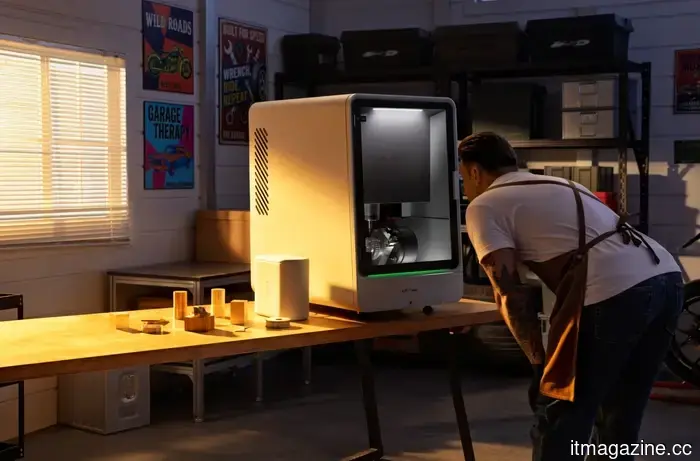 InfiMaker aims to make industrial manufacturing accessible on every desktop through the use of AI.
When individuals envision advanced manufacturing, they usually imagine expensive industrial machinery functioning within factories, rather than a small-scale setup.
InfiMaker aims to make industrial manufacturing accessible on every desktop through the use of AI.
When individuals envision advanced manufacturing, they usually imagine expensive industrial machinery functioning within factories, rather than a small-scale setup.
 Your physical copy of GTA 6 might become unusable before you have the chance to play it.
Rockstar has announced that download codes for GTA 6 on PS5 included in physical copies sold in Japan will become invalid 170 days after the game's launch because of regional regulations.
Your physical copy of GTA 6 might become unusable before you have the chance to play it.
Rockstar has announced that download codes for GTA 6 on PS5 included in physical copies sold in Japan will become invalid 170 days after the game's launch because of regional regulations.
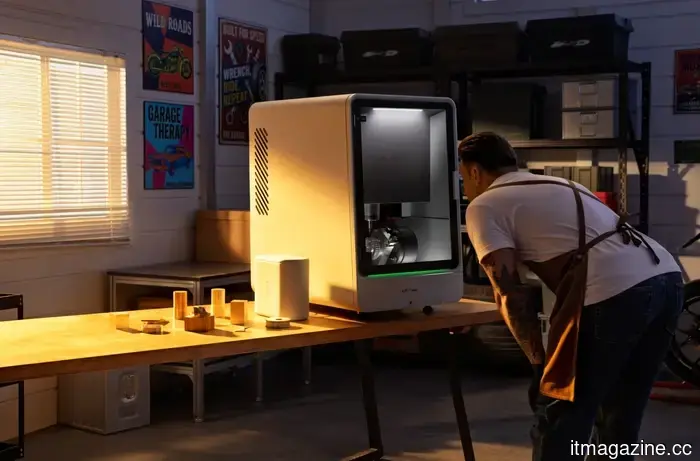 InfiMaker aims to make industrial manufacturing accessible on every desktop through the use of AI.
When individuals envision advanced manufacturing, they often imagine expensive industrial machinery functioning within large factories, rather than a small-scale setup.
InfiMaker aims to make industrial manufacturing accessible on every desktop through the use of AI.
When individuals envision advanced manufacturing, they often imagine expensive industrial machinery functioning within large factories, rather than a small-scale setup.
Tennessee alleges in front of the jury that Meta was aware that Instagram was detrimental to teenagers but chose to remain silent.
Tennessee informed a Nashville jury that Meta disregarded internal studies indicating that Instagram negatively affected teenagers, referencing a document from 2017. Meta asserts that it identifies issues in order to address them.