
Taiwan has apprehended an Nvidia employee as its investigation into chip smuggling extends to the semiconductor manufacturer.
Taiwan’s investigation into the smuggling of AI hardware, which began with Super Micro and has spent months examining the island's distributors, has now extended to Nvidia itself.
On July 28, prosecutors detained an Nvidia employee as part of the inquiry into whether restricted AI servers were being shipped to China, as reported by Bloomberg. This marks the first instance in which the expanding case has involved the company whose processors are central to it.
The employee, identified by local media as a senior business-development manager, was detained by the Keelung District Prosecutors’ Office, which has been leading the investigation since spring. Prosecutors claim he approved end-user and "know your customer" documents that facilitated the export review of restricted Nvidia servers before they were redirected to China, according to reports from Taiwanese media.
He has yet to be formally charged, and the allegations have not undergone judicial examination. This investigation initially represents the first criminal inquiry of its kind on the island.
The investigation developed from an unrelated matter. Coast Guard officers, while working on a drug-smuggling case, uncovered an underground supply chain, which has subsequently implicated Super Micro and several Taiwanese distribution and data-center partners.
Investigators reported that approximately 50 servers featuring Nvidia’s GB300 Grace Blackwell Ultra chips, valued at roughly NT$700 million or about $21 million, were seized in May. Prosecutors allege that shell companies placed the orders and that the servers were stored in a Taiwanese data center to make it appear as if they had never left the island before being forwarded through third countries. Previous reports indicated Japan as a potential transshipment location en route to Hong Kong and mainland China.
Due to the absence of a law in Taiwan that directly criminalizes the export of AI chips to China, prosecutors have relied on charges of document forgery and breach of trust. “While exporting AI chips to China is not illegal in Taiwan, it is under US law,” stated Chris McGuire, a fellow at the Council on Foreign Relations, to Bloomberg.
A proposed amendment to Taiwan’s Foreign Trade Act aims to address this gap, though it has not yet passed, leaving prosecutors to construct a smuggling case focused on paperwork violations rather than the exports themselves.
The detention expands a case that had previously centered on Super Micro. In May, prosecutors moved to detain three individuals, including Super Micro co-founder Yih-Shyan “Wally” Liaw, and continued to hold additional Super Micro staff through July. The company has stated it is cooperating with the investigation, does not consider itself a target, and suspended four employees based in Taiwan related to the issue.
The Taiwanese investigation runs parallel to a US case. In March, the Justice Department unsealed an indictment that accused a $2.5 billion scheme to divert Nvidia-powered servers to China using falsified documents and decoy shipments, with Liaw among those charged. This case focused on falsified end-user documents, unmarked boxes, and a pass-through company, tactics similar to the documentation violations currently pursued by Taiwanese prosecutors.
Since 2022, Washington has restricted sales of Nvidia’s advanced processors to China, and enforcement has struggled to keep up with demand, a situation highlighted by the dummy-server indictment.
Nvidia has consistently asserted that it complies with export controls and cannot service or support products that reach customers through illegal channels. Jensen Huang has described black-market data centers built from smuggled components as a dead end, arguing that diverted chips are virtually useless without the company’s ongoing technical support.
At the time of writing, the company had not publicly commented on its employee's detention. The next steps will be determined by the Keelung court, which will decide whether to keep the Nvidia employee in custody or grant bail while the inquiry continues. From its origins in a drug bust and a shipping container, the case has journeyed a significant distance up the supply chain.
Other articles
 New York school halts the deployment of humanoid robot 'Sally' following objections from the state and the union.
Salamanca halted its plans to place a Realbotix humanoid called Sally in a high school classroom after intervention from the state education commissioner.
New York school halts the deployment of humanoid robot 'Sally' following objections from the state and the union.
Salamanca halted its plans to place a Realbotix humanoid called Sally in a high school classroom after intervention from the state education commissioner.
 4 desk lamps I would genuinely suggest for your study setup this back-to-school season.
Desk lighting can significantly impact your study sessions. Here are four lamps that are definitely worth attaching to your workspace this back-to-school season.
4 desk lamps I would genuinely suggest for your study setup this back-to-school season.
Desk lighting can significantly impact your study sessions. Here are four lamps that are definitely worth attaching to your workspace this back-to-school season.
 Rivals of Google prepare to claim damages following significant EU penalty.
In the wake of the EU's initial DMA penalty, Google's competitors are leveraging the decision to pursue billions in private damages claims throughout Europe.
Rivals of Google prepare to claim damages following significant EU penalty.
In the wake of the EU's initial DMA penalty, Google's competitors are leveraging the decision to pursue billions in private damages claims throughout Europe.
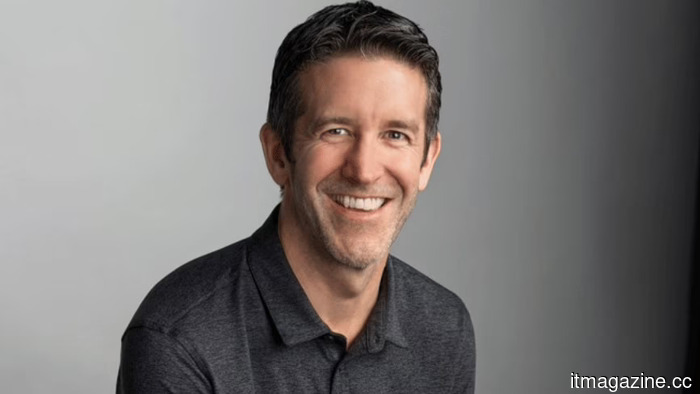 Apple's soon-to-be CEO aims to expand the company's ventures in film and television.
During the premiere of Ted Lasso, the new Apple CEO John Ternus indicated a commitment to maintaining continuity in a streaming division that, despite winning awards, continues to operate at a loss.
Apple's soon-to-be CEO aims to expand the company's ventures in film and television.
During the premiere of Ted Lasso, the new Apple CEO John Ternus indicated a commitment to maintaining continuity in a streaming division that, despite winning awards, continues to operate at a loss.
 Nike’s latest slide offers a spa-like experience for your feet.
Nike and Hyperice's latest Air Zoom Hyperslide combines plush Air Zoom cushioning with heat and vibration therapy, providing fatigued feet with an effective recovery experience following workouts, travel, or a long day.
Nike’s latest slide offers a spa-like experience for your feet.
Nike and Hyperice's latest Air Zoom Hyperslide combines plush Air Zoom cushioning with heat and vibration therapy, providing fatigued feet with an effective recovery experience following workouts, travel, or a long day.
 Orange increases annual projections due to the deal in Spain and growth in Africa.
Orange raised its 2026 EBITDAaL and cash flow projections following record growth in the first half, the complete consolidation of MasOrange, and a rapidly expanding business in Africa.
Orange increases annual projections due to the deal in Spain and growth in Africa.
Orange raised its 2026 EBITDAaL and cash flow projections following record growth in the first half, the complete consolidation of MasOrange, and a rapidly expanding business in Africa.
Taiwan has apprehended an Nvidia employee as its investigation into chip smuggling extends to the semiconductor manufacturer.
Prosecutors in Keelung, Taiwan, have arrested an Nvidia employee as part of the expanding investigation into AI servers that are reportedly being sent to China.