

The Claude chat you shared? Google might have seen it as well.
Public chat links have been indexed by Google, possibly revealing sensitive information shared with the AI.
If you have ever shared a conversation from Claude using a public link, it may be a good idea to review your privacy settings. This past weekend, users found that Claude chats and Artifacts shared publicly were appearing in Google Search and other search engines through queries like site:claude.ai/share. The indexed content reportedly included everything from resumes and business documents to API keys, health data, and other sensitive discussions that users likely did not expect to be searchable.
How did this occur?
Significantly, this situation didn't arise from a hack or a data breach; it was instead a result of utilizing Claude's built-in sharing feature.
Claude enables users to create a public share link, capturing a snapshot of a conversation accessible to anyone with the URL. This snapshot also includes any Artifacts, such as interactive documents, applications, or code generated during the discussion. While this feature is designed for collaborative purposes, users found that some of these public pages were indexed by search engines, making them findable through simple Google searches.
The issue gained visibility after Reddit users came across numerous searchable Claude conversations over the weekend. Many users assumed that “anyone with the link” meant the content would not show up in search results unless the URL was explicitly shared, leading to understandable confusion once it was revealed that Google had indexed the pages.
What are Anthropic and Google saying?
Anthropic has stated that this behavior was not due to a bug or data breach, but rather how their sharing feature is intended to function. The company informed TechCrunch that Claude chats are private by default and that they do not release chat directories or sitemaps to search engines. However, if a user shares a public Claude link on a website or social media platform that allows crawling, search engines can index it like any other publicly accessible webpage.
According to the company's Privacy Center, shared chats produce a public snapshot of the conversation, encompassing any Artifacts created prior to the link's generation. Users can revoke access at any time by navigating to Settings > Privacy > Shared Chats and unsharing the conversation. Still, previously indexed pages may continue appearing in search results or cached archives until they are refreshed.
Google, for its part, asserts that the responsibility lies with the website hosting the content. In a statement to TechCrunch, spokesperson Ned Adriance observed that search engines do not determine which pages are publicly accessible, emphasizing that Google provides website owners with tools to prevent crawling or indexing, and adheres to those directives. This incident serves as a crucial reminder that once content is made publicly available online, it can often be treated like any other webpage, even if it began as a private AI conversation.


Other articles
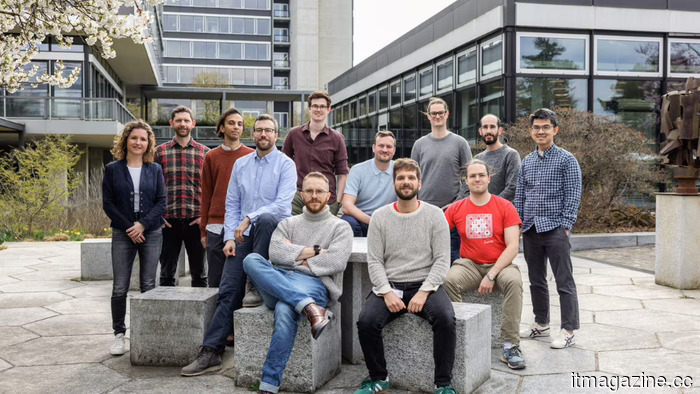 ZuriQ secures $25.5 million to expand its 2D quantum architecture.
ZuriQ, a spin-out from ETH Zürich, has secured $25.5 million in seed funding to expand its trapped-ion quantum processors designed with a native two-dimensional architecture.
ZuriQ secures $25.5 million to expand its 2D quantum architecture.
ZuriQ, a spin-out from ETH Zürich, has secured $25.5 million in seed funding to expand its trapped-ion quantum processors designed with a native two-dimensional architecture.
 According to the Financial Times, Nvidia is the unidentified tenant behind Hut 8’s $50 billion data center in Texas.
According to the Financial Times, Nvidia is the unidentified hyperscaler associated with Hut 8's Beacon Point leases in Texas, a transaction that has the potential to amount to $50 billion with renewals.
According to the Financial Times, Nvidia is the unidentified tenant behind Hut 8’s $50 billion data center in Texas.
According to the Financial Times, Nvidia is the unidentified hyperscaler associated with Hut 8's Beacon Point leases in Texas, a transaction that has the potential to amount to $50 billion with renewals.
 Tennessee informs the jury that Meta was aware Instagram was detrimental to teenagers and chose not to speak up.
Tennessee presented a Nashville jury with evidence that Meta overlooked internal studies indicating that Instagram was detrimental to teenagers, referencing a document from 2017. In response, Meta claims that it identifies issues in order to address them.
Tennessee informs the jury that Meta was aware Instagram was detrimental to teenagers and chose not to speak up.
Tennessee presented a Nashville jury with evidence that Meta overlooked internal studies indicating that Instagram was detrimental to teenagers, referencing a document from 2017. In response, Meta claims that it identifies issues in order to address them.
 New York school halts use of humanoid robot 'Sally' following pressure from the state and union.
Salamanca halted its plans to place a Realbotix humanoid called Sally in a high school classroom after intervention from the state education commissioner.
New York school halts use of humanoid robot 'Sally' following pressure from the state and union.
Salamanca halted its plans to place a Realbotix humanoid called Sally in a high school classroom after intervention from the state education commissioner.
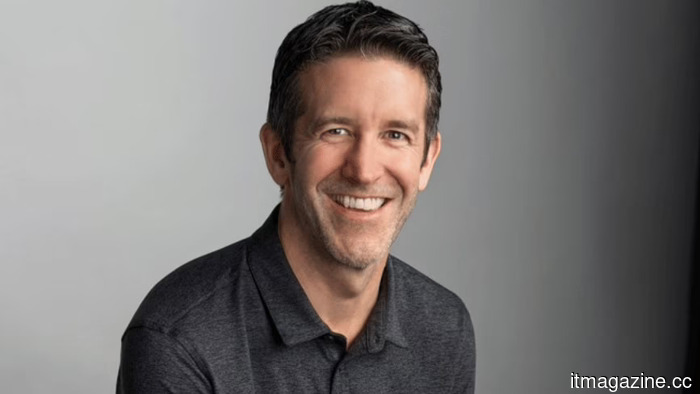 Apple's soon-to-be CEO aims to expand the company's ventures in film and television.
During the premiere of Ted Lasso, the new Apple CEO John Ternus indicated a commitment to maintaining continuity in a streaming division that, despite winning awards, continues to operate at a loss.
Apple's soon-to-be CEO aims to expand the company's ventures in film and television.
During the premiere of Ted Lasso, the new Apple CEO John Ternus indicated a commitment to maintaining continuity in a streaming division that, despite winning awards, continues to operate at a loss.
 Australia's groundbreaking data centre regulations have encountered their initial issue: the necessary power supply is not available yet.
Australia's initiative to transform data centres into net producers of clean energy has encountered an initial feasibility issue: the pace of renewable energy deployment is insufficient.
Australia's groundbreaking data centre regulations have encountered their initial issue: the necessary power supply is not available yet.
Australia's initiative to transform data centres into net producers of clean energy has encountered an initial feasibility issue: the pace of renewable energy deployment is insufficient.
The Claude chat you shared? Google might have seen it as well.
Public Claude chat links and artifacts were indexed by Google, revealing shared conversations online. Here's a summary of the situation and Anthropic's response.