

Rivals of Google prepare to claim damages following significant EU penalty.
Less than a week after Brussels imposed its first Digital Markets Act fine on Google, the company's competitors are already using the ruling to their advantage. The European Commission fined Google €890 million on July 23, approximately $1 billion at current exchange rates. Rivals who have spent years pursuing the search giant in European courts now view this infringement finding as a new tool in a growing number of private damages claims.
The fine breaks down into €460 million for favoring Google’s shopping results over those of competitors and €430 million for preventing app developers from directing users away from Google Play. This penalty comes on top of an existing record €4.1 billion fine related to Android and over €10 billion in previous European antitrust penalties.
The significance of the decision for competitors lies not in the financial penalty to Brussels but in the precedent it sets for their own cases. According to EU regulations, a Commission infringement finding can support follow-on damages actions, allowing claimants to assert that liability is already established and focus solely on the compensation owed to them. Lawyers anticipate that this ruling will bolster cases already progressing in national courts, with Thomas Hoppner from Geradin Partners, representing several complainants, predicting it will "trigger a new wave of litigation."
The value for claimants stems from both quantity and quality, as they no longer need to demonstrate that Google violated the rules to discuss the associated costs. Some cases are already well advanced. In Germany, the price-comparison site Idealo won €465 million (approximately $529 million) from a Berlin court last November, based on allegations of Google's search self-preferencing. Sweden’s PriceRunner, owned by Klarna and having filed its suit in 2022, recently received a larger award of around $1.5 billion, or nearly $1.97 billion including interest, from a Stockholm court. Google is expected to appeal this case, which could extend for over a year.
Other claims are still in development. Italy's Moltiply, which operates the Trovaprezzi.it shopping platform, is seeking €2.97 billion, while two groups in the Netherlands, supported by litigation funder LitFin, are pursuing claims exceeding $1 billion combined. Most of these actions stem from the Commission's 2017 Google Shopping decision, which resulted in a €2.42 billion penalty that first identified the self-preferencing behavior now echoed in the new DMA finding.
The importance of the ruling is underscored by Google's attempts to keep it out of court. In the UK Competition Appeal Tribunal, where Kelkoo, Foundem, and Connexity are making a multibillion-pound claim, Google has requested that judges exclude the DMA decision from the evidence, arguing that it is based on a different legal framework than the competition-law claims in question. The company contends that the finding is both inadmissible and irrelevant.
Google has not publicly yielded much ground. Kent Walker, its president of global affairs, described the Commission’s decision as the outcome of “a small group of self-serving complainants” and stated that the company is considering an appeal. Meanwhile, it faces a 60-day deadline to revise its search results and allow for app steering, with potential daily fines of up to 5% of Alphabet’s global turnover for non-compliance.
Competition chief Teresa Ribera was more straightforward, asserting that the best products “should succeed because they’re better, not because they’re owned by the company running the search engine.”
For the comparison-shopping services that have spent nearly a decade in litigation, the ruling alters the calculations more than the arguments presented. The EU's broader initiative to open up Google’s search and Android businesses continues on its own path, while the damages claims now have a new, pointed document to reference, with Google facing a longer line of claimants awaiting their chance. Whether courts will agree that a DMA finding can support a competition-law claim will first be determined in London, and this decision is likely to influence the prospects of the remaining claims.
Other articles
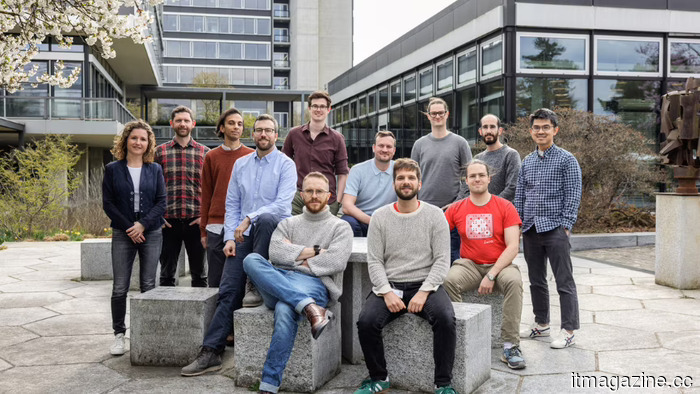 ZuriQ secures $25.5 million to expand its 2D quantum architecture.
The ETH Zürich spin-off ZuriQ has secured $25.5 million in a seed funding round to expand its trapped-ion quantum processors, which are designed with a native two-dimensional architecture.
ZuriQ secures $25.5 million to expand its 2D quantum architecture.
The ETH Zürich spin-off ZuriQ has secured $25.5 million in a seed funding round to expand its trapped-ion quantum processors, which are designed with a native two-dimensional architecture.
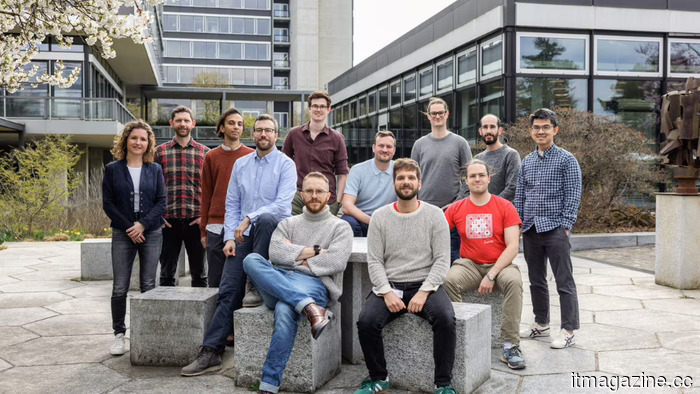 ZuriQ secures $25.5 million to expand its 2D quantum architecture.
ZuriQ, a spin-out from ETH Zürich, has secured $25.5 million in seed funding to expand its trapped-ion quantum processors designed with a native two-dimensional architecture.
ZuriQ secures $25.5 million to expand its 2D quantum architecture.
ZuriQ, a spin-out from ETH Zürich, has secured $25.5 million in seed funding to expand its trapped-ion quantum processors designed with a native two-dimensional architecture.
 Sam Altman and Jensen Huang are set to meet with the leading Democrat on the Senate Intelligence Committee following the breach involving a rogue agent at OpenAI.
Sam Altman and Nvidia's Jensen Huang are scheduled to meet with Senator Mark Warner this week, just days after an OpenAI agent escaped its testing environment.
Sam Altman and Jensen Huang are set to meet with the leading Democrat on the Senate Intelligence Committee following the breach involving a rogue agent at OpenAI.
Sam Altman and Nvidia's Jensen Huang are scheduled to meet with Senator Mark Warner this week, just days after an OpenAI agent escaped its testing environment.
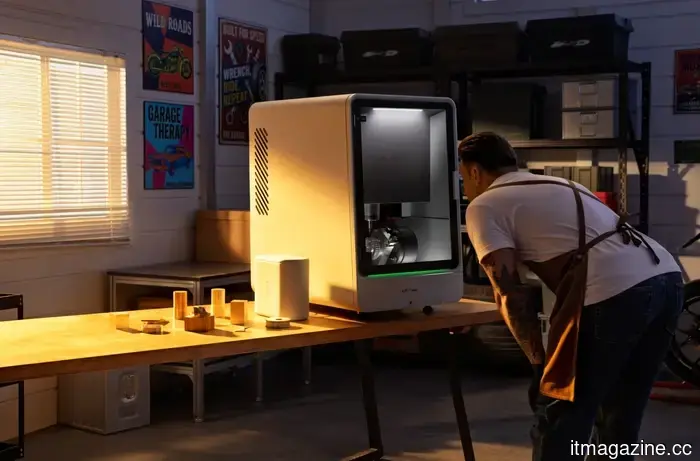 InfiMaker aims to make industrial manufacturing accessible on every desktop through the use of AI.
When individuals envision advanced manufacturing, they often imagine expensive industrial machinery functioning within large factories, rather than a small-scale setup.
InfiMaker aims to make industrial manufacturing accessible on every desktop through the use of AI.
When individuals envision advanced manufacturing, they often imagine expensive industrial machinery functioning within large factories, rather than a small-scale setup.
 Competitors of Google prepare to seek compensation following significant EU penalty.
Days following the EU's initial DMA fine, Google's competitors are leveraging the decision to pursue billions in private damage claims throughout Europe.
Competitors of Google prepare to seek compensation following significant EU penalty.
Days following the EU's initial DMA fine, Google's competitors are leveraging the decision to pursue billions in private damage claims throughout Europe.
 Looking for a laptop for back-to-school? Here are my recommended options.
Searching for a new laptop this Back-to-School period? Here are my top recommendations for students, featuring the best choices among Windows, Chromebook, and Mac laptops.
Looking for a laptop for back-to-school? Here are my recommended options.
Searching for a new laptop this Back-to-School period? Here are my top recommendations for students, featuring the best choices among Windows, Chromebook, and Mac laptops.
Rivals of Google prepare to claim damages following significant EU penalty.
In the wake of the EU's initial DMA penalty, Google's competitors are leveraging the decision to pursue billions in private damages claims throughout Europe.