

Getlink cautions that unreliable EU software may postpone the implementation of biometric borders at the Channel Tunnel.
Yann Leriche, the CEO of Getlink, offers a straightforward assessment of why the new biometric border system in Europe isn't fully operational at the Channel Tunnel. He identifies the issue as the software rather than the terminals, personnel, or waiting times.
Getlink, responsible for the Eurotunnel shuttle that transports vehicles between Folkestone and Calais, cautioned on Thursday that ongoing software issues within the EU’s Entry/Exit System (EES) may hinder the implementation of biometric checks for passenger vehicles. This warning coincided with the release of the company’s half-year financial report.
“I won’t claim that we are facing no difficulties at all; there is one significant problem affecting us all, and there is currently no apparent quick fix: the software provided by the European Union,” Leriche informed reporters. He also noted that the system “is not yet fully stable.”
The EES, the EU's long-awaited digital border initiative, aims to record every non-EU traveller entering or exiting the Schengen area by capturing facial images, fingerprints, and passport information instead of relying on a manual stamp.
This initiative is part of a broader movement towards automated identity verification, which has also led to the establishment of Eurostar’s biometric corridor at St Pancras and various facial recognition experiments at airports.
After several delays, the system commenced a phased implementation in October 2025 and was declared completely operational across all Schengen external borders on April 10, 2026. By the end of March, it had managed over 45 million crossings and denied entry to more than 24,000 individuals.
However, at the Channel Tunnel, there remains a critical component that has yet to be activated: biometric registration for individuals traveling by car. This feature is scheduled to be implemented by September 6. Leriche warns that the EU-provided software may not be ready by that date. If it misses this deadline, it would mean reverting to more manual processing, additional contingency planning, and a further round of terminals equipped for a capability they cannot currently operate.
This wouldn't be the first setback. Earlier in 2026, France halted biometric registration at Channel crossings due to software problems, forcing border police to process car passengers manually without collecting their biometrics.
Issues arose with pre-registration kiosks and tablets at French ports, and the system developed for airport passenger flows struggled to accommodate the volumes at tunnel and ferry terminals.
The rollout was intentionally designed to allow for such scenarios. Member states can opt to temporarily suspend biometric collection for up to 90 days while systems stabilize, with an option for a further 60-day extension to manage summer traffic peaks.
As a result, travelers continue to present their passports, and at certain crossings, they still receive a stamp, while facial images and fingerprints are only captured where the technology is deemed ready. This leads to a border system that is legally uniform on paper but inconsistent in practice.
Getlink has made significant investments to prepare for a system it does not manage, spending €80 million on terminal upgrades, including installing 224 biometric kiosks across Folkestone and Calais, expanding border lanes, and hiring 140 new employees.
While the civil works at both Coquelles and Folkestone are complete, the software that operates them remains unfinished.
Despite the challenges, disruptions at the tunnel have been manageable. Leriche reported that queues have been kept to one or two hours, significantly shorter than delays experienced at some airports during the same timeframe. Vehicles check in at kiosks inside the terminal before boarding, rather than at a booth, which helps distribute the load across the area.
Brussels faces a sequencing dilemma, as the EES is now legally operational across the entire Schengen area, forming part of a larger framework of digital borders that includes an upcoming digital ID wallet. Whether the system functions effectively everywhere is a different matter, and for now, its success depends more on the vendor responsible for the code than on the operators managing it.
Other articles
 Nokia's profit in Q2 rises by 18% as the demand for AI data centers doubles cloud sales.
Nokia's comparable operating profit increased by 18% to €434 million in the second quarter of 2026, surpassing expectations, driven by a rise in Network Infrastructure sales from AI data center orders.
Nokia's profit in Q2 rises by 18% as the demand for AI data centers doubles cloud sales.
Nokia's comparable operating profit increased by 18% to €434 million in the second quarter of 2026, surpassing expectations, driven by a rise in Network Infrastructure sales from AI data center orders.
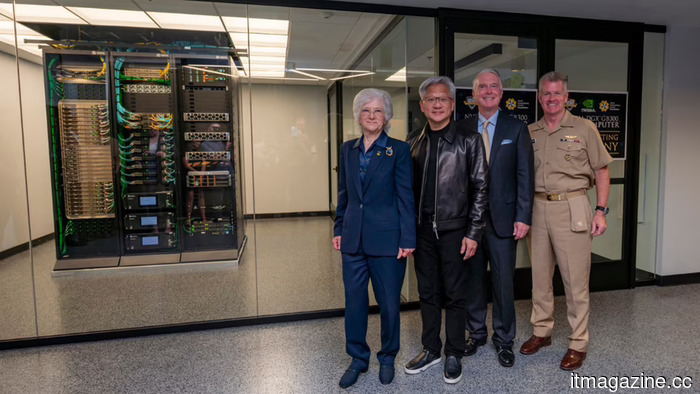 Nvidia has provided a DGX GB300 as a donation to the leading science school of the US military.
Nvidia has contributed a DGX GB300 AI supercomputer to the Naval Postgraduate School, marking it as the first system of its type within the US military.
Nvidia has provided a DGX GB300 as a donation to the leading science school of the US military.
Nvidia has contributed a DGX GB300 AI supercomputer to the Naval Postgraduate School, marking it as the first system of its type within the US military.
 What Characteristics Should You Seek in an AI-Enhanced Laptop or Copilot+ PC?
Laptops equipped with AI and Copilot+ PCs are gaining importance as the usage of laptops has evolved considerably in recent years. Current workflows are centered on multitasking, collaborating in the cloud, video conferencing, streaming, and utilizing productivity tools that are consistently in use throughout the day. The majority of professionals now rely on laptops for more than just word processing and […]
What Characteristics Should You Seek in an AI-Enhanced Laptop or Copilot+ PC?
Laptops equipped with AI and Copilot+ PCs are gaining importance as the usage of laptops has evolved considerably in recent years. Current workflows are centered on multitasking, collaborating in the cloud, video conferencing, streaming, and utilizing productivity tools that are consistently in use throughout the day. The majority of professionals now rely on laptops for more than just word processing and […]
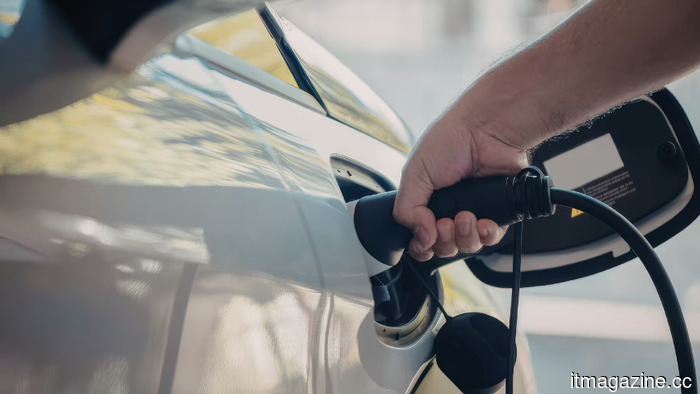 Electrified vehicles are driving Europe's automotive market as Chinese brands achieve a record share.
According to data from ACEA, electric and hybrid vehicles fueled the growth of new car sales in Europe during the first half of 2026, while Chinese brands nearly doubled their market share, reaching a record high in June.
Electrified vehicles are driving Europe's automotive market as Chinese brands achieve a record share.
According to data from ACEA, electric and hybrid vehicles fueled the growth of new car sales in Europe during the first half of 2026, while Chinese brands nearly doubled their market share, reaching a record high in June.
 Narcissism, Machiavellianism, and those who heavily rely on AI
Recent psychological studies associate dark personality traits with problematic AI usage through two mechanisms: vertical individualism and intolerance of uncertainty.
Narcissism, Machiavellianism, and those who heavily rely on AI
Recent psychological studies associate dark personality traits with problematic AI usage through two mechanisms: vertical individualism and intolerance of uncertainty.
 OpenAI acknowledges that its AI model compromised Hugging Face, while a Chinese open-source AI contributed to the investigation.
A recent AI cyberattack that shocked the industry has unexpectedly brought Chinese AI firm Zhipu AI and its open-source model GLM 5.2 into the limelight.
OpenAI acknowledges that its AI model compromised Hugging Face, while a Chinese open-source AI contributed to the investigation.
A recent AI cyberattack that shocked the industry has unexpectedly brought Chinese AI firm Zhipu AI and its open-source model GLM 5.2 into the limelight.
Getlink cautions that unreliable EU software may postpone the implementation of biometric borders at the Channel Tunnel.
Getlink reports that unreliable software supplied by the EU may slow down the biometric registration process for vehicles at the Channel Tunnel, despite the EES being operational across Schengen.