
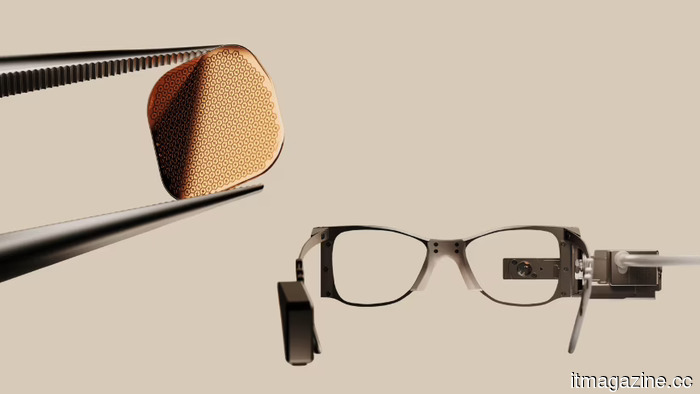
A retina chip designed to restore vision is now available for purchase in Europe.
Geographic atrophy represents the most severe type of age-related macular degeneration. For many individuals experiencing this condition, the central vision gradually dims. Faces become indistinct, and words fade away. Currently, there is no cure, only therapies that slow down the progression. However, a small chip is starting to restore some vision.
Science Corp, located in Alameda, California, announced its plan to begin selling the Prima implant in Europe. This device is a chip that is positioned at the back of the eye and operates in conjunction with a pair of specialized glasses.
These glasses emit near-infrared light to the chip, which then transforms it into signals for the retina. A "zoom" function enables patients to enlarge letters. As noted by Bloomberg, the Prima has received a CE mark from DEKRA, the notified body, allowing it to be sold in 30 different European countries.
This achievement is significant not only from a medical standpoint but also as it marks the first widely available device from a US brain-implant company. Interestingly, the company that has achieved this milestone is not the most well-known. Science is the second most valuable brain-implant company in the US, trailing behind Elon Musk’s Neuralink. Its founder, Max Hodak, was involved in the inception of Neuralink before establishing this venture.
“This represents the beginning of what we hope will be a long series of commercial products that will progressively advance this field, sometimes in small steps, but persistently,” Hodak stated in an interview.
The key term here is commercial. Companies developing brain implants have conducted trials for years, but selling a device to everyday patients marks a significant threshold.
The chip's capabilities
The trial that led to the device's approval was small yet notable. Featured in the New England Journal of Medicine, it monitored 38 patients across 17 locations in five countries. On average, these participants improved by 25.5 letters, which equates to more than five lines on a traditional eye chart. Additionally, 84% of them were able to read letters, numbers, and words again. However, it is important to note that this is not a cure.
Geographic atrophy caused by AMD affects over five million individuals globally. Nevertheless, it represents a genuine restoration of function. Science has secured $489 million in funding with a valuation of $1.5 billion.
Europe first, America later
The geographical aspect is noteworthy. Science anticipates its first commercial patient by August, likely in Germany, followed by numerous others this year and around 200 more next year.
The US market will come later, as the company collaborates with the Food and Drug Administration and hopes to launch in the US next year. The Prima already has FDA Breakthrough Device and Humanitarian Use Device designations, both of which are designed to expedite treatment for specific high-need cases.
Meanwhile, China has declared brain technology a national priority and has approved its initial implant. The race on a global scale is attracting billions in investment. The science that can restore vision is on the verge of becoming available. The next question concerns its pricing and availability: for now, the answer is straightforward: Europe, with the cost yet to be determined.
Other articles
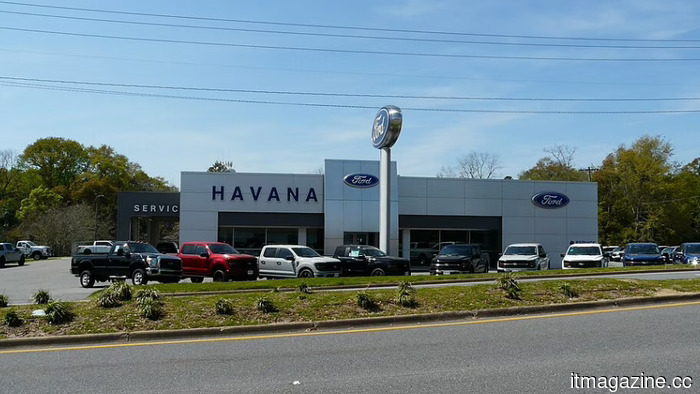 Ford and Geely will collaborate on the production of electric vehicles at Ford's facility in Spain. Ford holds a 66% stake, while Geely owns 34%.
Ford and Geely have revealed a partnership to manufacture electric vehicles at Ford's Valencia facility, with Ford owning a 66% stake. Four models are expected to be launched by 2028, and operations are set to commence in the first half of 2027.
Ford and Geely will collaborate on the production of electric vehicles at Ford's facility in Spain. Ford holds a 66% stake, while Geely owns 34%.
Ford and Geely have revealed a partnership to manufacture electric vehicles at Ford's Valencia facility, with Ford owning a 66% stake. Four models are expected to be launched by 2028, and operations are set to commence in the first half of 2027.
 AI is starting to be the source of our emotional support, and that concerns me.
A study revealed that top AI chatbots can surpass humans in alleviating anger and fear, prompting unsettling questions about whom we rely on more during challenging times.
AI is starting to be the source of our emotional support, and that concerns me.
A study revealed that top AI chatbots can surpass humans in alleviating anger and fear, prompting unsettling questions about whom we rely on more during challenging times.
 The postponement of Google's Gemini highlights a more significant issue: employee morale.
Insiders informed Axios that low morale, a disputed Pentagon agreement, and a talent drain are hindering Google's AI models, leading to negative cash flow. Google refutes these claims.
The postponement of Google's Gemini highlights a more significant issue: employee morale.
Insiders informed Axios that low morale, a disputed Pentagon agreement, and a talent drain are hindering Google's AI models, leading to negative cash flow. Google refutes these claims.
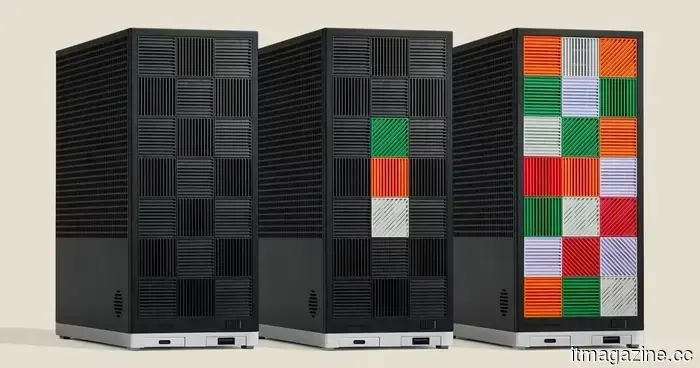 The Framework Desktop combines Ryzen AI Max, supports up to 192GB of RAM, and incorporates local AI into a compact PC.
Framework has showcased a new Desktop model equipped with 192GB of RAM and a powerful new processor, designed for running large AI models from home. Here’s what we’ve learned up to this point.
The Framework Desktop combines Ryzen AI Max, supports up to 192GB of RAM, and incorporates local AI into a compact PC.
Framework has showcased a new Desktop model equipped with 192GB of RAM and a powerful new processor, designed for running large AI models from home. Here’s what we’ve learned up to this point.
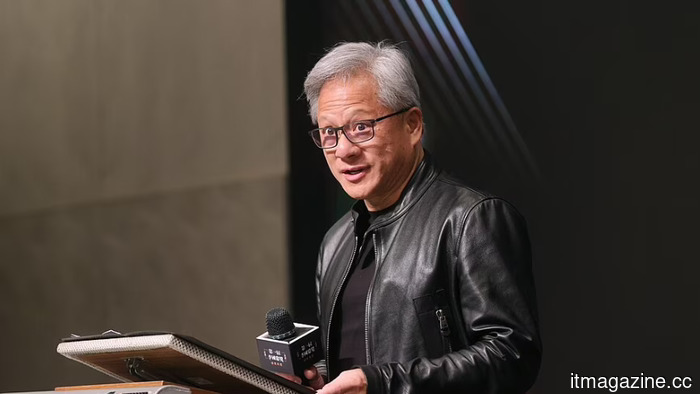 Jensen Huang describes the anxiety surrounding AI jobs as 'utter nonsense.'
Jensen Huang from Nvidia stated to Axios that concerns about widespread job losses due to AI are 'utter nonsense'. He emphasized that one should not confuse their specific tasks with their overall job.
Jensen Huang describes the anxiety surrounding AI jobs as 'utter nonsense.'
Jensen Huang from Nvidia stated to Axios that concerns about widespread job losses due to AI are 'utter nonsense'. He emphasized that one should not confuse their specific tasks with their overall job.
 The surge in artificial intelligence has led to an 80% increase in investment proposals in Thailand.
Foreign investors sought to invest $40.6 billion in Thailand in the first half of the year, an increase of 80%, with artificial intelligence and data centers accounting for three-quarters of the total investment.
The surge in artificial intelligence has led to an 80% increase in investment proposals in Thailand.
Foreign investors sought to invest $40.6 billion in Thailand in the first half of the year, an increase of 80%, with artificial intelligence and data centers accounting for three-quarters of the total investment.
A retina chip designed to restore vision is now available for purchase in Europe.
Science Corp's Prima retina implant has regained partial vision and has received EU approval, marking it as the first brain-implant device from the US to be available to regular patients.