
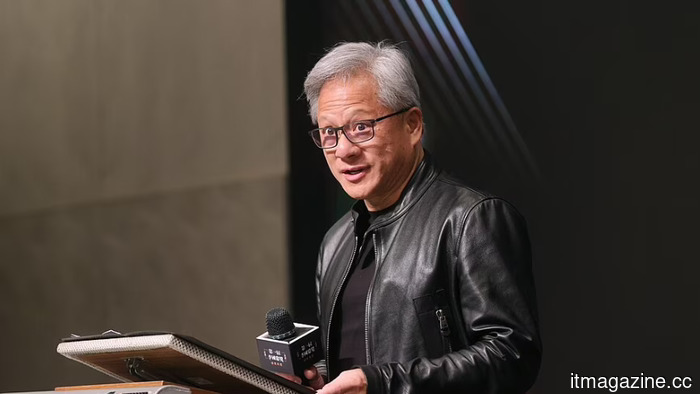
Jensen Huang describes the anxiety surrounding AI jobs as 'utter nonsense.'
Jensen Huang is aware of the warnings but chooses to dismiss them. As the head of Nvidia, which is the most valuable company globally due to the AI surge, his assertion that the most dire predictions about this boom are “complete nonsense” raises the question of whether he is correct or merely defending his interests.
In a comprehensive interview with Axios' Mike Allen, Huang tackled two significant claims: that AI will annihilate humanity and that it will eliminate half of American jobs. He labeled both assertions as “complete nonsense,” arguing that “all of the evidence points exactly to the opposite.”
Huang’s main argument is more nuanced than the catchy phrase suggests. He acknowledges that while some jobs will change, people often conflate a specific task with an entire job.
Do not confuse your task with your job
This is advice he shares with young individuals.
“Don’t mistake your task for the job.” For instance, a radiologist's task involves analyzing scans, which AI can largely handle. However, he contends that the actual job entails alleviating suffering and supporting patients, which does not disappear alongside the automation of scan reading. While some roles will likely be lost, he acknowledged that jobs in call centers are “very likely” to become highly automated, yet the decision-making aspect remains a human responsibility.
He provided some statistics. The number of radiologists is growing by about 20%, he stated, due to AI allowing each one to treat more patients, a claim supported by others. Paralegal positions have increased by around 10%.
He claimed that manufacturing jobs have surged by nearly 50% in recent years, driven by the industry's push to construct data centers. Huang bluntly reframed the fearful narrative, asserting, “AI is not going to destroy all of our jobs; rather, someone who utilizes AI is going to take your jobs.”
A critique of his peers
His pointed critique was directed at specific targets.
When asked why opinions in Asia about AI are more optimistic, Huang attributed it to “doomsayers” who “spend too much time theorizing about these science fiction outcomes,” which “makes them appear knowledgeable.” Although he softened when asked if he meant fellow AI leaders, the intent was evident.
Discussions about singularity, simulations, and machine consciousness are, in his view, “all fabricated.” He added, “It’s fine to warn people; however, making things up is completely inappropriate.”
Huang conveyed the same message in Washington, stating that AI is not a “100-meter dash” with a single victor, and he warned policymakers against overreacting to these narratives.
His recommendation to the Trump administration was to consult several scientists rather than just one or two. He even dismissed the notion of the government acquiring a stake in Nvidia as “unnecessary.”
The optimist’s perspective
Huang’s optimistic outlook is broad. He anticipates a trillion AI agents operating simultaneously and suggests that the “ChatGPT moment” for robots has already arrived, with practical machines potentially just three to four years away. He acknowledged that an AI bubble “will come someday,” but emphasized that it is “just not today,” and likely not within the next five years.
His counter-narrative is refreshing, and Huang has every incentive to promote it, as more AI translates to greater demand for Nvidia chips. His employment statistics are framed from his viewpoint, while competitors like Anthropic’s Dario Amodei still predict contrasting outcomes.
Nonetheless, his primary distinction is difficult to overlook. Automation has transformed jobs in the past without resulting in their elimination, and the notion that “someone who uses AI is going to take your jobs” is a more realistic concern than fears of a robot insurrection.
Huang believes the pessimism is merely a narrative. The critical question remains whether people will accept his perspective before they react to the alternative.
Other articles
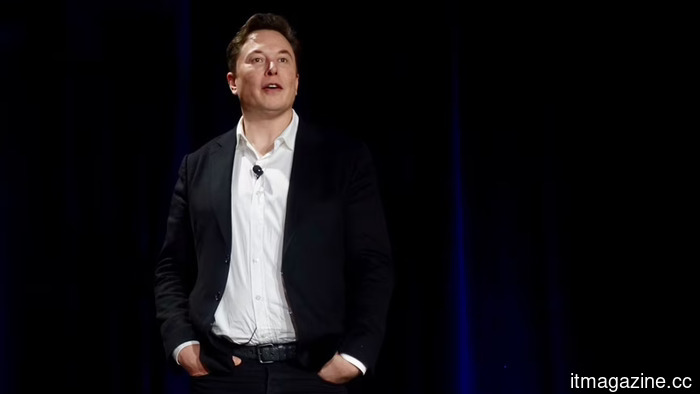 Musk expresses gratitude to Micron for the chips and constructs a factory to take its place.
Elon Musk expressed gratitude to Micron for a 'substantial' memory-chip allocation during Tesla's earnings call, all while he is developing Terafab, a $55 billion chip manufacturing facility for Tesla and SpaceX.
Musk expresses gratitude to Micron for the chips and constructs a factory to take its place.
Elon Musk expressed gratitude to Micron for a 'substantial' memory-chip allocation during Tesla's earnings call, all while he is developing Terafab, a $55 billion chip manufacturing facility for Tesla and SpaceX.
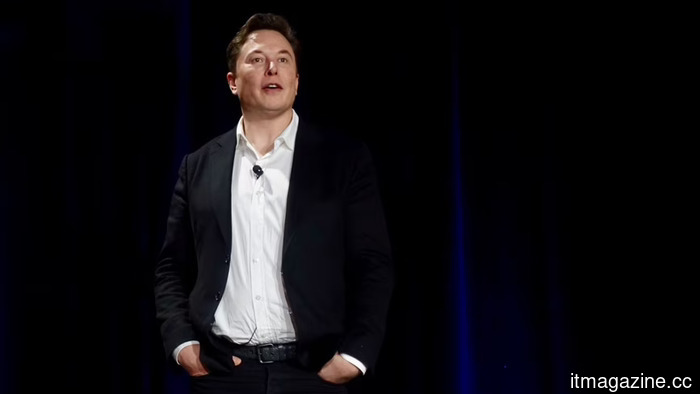 Musk expresses gratitude to Micron for the chips and establishes a fabrication facility to take its place.
Elon Musk expressed gratitude to Micron for a 'substantial' memory-chip allocation during Tesla's earnings call, while simultaneously developing Terafab, a $55 billion chip manufacturing facility for Tesla and SpaceX.
Musk expresses gratitude to Micron for the chips and establishes a fabrication facility to take its place.
Elon Musk expressed gratitude to Micron for a 'substantial' memory-chip allocation during Tesla's earnings call, while simultaneously developing Terafab, a $55 billion chip manufacturing facility for Tesla and SpaceX.
 The postponement of Google's Gemini highlights a more significant issue: employee morale.
Insiders informed Axios that low morale, a disputed Pentagon agreement, and a talent drain are hindering Google's AI models, leading to negative cash flow. Google refutes these claims.
The postponement of Google's Gemini highlights a more significant issue: employee morale.
Insiders informed Axios that low morale, a disputed Pentagon agreement, and a talent drain are hindering Google's AI models, leading to negative cash flow. Google refutes these claims.
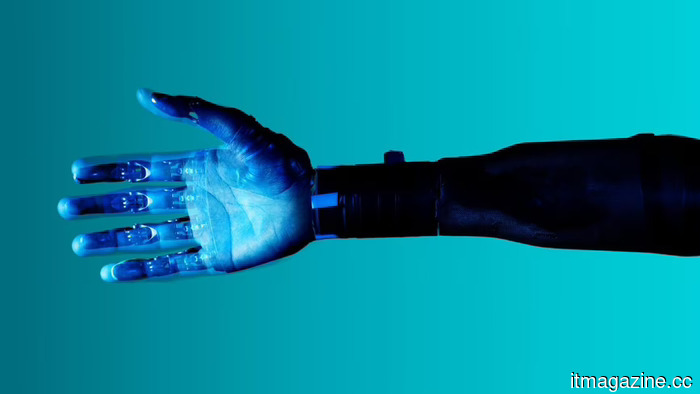 Nvidia's open-source simulator reduces the training time for robots to just 2 minutes.
Nvidia has released a medical-physics simulator as open-source software that reduces the training time for surgical robots from 5 hours to less than 2 minutes. Medtronic and J&J are currently utilizing this technology.
Nvidia's open-source simulator reduces the training time for robots to just 2 minutes.
Nvidia has released a medical-physics simulator as open-source software that reduces the training time for surgical robots from 5 hours to less than 2 minutes. Medtronic and J&J are currently utilizing this technology.
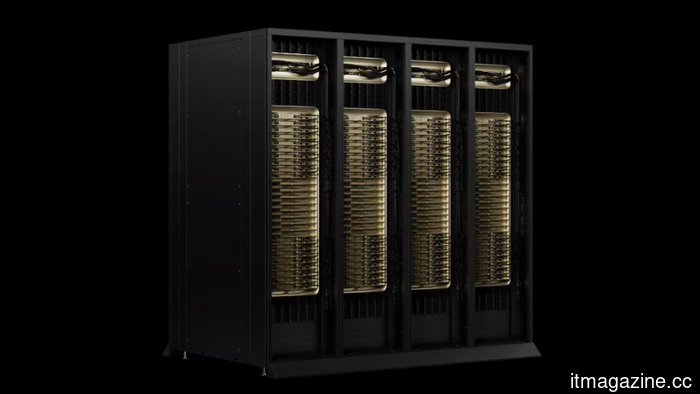 The US military acquires its inaugural Nvidia GB300 AI supercomputer.
Nvidia has contributed a DGX GB300 supercomputer to the Naval Postgraduate School, marking a military first, to educate officers on the applications and limitations of AI.
The US military acquires its inaugural Nvidia GB300 AI supercomputer.
Nvidia has contributed a DGX GB300 supercomputer to the Naval Postgraduate School, marking a military first, to educate officers on the applications and limitations of AI.
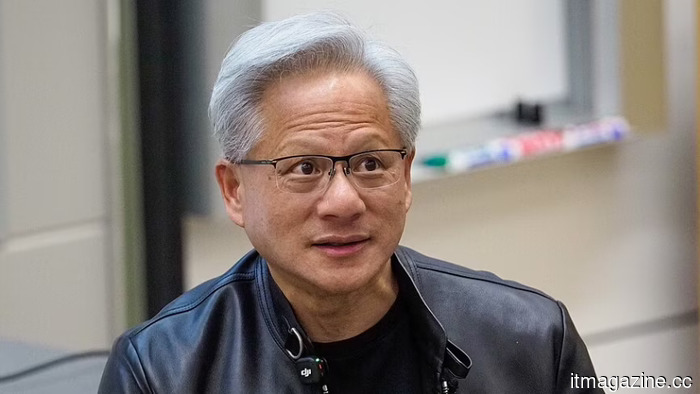 Jensen Huang earned $172 billion from the sale of AI chips. He recently donated $75 million to an art school.
Nvidia's CEO Jensen Huang contributed $75 million to Vanderbilt University for a college focusing on art, architecture, and design in San Francisco. The college is set to launch next year at the previous CCA campus.
Jensen Huang earned $172 billion from the sale of AI chips. He recently donated $75 million to an art school.
Nvidia's CEO Jensen Huang contributed $75 million to Vanderbilt University for a college focusing on art, architecture, and design in San Francisco. The college is set to launch next year at the previous CCA campus.
Jensen Huang describes the anxiety surrounding AI jobs as 'utter nonsense.'
Jensen Huang from Nvidia stated to Axios that concerns about widespread job losses due to AI are 'utter nonsense'. He emphasized that one should not confuse their specific tasks with their overall job.