
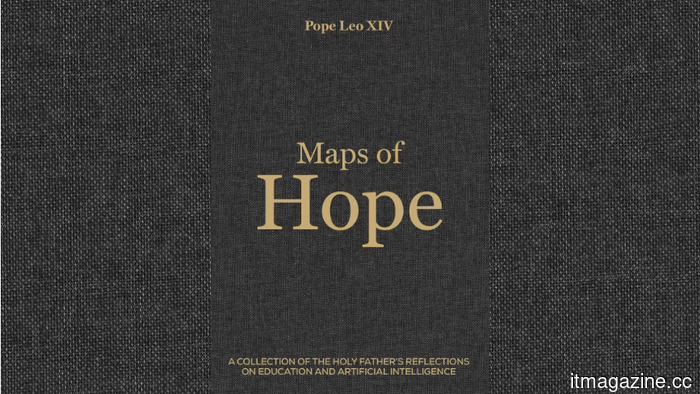
Pope Leo's texts were verified as human by AI detection tools.
To counter allegations that a machine assisted in crafting his messages, an anti-AI Pope turned to an unexpected ally: AI itself. An Australian company has validated that Pope Leo XIV's writings are human-generated, utilizing a range of detection tools developed by the technology.
Pope Leo XIV has prominently featured AI in his discourse. His inaugural encyclical, Magnifica Humanitas, released in May, cautioned against the potential for technology to overpower humanity. A newly certified compilation of his thoughts on education and AI, titled Maps of Hope, has been confirmed as authored by humans.
The uncomfortable context
This certification emerged after a troubling incident. Shortly after the encyclical's release, AI researcher Linch Zhang claimed in a widely circulated analysis that elements of it bore AI characteristics. He referenced the frequent use of em dashes, the term “genuinely,” and rhetorical triads, suggesting that the likely source was Anthropic’s AI model, Claude.
The detection tool Pangram identified some passages as problematic. The Verge posed a pertinent question: did the Pope utilize AI to discuss AI's perils? Zhang clarified that it was likely Vatican officials, rather than Leo himself, who may have used AI. The Vatican did not validate this assertion, and it remained unproven.
Introducing the human certifiers
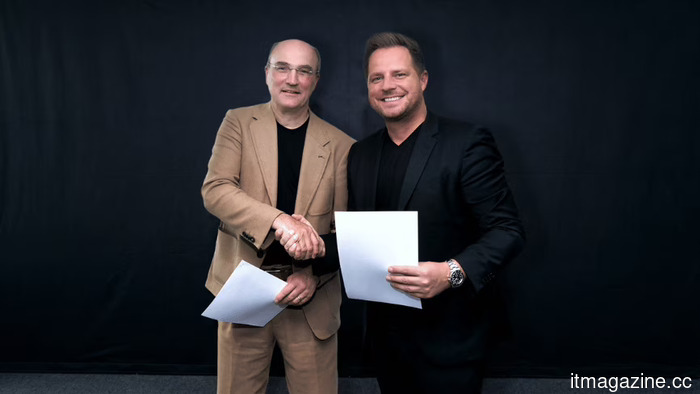
The latest updates from the EU tech landscape, insights from our founder Boris, and some dubious AI-generated art are available. Subscribe now for weekly delivery to your inbox! This backdrop sets the stage for the new validation. Proudly Human is led by Alan Finkel, Australia’s former chief scientist. It confirmed that Maps of Hope is human-written and awarded it the organization's trust mark. The book was produced by the Australian Catholic University in collaboration with the Vatican’s Dicastery for Culture and Education, featuring a foreword by Cardinal José Tolentino de Mendonça.
Finkel describes the certification as central to the initiative. “With the Pope’s focus on AI and human authorship, it indicates that this is no longer a niche discussion,” he stated. “It’s the defining issue of our time.”
The certification process involves both paperwork and technology. Authors must verify their identities and declare that AI did not compose the initial draft or any sentences. Proudly Human then analyzes the text using what Finkel describes as “a suite of four or five” AI detection tools, alongside its own averaging algorithm. The assessment concluded that the collection was “essentially entirely human.” In essence, the validation of humanity relies on machinery.
A 'fundamental right'
Finkel argues that, in the absence of legal requirements forcing authors to disclose AI utilization, readers have the right to know who or what generated a text. “I believe it’s a fundamental right,” he asserted. This is particularly true for religious leaders, he claimed, as congregations expect authentic wisdom from those delivering sermons.
This demand underscores an increasing desire for assurance that a person, rather than a program, created the work. However, a downside exists: AI detection is not a settled science. Detection tools can yield inconsistent results and make errors.
The limitations of detectors
The Atlantic has cautioned that excessive reliance on tools like Pangram could lead to a witch hunt mentality. Some human writers may be flagged simply because AI has adapted to mimic their style. Thus, a certificate's reliability hinges on the detectors employed, which remain imperfect.
This situation illustrates the trajectory of the ongoing debate about AI. As machine-generated content proliferates online, provenance is becoming a vital measure of trust and an emerging business opportunity. Proudly Human markets its certification as the organic or fair-trade equivalent for human writing. That the Pope serves as the test case, with an AI detection tool acting as the referee, only emphasizes this point.
Other articles
 NEURA is constructing gyms to prepare robots for real-world applications.
NEURA Robotics is launching a network of 'gyms' where robots can train in real-world conditions. Their belief is that the main limitation of Physical AI lies in experience rather than intelligence.
NEURA is constructing gyms to prepare robots for real-world applications.
NEURA Robotics is launching a network of 'gyms' where robots can train in real-world conditions. Their belief is that the main limitation of Physical AI lies in experience rather than intelligence.
 Instagram is finally providing a soundtrack revamp for your old posts.
Instagram's new Replace Audio feature lets users change the music on already posted feed posts and carousels while maintaining their engagement.
Instagram is finally providing a soundtrack revamp for your old posts.
Instagram's new Replace Audio feature lets users change the music on already posted feed posts and carousels while maintaining their engagement.
 China's shortage of AI talent has led tech giants to recruit teenagers.
Chinese AI firms are facing a shortage of engineers, prompting them to seek talent starting from the age of 13 through camps, mentorship programs, and even guaranteed employment immediately after high school.
China's shortage of AI talent has led tech giants to recruit teenagers.
Chinese AI firms are facing a shortage of engineers, prompting them to seek talent starting from the age of 13 through camps, mentorship programs, and even guaranteed employment immediately after high school.
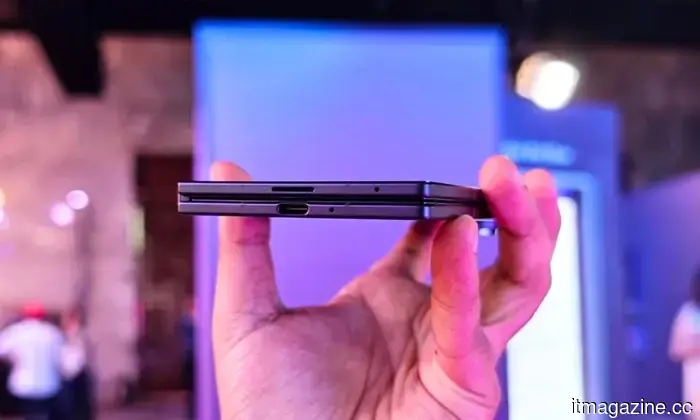 The Galaxy Z Fold 8 Ultra arrives featuring an improved display, a larger battery, and a $100 increase in price.
The new Galaxy Z Fold 8 Ultra from Samsung begins at $2,099.99 and features a clearer display, a larger battery, and an enhanced ultrawide camera, all within a marginally slimmer design.
The Galaxy Z Fold 8 Ultra arrives featuring an improved display, a larger battery, and a $100 increase in price.
The new Galaxy Z Fold 8 Ultra from Samsung begins at $2,099.99 and features a clearer display, a larger battery, and an enhanced ultrawide camera, all within a marginally slimmer design.
.jpg) 9 top requirements management tools for the development of medical devices (2026)
Nine tools for managing requirements in medical device development, evaluated based on traceability, support for compliance, and readiness for FDA and EU MDR regulations.
9 top requirements management tools for the development of medical devices (2026)
Nine tools for managing requirements in medical device development, evaluated based on traceability, support for compliance, and readiness for FDA and EU MDR regulations.
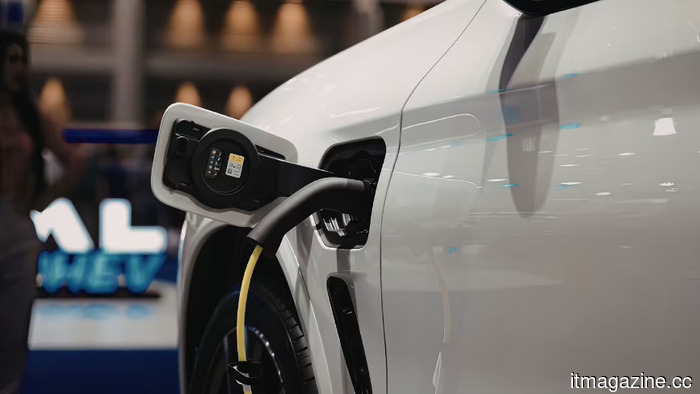 In June, electric vehicle sales in Europe skyrocketed by almost 40 percent, with market share exceeding 25 percent.
In June, battery-electric vehicle registrations reached 275,060 in 17 European countries, leading to first-half sales surpassing 1,240,000 and a market share exceeding 25 percent.
In June, electric vehicle sales in Europe skyrocketed by almost 40 percent, with market share exceeding 25 percent.
In June, battery-electric vehicle registrations reached 275,060 in 17 European countries, leading to first-half sales surpassing 1,240,000 and a market share exceeding 25 percent.
Pope Leo's texts were verified as human by AI detection tools.
To demonstrate that the anti-AI Pope’s statements were composed by a human, Australia’s Proudly Human verified his writings with a set of the AI detectors that have emerged from AI technology.