

NEURA is constructing gyms to prepare robots for real-world applications.
NEURA Robotics is establishing "gyms" where robots can train in real-world environments, beginning with two universities in Germany. The company's belief is that the limitation for humanoids is not their intelligence, but rather a lack of practical experience.
The German robotics company NEURA has devised a theory regarding the ongoing struggles of robots in real-world situations. The issue isn’t their lack of intelligence but rather inadequate practice. Their solution involves creating a series of gyms where robots can operate under realistic conditions.
NEURA has unveiled its plans for a training center in collaboration with RWTH Aachen University, one of Germany's premier engineering institutions. The NEURA Gym RWTH Aachen will span approximately 3,000 square meters at the Hightech Campus Melaten and is set to launch by the end of 2026, with around 20 of the university's institutes participating.
This is part of a broader expansion initiative. There are plans for ten gyms, with five expected to be operational by the end of 2026 across Europe, the United States, and China. A second major facility, the TUM RoboGym, will be inaugurated at Munich Airport later this year in partnership with the Technical University of Munich, supported by a €17 million investment.
The rationale behind the need for a robot gym is rooted in a data deficiency. While large language models learn from trillions of online words, robots only access a minuscule fraction of that data, which is also more challenging to gather. Although simulations are beneficial, they cannot perfectly replicate the friction and complexities of an actual factory environment.
Therefore, NEURA aims for robots to engage in real practice sessions. The gyms will combine hands-on practice with high-fidelity simulations, subsequently feeding the generated training data into the Neuraverse, its cloud platform connecting robots, developers, and clients. “The biggest bottleneck in Physical AI is no longer intelligence; it’s experience,” stated founder and CEO David Reger.
The strategic location choice is intentional. NEURA contends that the presence of two prominent German universities makes the country a cornerstone of Europe’s physical-AI framework. RWTH’s rector, Ulrich Rüdiger, emphasized it as a means of "securing Germany’s leading position in the global AI competition."
This argument comes at a critical time, as NEURA positions itself as a pioneer in developing Physical AI "from Europe," showcasing a message of sovereignty amidst significant investments in humanoid robots from the United States and China. They have the financial backing to support their ambitions, having closed a $1.4 billion Series C round in June with participation from NVIDIA, Qualcomm, Amazon, and Bosch.
However, the vision remains largely theoretical at this point. Most of the gyms are not yet built, and the flagship facilities are not expected to open until late this year at the earliest. The model also requires industrial partners to contribute valuable industry knowledge, although NEURA asserts that each partner retains control over their data.
A more significant challenge exists at a higher level. Humanoids are still largely experimental in the realm of physical AI, and gym practice does not equate to reliable performance on a production line. Nevertheless, if experience is indeed the crucial competitive advantage, the entity that creates the gym controls the environment in which the robots learn.
Other articles
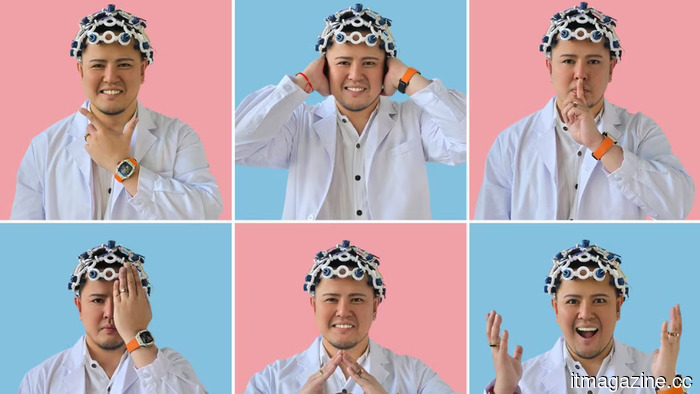 BCIs have the potential to establish a new form of digital divide, one based on biology.
As brain-computer interfaces transition from research settings to commercial applications, disparities in access could divide individuals not just by wealth or internet connectivity, but also by their physical and cognitive abilities.
BCIs have the potential to establish a new form of digital divide, one based on biology.
As brain-computer interfaces transition from research settings to commercial applications, disparities in access could divide individuals not just by wealth or internet connectivity, but also by their physical and cognitive abilities.
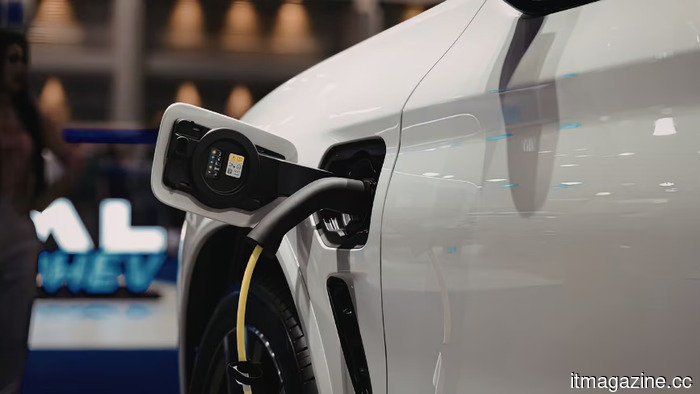 In June, electric vehicle sales in Europe jumped by nearly 40 percent, with their market share exceeding 25 percent.
In June, battery-electric vehicle registrations reached 275,060 in 17 European markets, leading to first-half sales exceeding 1,240,000 and a market share surpassing 25 percent.
In June, electric vehicle sales in Europe jumped by nearly 40 percent, with their market share exceeding 25 percent.
In June, battery-electric vehicle registrations reached 275,060 in 17 European markets, leading to first-half sales exceeding 1,240,000 and a market share surpassing 25 percent.
 Meta's AI moderation is incorrectly suspending accounts.
Meta's AI moderation is incorrectly removing accounts on Facebook and Instagram, and the typical method to contest an unjust ban usually involves additional AI.
Meta's AI moderation is incorrectly suspending accounts.
Meta's AI moderation is incorrectly removing accounts on Facebook and Instagram, and the typical method to contest an unjust ban usually involves additional AI.
 Pope Leo's texts were verified as human by AI detection tools.
To demonstrate that the anti-AI Pope’s statements were composed by a human, Australia’s Proudly Human verified his writings with a set of the AI detectors that have emerged from AI technology.
Pope Leo's texts were verified as human by AI detection tools.
To demonstrate that the anti-AI Pope’s statements were composed by a human, Australia’s Proudly Human verified his writings with a set of the AI detectors that have emerged from AI technology.
 OpenAI appoints two banking CEOs to its board in anticipation of an upcoming IPO.
OpenAI has appointed Nubank's David Vélez and BNY's Robin Vince to its boards, enhancing its Wall Street credentials as it considers a potential stock market launch in 2027.
Substack incorporates AI detection to combat ‘Claudefishing’.
Substack has teamed up with the detector Pangram, allowing readers to check posts for the proportion of content created by humans compared to AI. This practice is referred to as Claudefishing.
OpenAI appoints two banking CEOs to its board in anticipation of an upcoming IPO.
OpenAI has appointed Nubank's David Vélez and BNY's Robin Vince to its boards, enhancing its Wall Street credentials as it considers a potential stock market launch in 2027.
Substack incorporates AI detection to combat ‘Claudefishing’.
Substack has teamed up with the detector Pangram, allowing readers to check posts for the proportion of content created by humans compared to AI. This practice is referred to as Claudefishing.
NEURA is constructing gyms to prepare robots for real-world applications.
NEURA Robotics is launching a network of 'gyms' where robots can train in real-world conditions. Their belief is that the main limitation of Physical AI lies in experience rather than intelligence.