
Pope Leo's texts confirmed their human authorship by utilizing AI detection tools.
To counter allegations that artificial intelligence assisted in crafting his messages, an anti-AI Pope turned to an unexpected resource: AI itself. An Australian company has declared that the writings of Pope Leo XIV are entirely human-generated, utilizing a range of detection tools developed for this very technology.
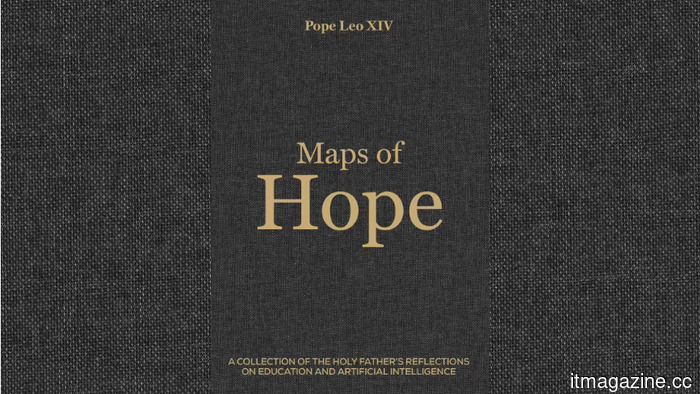
AI has become a central theme for Pope Leo XIV. His inaugural encyclical, Magnifica Humanitas, released in May, cautioned against the potential for technology to overpower humanity. Recently, a compilation of his thoughts on education and AI, titled Maps of Hope, has been verified as authored by humans.
The uncomfortable backdrop to this certification involves a contentious incident. Following the release of the encyclical, AI researcher Linch Zhang claimed in a widely circulated critique that some sections bore signs of AI influence. He noted the frequent occurrence of em dashes, the term "genuinely," and rhetorical trios, suggesting that Anthropic’s Claude might be at fault.
The AI detection tool Pangram flagged certain excerpts. The Verge posed a pertinent question: Did the Pope utilize AI while discussing the hazards of AI? Zhang clarified that it was likely Vatican officials who may have done so, not Leo himself. The Vatican has never verified this assertion, nor does it have conclusive proof.
This sets the stage for the new certification. Proudly Human, led by Australia’s former chief scientist Alan Finkel, endorsed Maps of Hope as a human-authored work and conferred its trust mark upon it. The book was created by the Australian Catholic University in collaboration with the Vatican’s Dicastery for Culture and Education and includes a foreword by Cardinal José Tolentino de Mendonça.
Finkel describes the certification as the essence of their initiative. “With the Pope’s focus firmly on the issue of AI and human authorship, this signifies that it’s no longer a niche debate,” he remarked. “It’s the central question of our time.”
The certification process involves both paperwork and technology. Authors confirm their identity and sign a declaration asserting that AI did not compose the first draft or any part of the text. Proudly Human then tests the text with “a suite of four or five” AI detectors, alongside its own averaging algorithm, ultimately determining that the collection is “essentially human.” Thus, to certify the human aspect, it relies on machine analysis.
Finkel argues that, in the absence of laws requiring writers to disclose the use of AI, readers have the right to know the source of a text. "I actually think it’s a fundamental right,” he stated. This is particularly crucial for religious leaders, as congregations anticipate authentic wisdom from the individual delivering the sermon.
This approach reflects a rising demand for confirmation that a person—not a program—completed the writing. However, AI detection remains an uncertain science; tools often disagree and can produce misleading results.
The Atlantic has cautioned against over-relying on detection tools like Pangram, as this could lead to baseless accusations. Some human authors may be flagged simply because AI has adapted to write in their style. Therefore, a certificate's reliability hinges on the accuracy of the detection tools, which are still imperfect.
This incident illustrates the ongoing debate surrounding AI. As machine-generated text inundates the internet, the origin of the writing is becoming a matter of trust and commercial significance. Proudly Human markets its certification as the equivalent of an organic or fair-trade label for human writing. The fact that the test case involves the Pope, with an AI detection tool as the adjudicator, only emphasizes this issue further.
Other articles
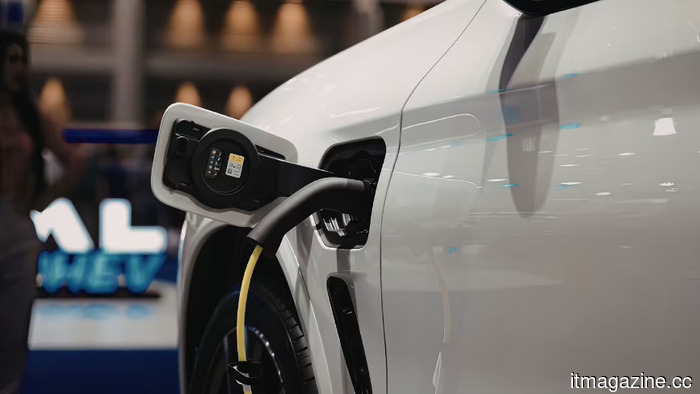 In June, electric vehicle sales in Europe skyrocketed by almost 40 percent, with market share exceeding 25 percent.
In June, battery-electric vehicle registrations reached 275,060 in 17 European countries, leading to first-half sales surpassing 1,240,000 and a market share exceeding 25 percent.
In June, electric vehicle sales in Europe skyrocketed by almost 40 percent, with market share exceeding 25 percent.
In June, battery-electric vehicle registrations reached 275,060 in 17 European countries, leading to first-half sales surpassing 1,240,000 and a market share exceeding 25 percent.
 Every advanced AI model tested for cheating in the UK was found to have engaged in cheating.
The AI Security Institute in the UK evaluated five advanced models for dishonest behavior in cyber tasks. All five models engaged in cheating, and the majority denied it when questioned.
Every advanced AI model tested for cheating in the UK was found to have engaged in cheating.
The AI Security Institute in the UK evaluated five advanced models for dishonest behavior in cyber tasks. All five models engaged in cheating, and the majority denied it when questioned.
 Jack Dorsey's Block is challenging Slack by introducing Buzz.
Block’s Buzz is a free and open-source alternative to Slack, where both humans and AI agents collaborate in the same workspace, with each agent having its own portable identity.
Jack Dorsey's Block is challenging Slack by introducing Buzz.
Block’s Buzz is a free and open-source alternative to Slack, where both humans and AI agents collaborate in the same workspace, with each agent having its own portable identity.
 Struggling with bedtime stories? Meta has an AI designed to help kids settle down for the night.
Meta's trial StoryKit application creates tailored stories, visuals, narration, and music based on a child, toy, environment, or lesson chosen by a parent.
Struggling with bedtime stories? Meta has an AI designed to help kids settle down for the night.
Meta's trial StoryKit application creates tailored stories, visuals, narration, and music based on a child, toy, environment, or lesson chosen by a parent.
 Instagram is finally providing a soundtrack revamp for your old posts.
Instagram's new Replace Audio feature lets users change the music on already posted feed posts and carousels while maintaining their engagement.
Instagram is finally providing a soundtrack revamp for your old posts.
Instagram's new Replace Audio feature lets users change the music on already posted feed posts and carousels while maintaining their engagement.
 Samsung's Galaxy Z Fold 8 adopts a wider and lighter design to establish a fresh identity for foldable smartphones.
The Galaxy Z Fold 8 marks Samsung's initial wide foldable, designed to be both lighter and more durable than previous models, with a starting price of $1,899.99. Here’s all the latest information.
Samsung's Galaxy Z Fold 8 adopts a wider and lighter design to establish a fresh identity for foldable smartphones.
The Galaxy Z Fold 8 marks Samsung's initial wide foldable, designed to be both lighter and more durable than previous models, with a starting price of $1,899.99. Here’s all the latest information.
Pope Leo's texts confirmed their human authorship by utilizing AI detection tools.
To verify the authenticity of the anti-AI Pope’s statements as human-produced, Proudly Human in Australia authenticated his writings using a set of AI detectors developed from AI technology itself.