
Big Tech's investment in AI is aligning with its cash flow.
The four largest technology firms in the US are set to invest nearly $700 billion in artificial intelligence infrastructure this year, and this expenditure is beginning to manifest in a key metric that is hard to manipulate: free cash flow.
An analysis by Reuters revealed that the combined capital expenditure among the major cloud service providers is expected to exceed the cash generated by their core operations. Wall Street’s expectations for AI capital expenditures have risen significantly, going from around $485 billion in January to approximately $730 billion by July, according to Reuters’ findings.
A notable early indication came from Amazon, which saw its free cash flow decrease to $1.2 billion over the past 12 months in the first quarter, compared to about $26 billion a year prior, despite a 30% increase in operating cash flow to $148.5 billion.
The situation is clear: capital spending is increasing at a much faster pace than incoming revenue. Epoch AI estimates that capital expenditures from hyperscalers are growing at roughly 70% annually, while operating cash flow is increasing by about 23%. This trend suggests that total spending may surpass operating cash flow around the third quarter of 2026.
Reuters presented the disparity bluntly: from 2025 to 2027, capital expenditure across Microsoft, Alphabet, Amazon, Meta, and Oracle is anticipated to rise by approximately $534 billion, contrasting with a roughly $340 billion increase in operating cash flow. This results in $1.57 of capital expenditure for every additional dollar of cash these companies generate.
Not every organization is facing the same level of pressure. Microsoft reported $37.5 billion in capital spending in its fiscal second quarter, alongside $35.8 billion in operating cash flow, and is forecasting around $190 billion for the year. Alphabet and Meta continue to produce sufficient cash to cover dividends and buybacks, at least for the moment.
Despite the rising forecasts, Meta has indicated it will spend up to $145 billion this year, and Alphabet has raised its targets for the second consecutive quarter. When asked about the returns on that investment, Meta’s CEO Mark Zuckerberg stated in April that it is “a very technical question,” which reflects a common response across the sector.
Oracle is the furthest along in this trend, with its capital expenditures reaching 174% of operating cash flow in fiscal 2026, up from 47% four years ago, and its free cash flow has turned negative. The company's credit rating is one notch above junk, and it has indicated plans to raise between $45 billion and $50 billion to continue its expansion.
This scenario points to a larger trend. Most hyperscalers are increasingly relying on external financing via cash reserves, bond issuance, or equity to fund their growth rather than relying solely on operational revenue. Recently, Amazon, Alphabet, and Meta have entered the bond markets at a scale that is starting to alter corporate debt issuance on both sides of the Atlantic.
Investors are continually questioning whether this spending will yield returns. Shay Boloor from Futurum Equities commented that “AI is pushing them toward a hybrid model where software, advertising, and cloud economics increasingly rely on substantial physical infrastructure spending.”
Others express caution regarding the timeline. David Russell from TradeStation cautioned that “earnings growth may not be sufficient to justify investment if capital expenditure is draining cash,” while Freddy Lavric from Winthrop Capital noted that companies might need two to three years to demonstrate that their spending is resulting in additional revenue and improving margins.
For the time being, accounting practices help mitigate the immediate impact. Because capital expenses are depreciated over several years rather than being recorded upfront, all the major investors remain profitable and are becoming increasingly so. Free cash flow is where the strain is felt first.
The upcoming test will be the quarterly earnings reports in the following weeks. Investors will be closely monitoring capital expenditure guidance just as much as revenue, and for once, these two figures may diverge.
Other articles
 Garmin's latest competitor to Fitbit Air features 80 workout modes and steers clear of the annoying subscription model.
The Garmin CIRQA is priced at twice that of the Fitbit Air; however, its extended battery life, comprehensive workout support, and software that doesn't require a subscription might make the higher cost worthwhile.
Garmin's latest competitor to Fitbit Air features 80 workout modes and steers clear of the annoying subscription model.
The Garmin CIRQA is priced at twice that of the Fitbit Air; however, its extended battery life, comprehensive workout support, and software that doesn't require a subscription might make the higher cost worthwhile.
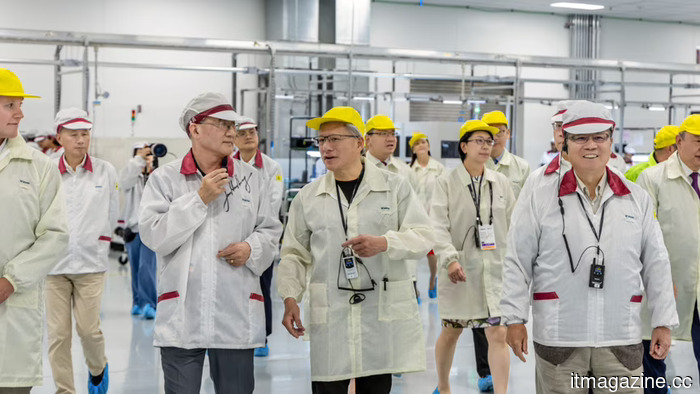 Nvidia's supplier Wistron has launched a $700 million factory in Texas for the production of Grace Blackwell superchips.
Wistron has launched its inaugural factory in the U.S. located in Fort Worth, a $700 million facility that is already in mass production of Nvidia’s GB300 Grace Blackwell Ultra superchips.
Nvidia's supplier Wistron has launched a $700 million factory in Texas for the production of Grace Blackwell superchips.
Wistron has launched its inaugural factory in the U.S. located in Fort Worth, a $700 million facility that is already in mass production of Nvidia’s GB300 Grace Blackwell Ultra superchips.
 Garmin's latest competitor to Fitbit Air features 80 workout modes and steers clear of the annoying subscription model.
The Garmin CIRQA is priced at double that of the Fitbit Air; however, its extended battery life, comprehensive workout features, and software that doesn't require a subscription may warrant the higher cost.
Garmin's latest competitor to Fitbit Air features 80 workout modes and steers clear of the annoying subscription model.
The Garmin CIRQA is priced at double that of the Fitbit Air; however, its extended battery life, comprehensive workout features, and software that doesn't require a subscription may warrant the higher cost.
 The University of Tennessee is filing a lawsuit against Anthropic regarding patents related to neural networks.
The University of Tennessee has filed a lawsuit against Anthropic in Delaware concerning two neural network patents, marking what is believed to be the first patent lawsuit involving the company.
The University of Tennessee is filing a lawsuit against Anthropic regarding patents related to neural networks.
The University of Tennessee has filed a lawsuit against Anthropic in Delaware concerning two neural network patents, marking what is believed to be the first patent lawsuit involving the company.
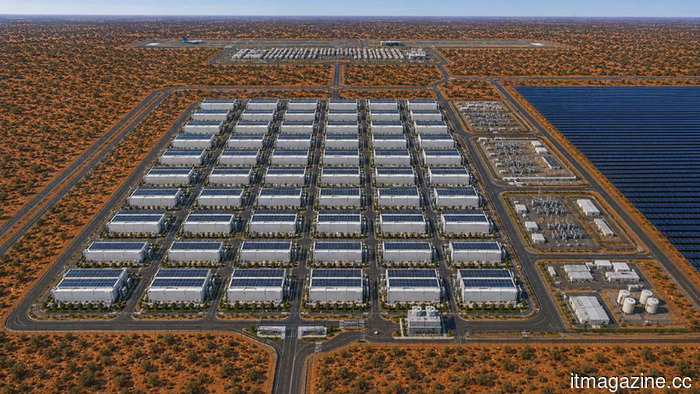 A gas-rich outback station may accommodate a $28 billion off-grid AI data center.
Energy North plans to construct a 1GW off-grid AI data center at Murranji Station in Australia’s gas-abundant Barkly region, with the total project estimated to cost approximately $28 billion.
A gas-rich outback station may accommodate a $28 billion off-grid AI data center.
Energy North plans to construct a 1GW off-grid AI data center at Murranji Station in Australia’s gas-abundant Barkly region, with the total project estimated to cost approximately $28 billion.
 Noetra's CEO describes his robotic AI startup as Japan's 'final opportunity.'
Hironobu Tamba departed from SoftBank to head Noetra, a $6 billion state-supported initiative focused on developing AI for robots in Japan. He refers to it as the nation's last opportunity.
Noetra's CEO describes his robotic AI startup as Japan's 'final opportunity.'
Hironobu Tamba departed from SoftBank to head Noetra, a $6 billion state-supported initiative focused on developing AI for robots in Japan. He refers to it as the nation's last opportunity.
Big Tech's investment in AI is aligning with its cash flow.
The combined capital expenditures on AI by the largest cloud companies are expected to surpass the revenue generated by their primary operations, with free cash flow being the first to show the impact.