

Big Tech's expenditure on AI is beginning to align with its cash flow.
The four largest technology companies in the US are projected to invest nearly $700 billion on artificial intelligence infrastructure this year, and this expense is becoming evident in the one metric that is difficult to conceal: free cash flow.
An analysis conducted by Reuters indicated that total capital expenditures among the major cloud providers are expected to surpass the cash generated by their core operations. Wall Street's estimate for this year's AI capital expenditures has risen from approximately $485 billion in January to around $730 billion by July, based on the data compiled by Reuters.
The earliest warning signal came from Amazon, whose free cash flow dropped to $1.2 billion on a trailing 12-month basis in the first quarter, down from roughly $26 billion the previous year, despite a 30% increase in operating cash flow to $148.5 billion.
The situation is clear-cut: capital expenditures are increasing at a pace much quicker than revenue. Epoch AI estimates that hyperscaler capital spending is rising at approximately 70% per year, while operating cash flow grows by about 23%, indicating that total spending is on track to exceed operating cash flow by the third quarter of 2026.
Reuters presented the disparity starkly. From 2025 to 2027, capital expenditures by Microsoft, Alphabet, Amazon, Meta, and Oracle are projected to increase by about $534 billion, compared to a roughly $340 billion rise in operating cash flow. This equates to $1.57 of capital expenditure for every additional dollar generated by the businesses.
However, not all companies are experiencing the same pressures. Microsoft reported $37.5 billion in capital expenditures, including finance leases, during its fiscal second quarter, against $35.8 billion in operating cash flow, and has projected around $190 billion for the year. Alphabet and Meta are still generating sufficient cash to sustain dividends and buybacks, at least for now.
Guidance continues to rise regardless. Meta has announced plans to spend up to $145 billion this year, and Alphabet has raised its own forecast for the second consecutive quarter. When asked about the returns on these investments, Meta's CEO Mark Zuckerberg remarked in April that it was "a very technical question," which reflects the response the market has received from the industry.
Oracle has taken the most substantial steps down this path, with its capital expenditures reaching 174% of operating cash flow in fiscal 2026, an increase from 47% four years prior, resulting in negative free cash flow. The company’s credit rating stands just above junk status, and it has indicated intentions to raise between $45 billion and $50 billion to continue its expansion.
This trend highlights a broader shift, as most hyperscalers have started seeking external financing—through cash reserves, bond issuance, or equity—to support their development instead of funding it through operational cash flows. Recently, Amazon, Alphabet, and Meta have all accessed the bond markets to such an extent that it has begun to alter corporate debt issuance on both sides of the Atlantic.
Investors are continually questioning whether these expenditures will yield returns. Shay Boloor from Futurum Equities noted to Reuters that “AI is pushing them toward a hybrid model where software, advertising and cloud economics increasingly depend on enormous physical infrastructure spending.”
Others are more wary regarding the timeline. David Russell from TradeStation cautioned that “earnings growth may not be sufficient to justify investment if capital expenditures are draining cash,” while Freddy Lavric from Winthrop Capital remarked that companies would likely need two to three years to demonstrate that their spending translates into additional revenue and improved margins.
For the moment, accounting practices soften the impact. Since capital spending is depreciated over several years rather than recorded immediately, all the major spenders continue to remain profitable, and increasingly so. Free cash flow is simply where the strain is felt first.
The upcoming quarterly earnings reports will be a crucial test. Investors will be scrutinizing capital expenditure guidance as closely as revenue, and for once, the two figures may indeed head in opposite directions.
Other articles
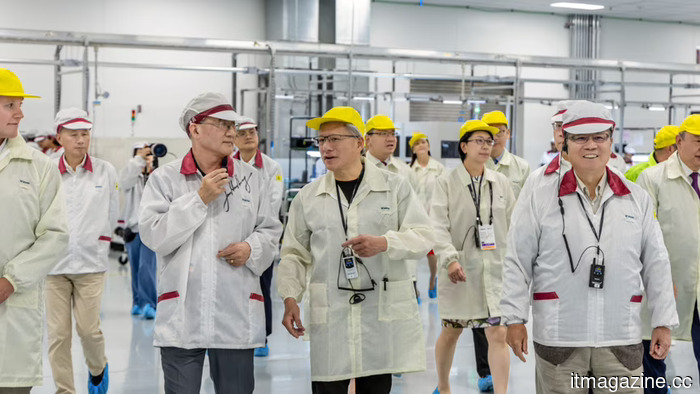 Nvidia's supplier Wistron has launched a $700 million factory in Texas for the production of Grace Blackwell superchips.
Wistron has launched its inaugural factory in the U.S. located in Fort Worth, a $700 million facility that is already in mass production of Nvidia’s GB300 Grace Blackwell Ultra superchips.
Nvidia's supplier Wistron has launched a $700 million factory in Texas for the production of Grace Blackwell superchips.
Wistron has launched its inaugural factory in the U.S. located in Fort Worth, a $700 million facility that is already in mass production of Nvidia’s GB300 Grace Blackwell Ultra superchips.
 ONS: AI adoption in the UK has tripled since 2023, yet the integration has barely advanced.
The adoption of AI in UK businesses increased from 12% to 35% since 2023, yet the typical user utilizes only 1.6 tools. According to Scott Pope from Nexthink, the issue lies within the organizational culture.
ONS: AI adoption in the UK has tripled since 2023, yet the integration has barely advanced.
The adoption of AI in UK businesses increased from 12% to 35% since 2023, yet the typical user utilizes only 1.6 tools. According to Scott Pope from Nexthink, the issue lies within the organizational culture.
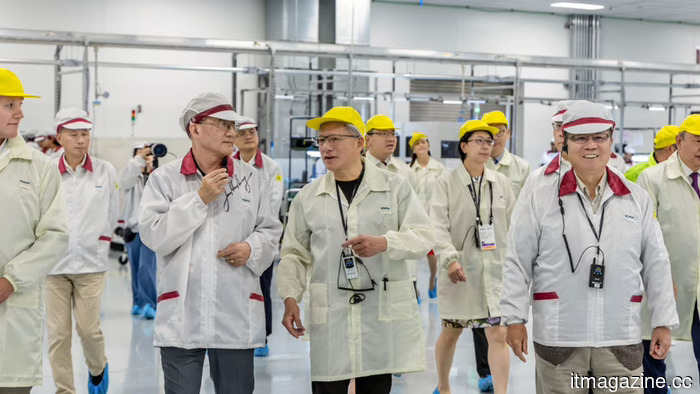 Nvidia's supplier Wistron has inaugurated a $700 million manufacturing facility in Texas to produce Grace Blackwell superchips.
Wistron has inaugurated its first factory in the US located in Fort Worth, a $700 million facility that is already in large-scale production of Nvidia's GB300 Grace Blackwell Ultra superchips.
Nvidia's supplier Wistron has inaugurated a $700 million manufacturing facility in Texas to produce Grace Blackwell superchips.
Wistron has inaugurated its first factory in the US located in Fort Worth, a $700 million facility that is already in large-scale production of Nvidia's GB300 Grace Blackwell Ultra superchips.
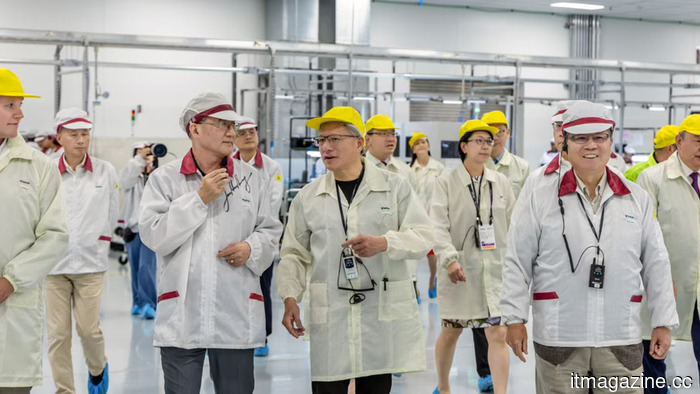 Nvidia supplier Wistron has launched a $700 million factory in Texas to manufacture Grace Blackwell superchips.
Wistron has inaugurated its inaugural factory in the US, located in Fort Worth, a $700 million facility that is already in mass production of Nvidia’s GB300 Grace Blackwell Ultra superchips.
Nvidia supplier Wistron has launched a $700 million factory in Texas to manufacture Grace Blackwell superchips.
Wistron has inaugurated its inaugural factory in the US, located in Fort Worth, a $700 million facility that is already in mass production of Nvidia’s GB300 Grace Blackwell Ultra superchips.
 Samsung's promotion of doubling storage for preorders has ended in Austria, and the new offer is not as appealing.
Samsung has eliminated its traditional pre-order benefit of double storage at no extra cost for Austria, substituting it with discounted upgrade options for the Galaxy Z Fold 8 and Z Flip 8.
Samsung's promotion of doubling storage for preorders has ended in Austria, and the new offer is not as appealing.
Samsung has eliminated its traditional pre-order benefit of double storage at no extra cost for Austria, substituting it with discounted upgrade options for the Galaxy Z Fold 8 and Z Flip 8.
 Big Tech's investment in AI is aligning with its cash flow.
The combined capital expenditures on AI by the largest cloud companies are expected to surpass the revenue generated by their primary operations, with free cash flow being the first to show the impact.
Big Tech's investment in AI is aligning with its cash flow.
The combined capital expenditures on AI by the largest cloud companies are expected to surpass the revenue generated by their primary operations, with free cash flow being the first to show the impact.
Big Tech's expenditure on AI is beginning to align with its cash flow.
The total capital expenditure on AI by the largest cloud companies is expected to surpass the cash generated by their main operations, with free cash flow being impacted first.