

Brazil's Pix is emerging as a focal point for trade tensions with the United States, and it is drawing global attention.
Brazil's instant-payment platform, Pix, has transitioned from a national success to a focal point in a trade dispute with the United States, prompting interest from governments worldwide regarding its outcome. The tension escalated in June when the Office of the US Trade Representative (USTR) declared Brazil's practices concerning digital trade and electronic payments to be "unreasonable" and detrimental to US commerce.
Pix, a real-time payment system initiated by Brazil's central bank in November 2020, enables users to transfer money in seconds utilizing a phone number, email address, or QR code, without any charge to individuals. It has emerged as one of the most scrutinized instances of state-developed digital payment systems.
The magnitude of its adoption is significant. By early 2025, over 160 million individuals had signed up for Pix, according to data from the central bank, along with approximately 19 million businesses. In 2025, the system facilitated around R$35 trillion (almost $6.7 trillion) in nearly 80 billion transactions, a considerable increase from R$26.4 trillion the previous year, according to industry data. These figures greatly surpass the transaction values processed by most private networks in the region.
The adoption rate continues to rise, with Pix becoming Brazil's leading online payment method in 2025, comprising around 42% of e-commerce transactions and narrowly surpassing credit cards. Analysts predict that it could represent half of all online sales by 2028, contributing to Washington's interest in the situation. In its Section 301 review, USTR contended that Brazil's central bank has a conflict of interest by functioning as both the regulator and operator of Pix and argued that compulsory participation for large banks, prominent app placements, and capped fees disadvantage US payment companies.
This finding was part of a broader investigation that combined the payment complaint with issues related to tariffs, anti-corruption measures, intellectual property, access to the ethanol market, and deforestation, as reported by the Congressional Research Service. The US has linked its findings to tariffs, with a 25% duty on most Brazilian products set to be implemented in late July, although several categories were reportedly exempt, and the timeline remained flexible amid ongoing discussions.
Brazilian officials have strongly opposed these moves, with President Luiz Inácio Lula da Silva referring to Pix as “a heritage of our people and an international reference for digital public infrastructure,” while US Secretary of State Marco Rubio accused Lula's administration of failing to negotiate in good faith. USTR Ambassador Jamieson Greer echoed this sentiment, stating that a year of negotiations had not resolved the issues, leaving "substantial differences" in place. Brazil has threatened if necessary retaliation but has yet to implement any immediate counter-tariffs.
The implications extend well beyond US-Brazil trade relations. Analysts at the Atlantic Council have cautioned that classifying a domestic payment system as a trade barrier may set a precedent that could influence Europe's ambitions for a digital euro and other central bank digital currencies. This concern appears to be more than theoretical, as this is reportedly the first instance where the USTR has addressed a country's public payment system as an enforcement issue, following similar scrutiny on India's UPI network in the 2026 National Trade Estimate report.
For central banks considering the establishment of their own instant-payment systems, much like several European entities have contemplated, this confrontation serves as a practical examination of how far a government can go in providing a free public alternative to private payment networks. Some economists contextualize it in terms of monetary sovereignty.
Monica de Bolle from the Peterson Institute for International Economics stated that the forthcoming weeks would "unearth the modern boundaries of monetary sovereignty," highlighting the intertwined trade and security challenges facing Brasília. The future remains uncertain as negotiations are ongoing, the tariff schedule could evolve, and Brazil retains the option for formal retaliation, while companies facilitating cross-border payments through Brazil remain alert to potential disruptions.
Other articles
 AI-generated misinformation is fabricating rare bird sightings and negatively impacting scientific research.
AI-altered images are creating false reports of rare bird sightings on iNaturalist, and scientists caution that this AI-generated content could compromise biodiversity records.
AI-generated misinformation is fabricating rare bird sightings and negatively impacting scientific research.
AI-altered images are creating false reports of rare bird sightings on iNaturalist, and scientists caution that this AI-generated content could compromise biodiversity records.
 deltaVision secures €10.2M to develop the infrastructure for in-orbit refueling.
The Munich-based startup deltaVision has secured €10.2 million in its initial funding round to expand its spacecraft valves and develop components for refueling satellites in orbit.
deltaVision secures €10.2M to develop the infrastructure for in-orbit refueling.
The Munich-based startup deltaVision has secured €10.2 million in its initial funding round to expand its spacecraft valves and develop components for refueling satellites in orbit.
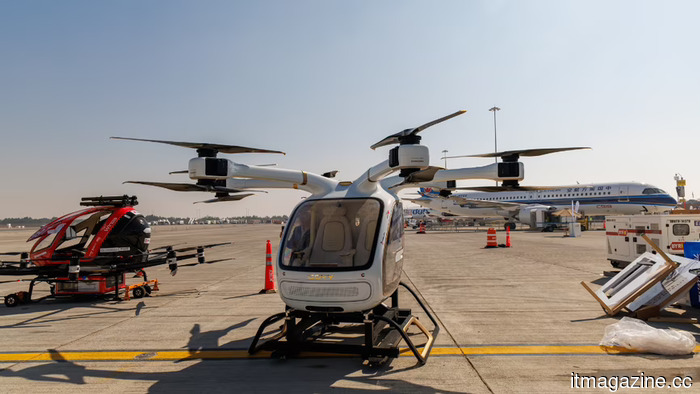 The US is preparing the runway for air taxis and supersonic aircraft.
The FAA is expediting the introduction of electric air taxis and civil supersonic flights into the market by lifting the 1973 ban on overland Mach travel and fast-tracking the testing of eVTOLs.
The US is preparing the runway for air taxis and supersonic aircraft.
The FAA is expediting the introduction of electric air taxis and civil supersonic flights into the market by lifting the 1973 ban on overland Mach travel and fast-tracking the testing of eVTOLs.
 Adobe’s Project Indigo camera application can now enhance photos using AI.
Adobe's Project Indigo camera application introduces an AI Playground that evaluates, modifies, and reconstructs your images utilizing Google's Nano Banana instead of Firefly.
Adobe’s Project Indigo camera application can now enhance photos using AI.
Adobe's Project Indigo camera application introduces an AI Playground that evaluates, modifies, and reconstructs your images utilizing Google's Nano Banana instead of Firefly.
 South Korea is investing $540 billion in a southwestern chip hub that the current power grid is not equipped to support.
South Korea's $540 billion Honam chip cluster offers the potential for AI-era scale, but the rural southwest lacks sufficient power and water resources to support it.
South Korea is investing $540 billion in a southwestern chip hub that the current power grid is not equipped to support.
South Korea's $540 billion Honam chip cluster offers the potential for AI-era scale, but the rural southwest lacks sufficient power and water resources to support it.
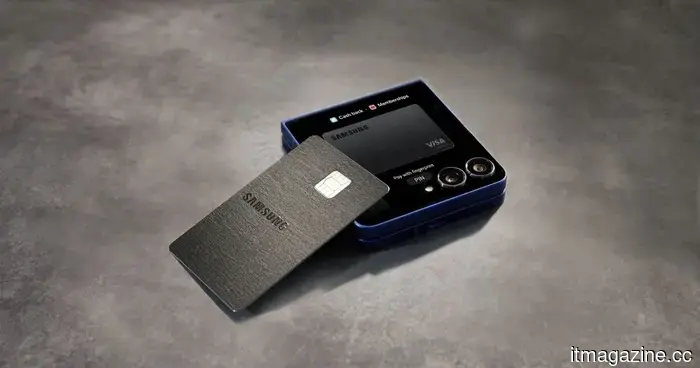 Samsung introduces Galaxy credit card prior to Galaxy Unpacked event.
Samsung has introduced the Galaxy Card, which provides up to 5 percent cashback on qualifying Samsung purchases just before its Galaxy Unpacked event.
Samsung introduces Galaxy credit card prior to Galaxy Unpacked event.
Samsung has introduced the Galaxy Card, which provides up to 5 percent cashback on qualifying Samsung purchases just before its Galaxy Unpacked event.
Brazil's Pix is emerging as a focal point for trade tensions with the United States, and it is drawing global attention.
A US Section 301 investigation into Brazil's central bank payment system, Pix, has resulted in 25% tariffs and is subjecting state-run instant payments to scrutiny.