
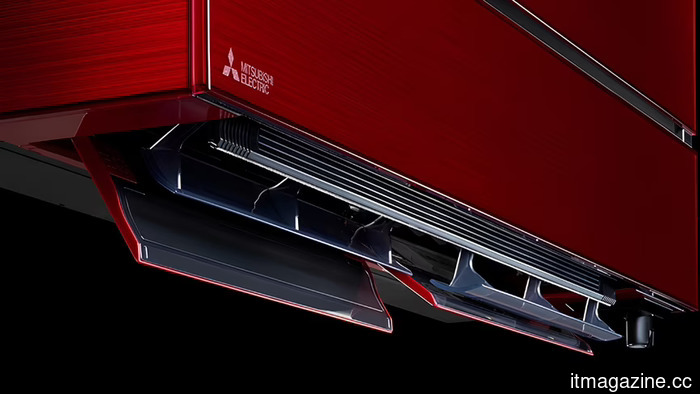
Mitsubishi Electric is considering a merger of its power chip divisions with those of Rohm and Toshiba.
Japan's three largest power chip manufacturers are aiming to merge into a single entity, but reorganizing has proven more challenging than anticipated. Mitsubishi Electric is considering integrating its power semiconductor operations with those of Rohm and Toshiba, according to sources familiar with the situation as reported by Bloomberg.
These discussions are part of a larger effort to secure a stake in the chips utilized in electric vehicles, with the three companies already having signed a memorandum of understanding to explore what they refer to as “business and management integration.”
Power semiconductors, which are essential components managing the electrical current in motors, chargers, and industrial drives, are experiencing rising demand as automotive manufacturers increasingly electrify their fleets and begin to design their own chips. A unified entity would command approximately 11% of the global market, according to analyst projections, making it the second-largest supplier after Germany's Infineon, which holds around 24%. This merger would yield over $8 billion in combined revenue from power devices.
Each member contributes unique strengths. Rohm operates its own silicon-carbide wafer fabrication and is a leader in SiC MOSFET technology, Mitsubishi specializes in high-power IGBT modules, and Toshiba offers a comprehensive range of silicon IGBT and MOSFET products.
The collaboration appears advantageous on paper, potentially providing a foothold across nearly every segment of the market, from car inverters to industrial drives and grid solutions. Their joint research budget could exceed $2 billion annually, sufficient to support the transition to 8-inch SiC wafers, which would reduce the cost per chip.
The timing is crucial due to the significance of SiC technology. This material allows electric vehicles to charge more rapidly and achieve greater range with the same battery, with the global power semiconductor market projected to reach nearly $62 billion by 2028, reflecting the rapid growth in demand.
However, the plan comes with a complicated backdrop. In February, Denso, a company linked to Toyota, made a bid of approximately ¥1.3 trillion ($8.3 billion) for Rohm, part of Toyota's initiative to localize its supply chain for EV chips. Rohm declined the offer to safeguard its relationships with cross-industry customers, and Denso subsequently withdrew its bid in late April.
This resulted in a horizontal partnership among peers as the viable path to scale, rather than a complete acquisition by a single automotive manufacturer. It also allowed Rohm to continue selling to a wide range of vehicle parts companies, which was a key reason for rejecting the Denso offer.
Rohm's president, Katsumi Azuma, has indicated that the negotiations are turning out to be “more complex and slower than initially expected.” He remarked that the partners aim to avoid a situation with too many leaders attempting to navigate the venture toward potential pitfalls.
The organizational structure is a significant hurdle. Reports suggest that the agreement might proceed along two fronts: a broader integration involving Toshiba's device division and a possible joint venture with Mitsubishi, rather than a straightforward merger.
Ownership complications arise as Toshiba’s semiconductor business falls under the investment entities Japan Industrial Partners and TBJ Holdings, both of which have signed the memorandum. Therefore, any agreement must meet the approval of financial stakeholders as well as those in engineering.
There has been no confirmed direct government involvement in this merger. However, in 2023, Rohm and Toshiba jointly secured state support for a domestic supply initiative, and the Ministry of Economy, Trade and Industry (METI) has publicly encouraged the formation of fewer, larger national leaders in the sector.
Additionally, there are issues of duplication as both Mitsubishi and Toshiba have pursued independent plans for 300mm wafers, which could diminish the potential cost savings that consolidation would ideally deliver.
The broader rationale for this collaboration is defensive. Japan is credited with many advancements in modern power electronics but has allowed its industry to fragment among its conglomerates while companies like Infineon and STMicroelectronics have achieved scale. For years, Tokyo has been encouraging firms such as Rapidus and Renesas to attain greater heft as part of an overarching effort to rebuild its semiconductor industry.
Meanwhile, Chinese suppliers are aggressively undercutting prices across SiC and related sectors, pressuring clients to pursue custom silicon solutions. Merging the three relatively small entities into one may be the least glamorous, yet potentially the most sustainable response.
Currently, no agreements have been finalized. The companies have stated that discussions will continue, and any binding deal, along with its financial implications, will be disclosed once terms are settled.
Other articles
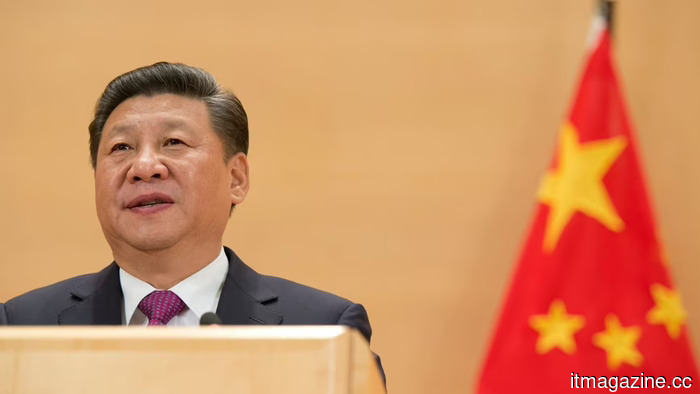 Xi asserts at the World AI Conference that no one nation should have a monopoly on AI.
Xi Jinping delivered his inaugural keynote at the WAIC, advocating for open AI for developing nations while criticizing US export restrictions, just a day after China introduced a competing AI organization.
Xi asserts at the World AI Conference that no one nation should have a monopoly on AI.
Xi Jinping delivered his inaugural keynote at the WAIC, advocating for open AI for developing nations while criticizing US export restrictions, just a day after China introduced a competing AI organization.
 The new search tool in ChatGPT helps you avoid sifting through past chats, files, and images.
Forget about sifting through months of ChatGPT history; this new sidebar search allows you to locate chats, files, and images in seconds, complete with filters to refine your results.
The new search tool in ChatGPT helps you avoid sifting through past chats, files, and images.
Forget about sifting through months of ChatGPT history; this new sidebar search allows you to locate chats, files, and images in seconds, complete with filters to refine your results.
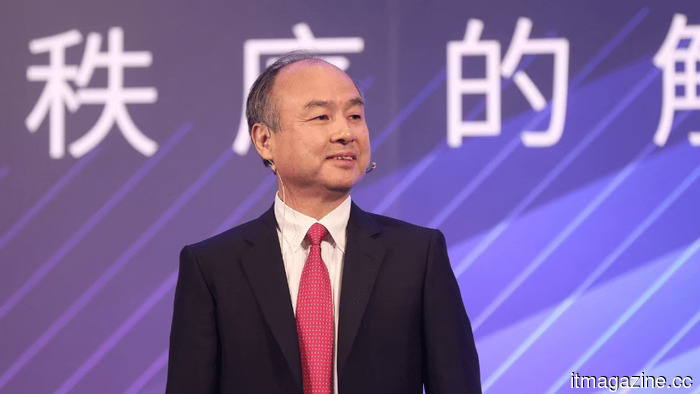 SoftBank is preparing a new $60 billion bond to support its investment in OpenAI.
SoftBank is said to be preparing a new bond issue of up to $60 billion to support its initiative with OpenAI, a goal that would exceed its previous record retail transaction and challenge its leverage.
SoftBank is preparing a new $60 billion bond to support its investment in OpenAI.
SoftBank is said to be preparing a new bond issue of up to $60 billion to support its initiative with OpenAI, a goal that would exceed its previous record retail transaction and challenge its leverage.
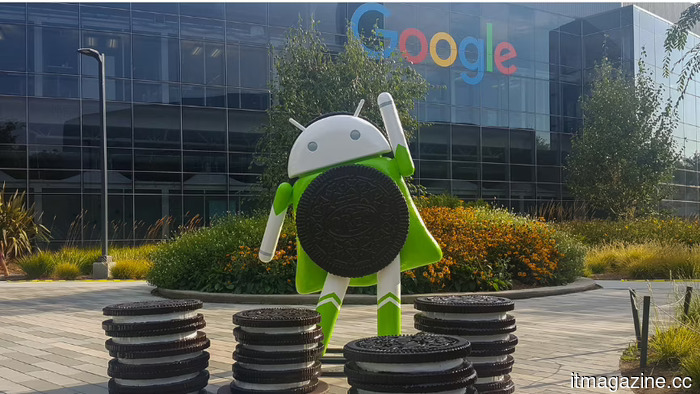 Google's fine from the EU will reduce the amount taxpayers owe to Brussels.
The 4.6 billion euro fine imposed on Google for Android goes into the EU budget, resulting in reduced contributions from member states. Germany might save approximately 1 billion euros.
Google's fine from the EU will reduce the amount taxpayers owe to Brussels.
The 4.6 billion euro fine imposed on Google for Android goes into the EU budget, resulting in reduced contributions from member states. Germany might save approximately 1 billion euros.
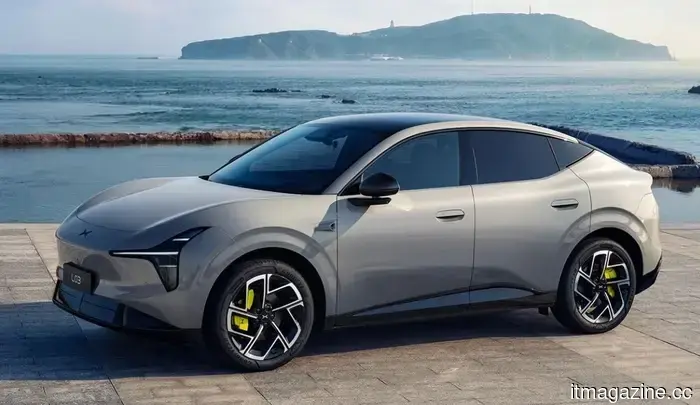 XPeng unveils the MONA L03 in Munich, targeting the electric SUV market in Europe.
On Thursday, XPeng introduced the MONA L03 smart SUV during its global launch event in Munich, Germany. This model is set to be released in 65 countries and regions.
XPeng unveils the MONA L03 in Munich, targeting the electric SUV market in Europe.
On Thursday, XPeng introduced the MONA L03 smart SUV during its global launch event in Munich, Germany. This model is set to be released in 65 countries and regions.
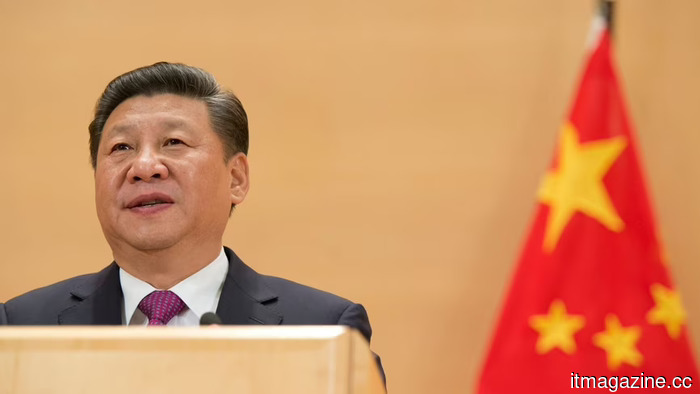 Xi states at the World AI Conference that no one nation should dominate AI.
In his inaugural keynote at the WAIC, Xi Jinping promoted open AI for developing nations while also addressing US export restrictions, just a day after China established a competing AI organization.
Xi states at the World AI Conference that no one nation should dominate AI.
In his inaugural keynote at the WAIC, Xi Jinping promoted open AI for developing nations while also addressing US export restrictions, just a day after China established a competing AI organization.
Mitsubishi Electric is considering a merger of its power chip divisions with those of Rohm and Toshiba.
Sources indicate that Mitsubishi Electric is considering a partnership with Rohm and Toshiba to develop a power-chip combination that would establish them as the second-largest supplier globally.