
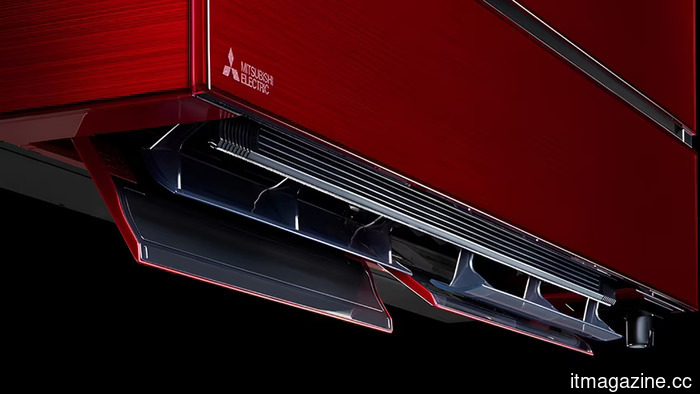
Mitsubishi Electric is considering a merger of its power chip business with Rohm and Toshiba.
Japan’s three largest power-chip manufacturers are seeking to merge into a single entity, but restructuring is proving more challenging than anticipated. Mitsubishi Electric is considering the integration of its power-semiconductor divisions with those of Rohm and Toshiba, as reported by sources familiar with the situation, according to Bloomberg.
These negotiations are part of a broader effort to gain dominance over the chips utilized in all electric vehicles, and the trio has already signed a memorandum of understanding to explore what they refer to as “business and management integration.” Power semiconductors play a crucial role in regulating the current for motors, chargers, and industrial drives, and demand is increasing as automotive manufacturers transition to electric vehicles and increasingly design chips in-house.
A merged entity could capture around 11% of the global market, according to analysts, placing it in second place after Germany’s Infineon, which holds approximately 24%. This would elevate it to the world’s second-largest supplier, with combined power-device revenues exceeding $8 billion.
Each company contributes unique strengths: Rohm operates its own silicon-carbide wafer fabrication facility and leads in SiC MOSFET technology; Mitsubishi is a leader in high-power IGBT modules; and Toshiba provides a comprehensive lineup of silicon IGBT and MOSFET products.
Together, the companies could create a strong presence that spans almost all areas of the market, including automotive inverters, factory drives, and grid technologies. Their combined research budget would exceed $2 billion annually, facilitating the transition to 8-inch SiC wafers, which reduce the cost per chip.
SiC technology is pivotal, as it enables electric vehicles to charge more rapidly and maximize battery range, and the global power-semiconductor market is projected to reach approximately $62 billion by 2028 due to escalating demand.
However, the plan has a complicated history. In February, Denso, a Toyota affiliate, attempted to acquire Rohm for around ¥1.3 trillion ($8.3 billion) to localize its EV chip supply; however, Rohm rejected the bid to safeguard its cross-industry customers, leading Denso to withdraw in late April. This left the companies to pursue a horizontal collaboration rather than absorption by a single carmaker, allowing Rohm to continue selling to multiple vehicle parts manufacturers, which was one of the key reasons for its rejection.
Rohm's president, Katsumi Azuma, has since noted that the discussions are turning out to be “more complex and slower than initially anticipated.” He emphasized the desire to avoid a scenario where there are too many leaders trying to guide the venture.
The structure of the potential merger is currently a point of contention. Reports indicate that the arrangement may proceed on two fronts: a broader integration with Toshiba’s device unit and a potential joint venture with Mitsubishi, rather than a straightforward merger.
Ownership also complicates matters, as Toshiba's chip business is under the investment fund Japan Industrial Partners and TBJ Holdings—both of which signed the memorandum—making it necessary for any agreement to satisfy both financial stakeholders and engineers.
While there has been no confirmed direct government involvement in this collaboration, Rohm and Toshiba did receive state support in 2023 for a domestic supply initiative, and Japan's Ministry of Economy, Trade, and Industry (METI) has shown a preference for having fewer, larger national champions.
Duplication remains another issue, as both Mitsubishi and Toshiba have advanced separate 300mm wafer initiatives, potentially diminishing the savings that would make consolidation beneficial.
The overall rationale for this merger is defensive. Japan was at the forefront of modern power electronics but has seen its industry fragment across various conglomerates while companies like Infineon and STMicroelectronics have built significant scale. Tokyo has spent years encouraging firms like Rapidus and Renesas to achieve similar scale as part of a broader strategy to strengthen its semiconductor industry.
Chinese competitors, meanwhile, are cutting prices across the SiC sector and adjacent components, reinforcing the trend of customers moving toward personalized silicon solutions. Merging three smaller operations into one may be the least glamorous but potentially the most sustainable solution.
Nothing has been finalized yet. The companies have stated that full discussions will continue, and any binding agreement—along with its financial implications—will be disclosed once the terms are finalized.
Other articles
 SoftBank is preparing a new $60 billion bond to support its investment in OpenAI.
SoftBank is said to be preparing a new bond issue of up to $60 billion to support its initiative with OpenAI, a goal that would exceed its previous record retail transaction and challenge its leverage.
SoftBank is preparing a new $60 billion bond to support its investment in OpenAI.
SoftBank is said to be preparing a new bond issue of up to $60 billion to support its initiative with OpenAI, a goal that would exceed its previous record retail transaction and challenge its leverage.
 The new search tool in ChatGPT helps you avoid sifting through past chats, files, and images.
Forget about sifting through months of ChatGPT history; this new sidebar search allows you to locate chats, files, and images in seconds, complete with filters to refine your results.
The new search tool in ChatGPT helps you avoid sifting through past chats, files, and images.
Forget about sifting through months of ChatGPT history; this new sidebar search allows you to locate chats, files, and images in seconds, complete with filters to refine your results.
 A luggage manufacturer’s filing has just valued DeepSeek at $52 billion.
A filing from a Chinese luggage manufacturer suggests that DeepSeek's value is approximately $52 billion, a figure that falls between its discussions of $45 billion and its aspirations for a $74 billion IPO.
A luggage manufacturer’s filing has just valued DeepSeek at $52 billion.
A filing from a Chinese luggage manufacturer suggests that DeepSeek's value is approximately $52 billion, a figure that falls between its discussions of $45 billion and its aspirations for a $74 billion IPO.
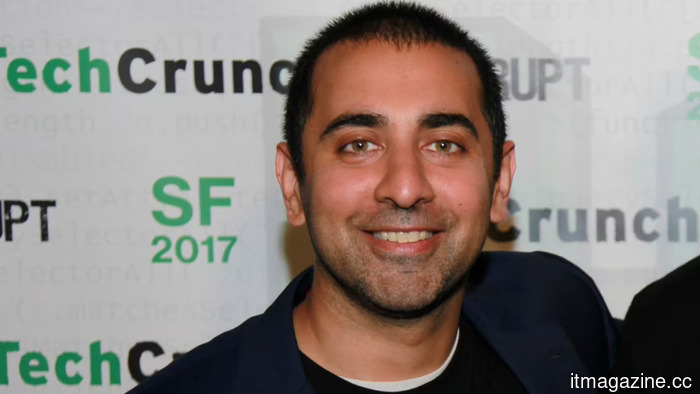 The founder of Network School stated that the investigation by Malaysian immigration threatens its technological goals.
Balaji Srinivasan halted a US$500 million investment and requested a meeting with Anwar after Malaysian officials examined 266 residents in his Forest City network-state community.
The founder of Network School stated that the investigation by Malaysian immigration threatens its technological goals.
Balaji Srinivasan halted a US$500 million investment and requested a meeting with Anwar after Malaysian officials examined 266 residents in his Forest City network-state community.
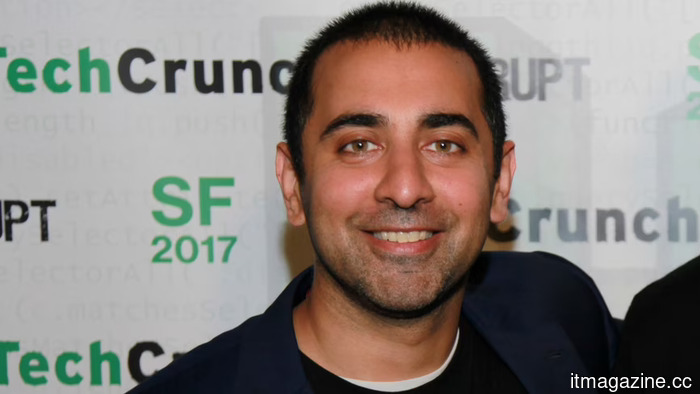 The founder of Network School states that the investigation by Malaysian immigration could jeopardize its technological aspirations.
Balaji Srinivasan halted a US$500 million initiative and requested a meeting with Anwar after Malaysian officials examined 266 residents of his Forest City network-state community.
The founder of Network School states that the investigation by Malaysian immigration could jeopardize its technological aspirations.
Balaji Srinivasan halted a US$500 million initiative and requested a meeting with Anwar after Malaysian officials examined 266 residents of his Forest City network-state community.
 ChatGPT will now prompt teenagers to take breaks and offer parents increased control options.
OpenAI is enhancing ChatGPT's safety features for teenagers by introducing age prediction, reminders for breaks, and improved parental controls, while also justifying the importance of AI access for teens.
ChatGPT will now prompt teenagers to take breaks and offer parents increased control options.
OpenAI is enhancing ChatGPT's safety features for teenagers by introducing age prediction, reminders for breaks, and improved parental controls, while also justifying the importance of AI access for teens.
Mitsubishi Electric is considering a merger of its power chip business with Rohm and Toshiba.
According to sources, Mitsubishi Electric is looking into a power-chip collaboration with Rohm and Toshiba that would establish it as the second-largest supplier in the world.