
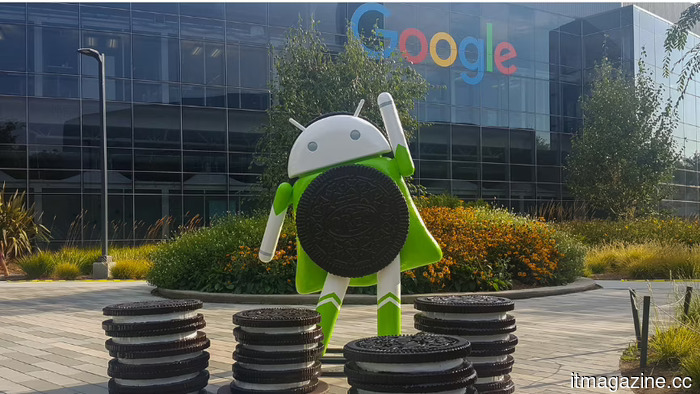
Google's fine from the EU will reduce the amount taxpayers owe to Brussels.
TL;DR Google has settled its record €4.6 billion EU antitrust fine, and since EU fines are not allocated for specific uses, the funds will be absorbed into the central budget, reducing the contributions required from member states in the following year. Germany, which covers about a quarter of this budget, stands to save around €1 billion, providing relief as its deficit approached the EU’s 3% limit. This situation reveals how an American tech giant is unintentionally helping to finance the EU, creating a temporary financial advantage that intensifies the ongoing debate over whether Big Tech should serve as a consistent revenue source, amid discussions of a proposed digital tax by France and tariff threats from Trump.
Google has paid its landmark EU antitrust fine, leading to an unexpected outcome. The €4.6 billion is set to contribute to the EU’s central budget, subsequently decreasing the financial obligations of member states to Brussels, according to Politico.
Although the process may seem technical, the implications are significant. EU fines are not designated for specific purposes, hence they simply reduce the contributions that governments are required to make in the subsequent year. Essentially, an American technology giant is inadvertently supporting the funding of the European Union. Google’s penalty has subtly transformed into a subsidy for Europe.
The fine, which dates back to 2018 and was part of Margrethe Vestager’s efforts against US Big Tech, was imposed on Google for compelling manufacturers to pre-install its apps on Android—a practice it has since begun charging phone makers for. With the legal proceedings concluded, Google finalized its payment this month. The amount, €4.6 billion including interest, represents the largest single fine ever levied by the EU, equating to over 2% of the bloc’s projected budget for 2026.
This money contributes to a common fund alongside customs duties and national contributions. The European Commission plans to incorporate the €4.6 billion into a budget amendment later this year, following the dismissal of Google's final appeal by the EU’s highest court.
Germany stands to benefit the most from this arrangement. As the largest contributor to the EU budget, covering about a quarter of the total, Berlin could save approximately €1 billion. This timing is significant, as Germany's deficit has approached the EU's 3% limit in 2026, a threshold that could trigger penalties from the Commission if exceeded. Thus, a fine imposed on a US company aids the German government in avoiding its own penal consequences, presenting a rather ironic twist in the budget calculations.
However, this financial benefit is a one-time occurrence and does not address the larger issue of the upcoming €2 trillion seven-year budget scheduled to commence in 2028. To support that budget, France is advocating for a tax on US digital companies like Google, an idea that faces opposition from Germany and others. Europe is still grappling with the question of whether to regard Big Tech as a regular source of revenue or as an exceptional one.
The political landscape surrounding this issue is volatile. The crackdown on US tech has already prompted tariff threats from Donald Trump, and the broader conflict between the EU and US regarding technology and trade remains unresolved.
The recent Google fine reflects a wider trend, with Brussels increasingly imposing significant financial penalties on US tech companies, and additional fines are anticipated, including a new penalty under the Digital Markets Act concerning Google’s search practices. There is a tension in relying on this revenue, as a budget partially funded by fines depends on companies continuing to violate rules—an unsettling proposition for a regulatory body.
Additionally, there are other avenues for revenue generation. A €3 customs duty on low-cost parcels entering the EU took effect in July, with the bloc retaining 75% of the revenue and the remainder allocated to national governments. While neither of these revenue sources is groundbreaking on its own, collectively, they indicate how Brussels is seeking additional funding while negotiations over the next budget progress.
For the moment, the payment has been completed and its implications are tangible. Google's ambition to dominate Android has inadvertently resulted in a reduction of approximately €1 billion in Germany’s contributions to the European Union.
Other articles
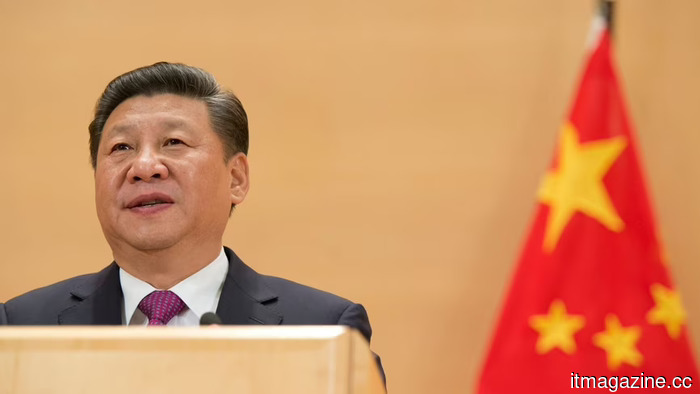 Xi states at the World AI Conference that no one nation should dominate AI.
In his inaugural keynote at the WAIC, Xi Jinping promoted open AI for developing nations while also addressing US export restrictions, just a day after China established a competing AI organization.
Xi states at the World AI Conference that no one nation should dominate AI.
In his inaugural keynote at the WAIC, Xi Jinping promoted open AI for developing nations while also addressing US export restrictions, just a day after China established a competing AI organization.
 Google’s fine imposed by the EU will reduce the amount taxpayers owe to Brussels.
The 4.6 billion euro fine imposed on Google for Android will go into the EU budget, reducing the contributions needed from member states. Germany stands to save approximately 1 billion euros.
Google’s fine imposed by the EU will reduce the amount taxpayers owe to Brussels.
The 4.6 billion euro fine imposed on Google for Android will go into the EU budget, reducing the contributions needed from member states. Germany stands to save approximately 1 billion euros.
 The new search feature in ChatGPT eliminates the need to sift through previous conversations, documents, and pictures.
Say goodbye to sifting through months of ChatGPT history; this new sidebar search allows you to locate chats, files, and images in seconds, complete with filters to refine your results.
The new search feature in ChatGPT eliminates the need to sift through previous conversations, documents, and pictures.
Say goodbye to sifting through months of ChatGPT history; this new sidebar search allows you to locate chats, files, and images in seconds, complete with filters to refine your results.
 ChatGPT will now prompt teenagers to take breaks and offer parents increased control options.
OpenAI is enhancing ChatGPT's safety features for teenagers by introducing age prediction, reminders for breaks, and improved parental controls, while also justifying the importance of AI access for teens.
ChatGPT will now prompt teenagers to take breaks and offer parents increased control options.
OpenAI is enhancing ChatGPT's safety features for teenagers by introducing age prediction, reminders for breaks, and improved parental controls, while also justifying the importance of AI access for teens.
 Mitsubishi Electric is considering a merger of its power chip divisions with those of Rohm and Toshiba.
Sources indicate that Mitsubishi Electric is considering a partnership with Rohm and Toshiba to develop a power-chip combination that would establish them as the second-largest supplier globally.
Mitsubishi Electric is considering a merger of its power chip divisions with those of Rohm and Toshiba.
Sources indicate that Mitsubishi Electric is considering a partnership with Rohm and Toshiba to develop a power-chip combination that would establish them as the second-largest supplier globally.
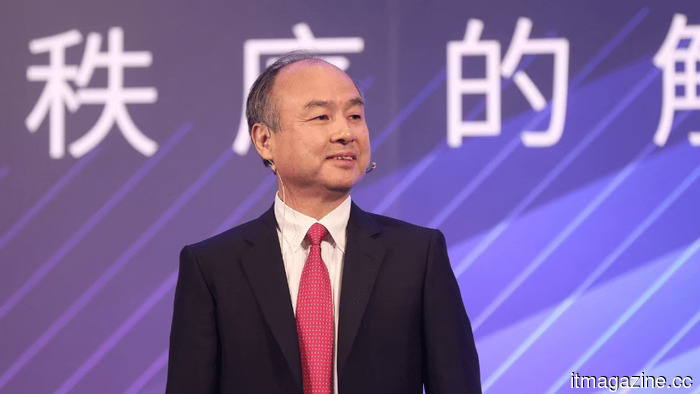 SoftBank is preparing a new $60 billion bond to support its investment in OpenAI.
SoftBank is said to be preparing a new bond issue of up to $60 billion to support its initiative with OpenAI, a goal that would exceed its previous record retail transaction and challenge its leverage.
SoftBank is preparing a new $60 billion bond to support its investment in OpenAI.
SoftBank is said to be preparing a new bond issue of up to $60 billion to support its initiative with OpenAI, a goal that would exceed its previous record retail transaction and challenge its leverage.
Google's fine from the EU will reduce the amount taxpayers owe to Brussels.
The 4.6 billion euro fine imposed on Google for Android goes into the EU budget, resulting in reduced contributions from member states. Germany might save approximately 1 billion euros.