
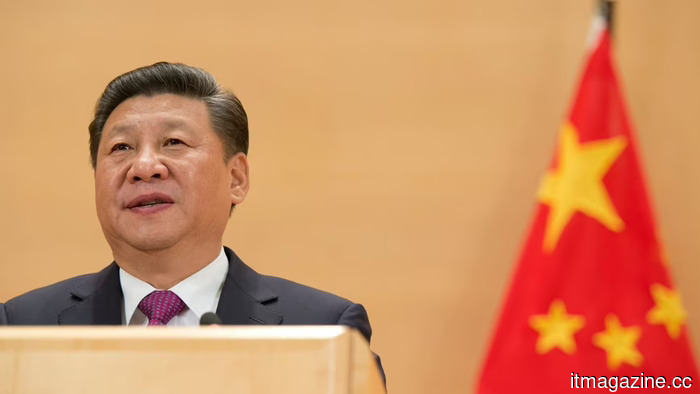
Xi asserts at the World AI Conference that no one nation should have a monopoly on AI.
Xi Jinping stated at the World AI Conference in Shanghai on Friday that artificial intelligence "should not be a solo performance by a single country, but a symphony of international cooperation," positioning Beijing as a champion of open, shared technology. This statement, directed towards the developing world and, by extension, at Washington, set the tone for a speech focused more on governance than on technological products.
His participation had been anticipated for several days, marking the first occasion a Chinese president has addressed the summit in person. This followed the signing of a China-led cooperation initiative by 29 governments in the same city, with Foreign Minister Wang Yi endorsing the agreement.
Xi portrayed AI as a technology presenting "great opportunities and governance challenges," according to the official Xinhua report, advocating for a people-centered approach. He cautioned that neglecting poorer nations could further entrench the technological divide, resulting in “new historical injustices.”
His focus on governance served as a critique of U.S. policy. "We should jointly oppose overstretching the national security concept in the field of AI or prioritizing one country’s security over others," Xi remarked, comments widely interpreted as a reference to American export restrictions.
These restrictions are the context for nearly all of China's discussions about AI. Over the past two years, Washington has limited Chinese access to the most advanced chips, prompting Beijing to consider its own limitations on who abroad can utilize its leading models.
The timing of Xi's address is significant. China has narrowed the gap with American labs faster than many in Washington anticipated, allowing Xi to argue from a position closer to parity than earlier summits.
The comparison Xi aimed to create was one of cooperation versus containment. He promised capacity-building for partners across Africa, Latin America, Asia, and the BRICS group, extending a previous offer of free AI resources to the global south, which contrasts with the G7's more cautious approach.
Safety also received attention, with Xi calling for "laws and regulations, technological monitoring, early warning, and emergency response systems" to ensure AI remains "always under human control," language that would fit comfortably at a Western summit. The difference lies more in who has the authority to define the standards.
The new organization is designed to give this rhetoric a formal basis. It has been described as an independent body that promotes “beneficial, safe and fair” AI under UN Charter principles and has garnered founding signatures from countries such as Russia, Kazakhstan, Pakistan, Indonesia, and Laos, with its headquarters in Shanghai.
Its focus is on capacity-building rather than regulation, offering infrastructure, training, and shared models to nations that have largely observed the AI surge from the sidelines. This is the audience Xi chose to address in his speech, which Beijing hopes will find their terms more accommodating than those offered by the West.
What remained unsaid also holds significance. Major U.S. tech companies were largely absent from the event, whereas Huawei took the opportunity to present its Atlas 950 SuperPoD, a computing cluster designed to operate without Nvidia’s top chips.
The event carried a UN-like ambiance, as Secretary-General António Guterres attended the launch of the cooperation organization, providing the developing-world narrative with a degree of multilateral legitimacy that a solely Chinese initiative would struggle to achieve on its own.
Despite the emphasis on symphony, the composition is contested. Xi has compared the emergence of AI to the steam engine, a transformation he believes will permeate the entire economy, and he clearly wants Beijing to take the lead when the global south decides which standards to adopt. Ultimately, a symphony requires a conductor.
Whether the World AI Cooperation Organization becomes a true competitor to Western governance frameworks or merely a symbolic gathering will be determined at the next conference. For now, China has the venue, the guest list, and on Friday, the focal address.
Other articles
 The new search feature in ChatGPT eliminates the need to sift through previous conversations, documents, and pictures.
Say goodbye to sifting through months of ChatGPT history; this new sidebar search allows you to locate chats, files, and images in seconds, complete with filters to refine your results.
The new search feature in ChatGPT eliminates the need to sift through previous conversations, documents, and pictures.
Say goodbye to sifting through months of ChatGPT history; this new sidebar search allows you to locate chats, files, and images in seconds, complete with filters to refine your results.
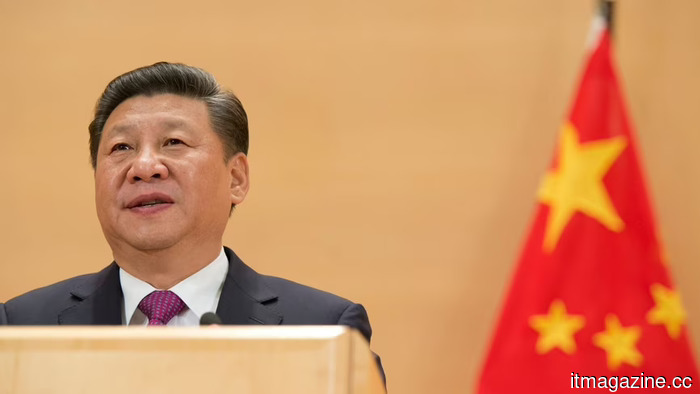 Xi states at the World AI Conference that no one nation should dominate AI.
In his inaugural keynote at the WAIC, Xi Jinping promoted open AI for developing nations while also addressing US export restrictions, just a day after China established a competing AI organization.
Xi states at the World AI Conference that no one nation should dominate AI.
In his inaugural keynote at the WAIC, Xi Jinping promoted open AI for developing nations while also addressing US export restrictions, just a day after China established a competing AI organization.
 You can now modify videos in Google Vids just by explaining the alterations you want.
Google has introduced Gemini Omni and personal avatars to Vids, offering paid users innovative methods for creating, editing, and showcasing videos without relying on conventional editing tools.
You can now modify videos in Google Vids just by explaining the alterations you want.
Google has introduced Gemini Omni and personal avatars to Vids, offering paid users innovative methods for creating, editing, and showcasing videos without relying on conventional editing tools.
 Sources indicate that the PayPal board has rejected a $53 billion offer from Stripe and Advent, considering it insufficient.
Sources familiar with the discussions have informed Reuters that PayPal's board considers the $53 billion joint takeover offer from Stripe and Advent International to be insufficient.
Sources indicate that the PayPal board has rejected a $53 billion offer from Stripe and Advent, considering it insufficient.
Sources familiar with the discussions have informed Reuters that PayPal's board considers the $53 billion joint takeover offer from Stripe and Advent International to be insufficient.
 Sources indicate that the PayPal board has rejected a bid of $53 billion from Stripe and Advent, deeming it insufficient.
According to sources familiar with the discussions, PayPal's board considers a $53 billion joint acquisition offer from Stripe and Advent International to be insufficient, as reported by Reuters.
Sources indicate that the PayPal board has rejected a bid of $53 billion from Stripe and Advent, deeming it insufficient.
According to sources familiar with the discussions, PayPal's board considers a $53 billion joint acquisition offer from Stripe and Advent International to be insufficient, as reported by Reuters.
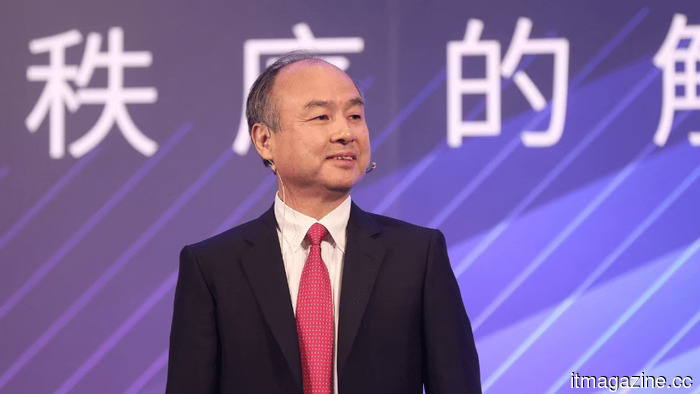 SoftBank is preparing a new $60 billion bond to support its investment in OpenAI.
SoftBank is said to be preparing a new bond issue of up to $60 billion to support its initiative with OpenAI, a goal that would exceed its previous record retail transaction and challenge its leverage.
SoftBank is preparing a new $60 billion bond to support its investment in OpenAI.
SoftBank is said to be preparing a new bond issue of up to $60 billion to support its initiative with OpenAI, a goal that would exceed its previous record retail transaction and challenge its leverage.
Xi asserts at the World AI Conference that no one nation should have a monopoly on AI.
Xi Jinping delivered his inaugural keynote at the WAIC, advocating for open AI for developing nations while criticizing US export restrictions, just a day after China introduced a competing AI organization.