
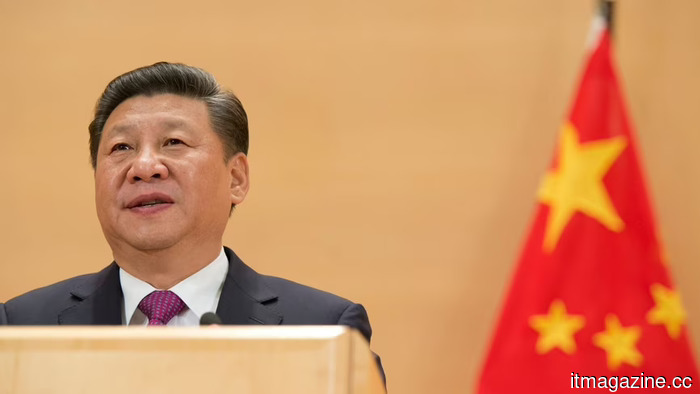
Xi states at the World AI Conference that no one nation should dominate AI.
Xi Jinping stated at the World AI Conference in Shanghai on Friday that artificial intelligence “should not be a solo act by a single nation, but a symphony of international collaboration,” positioning Beijing as a supporter of open and shared technology. This statement, directed at developing countries and implicitly aimed at Washington, set the stage for a speech focused on governance rather than products.
His participation was anticipated for several days, marking the first instance of a Chinese president addressing the summit in person. This event followed the signing of a China-led cooperative agreement by 29 governments the day before in the same city, with foreign minister Wang Yi endorsing the agreement.
According to the official Xinhua report, Xi characterized AI as a technology that presents “great opportunities and governance challenges” and advocated for a people-centered approach. He cautioned that neglecting poorer nations could solidify the technology gap into “new historical injustices.”
His governance message simultaneously critiqued US policy. “We should jointly oppose the overextension of the national security concept in the realm of AI or prioritizing one country’s security over that of others,” Xi stated, remarks widely interpreted as a criticism of American export controls.
These controls are central to nearly all of China’s comments about AI now. Washington has spent the past two years limiting Chinese access to the most advanced chips, prompting Beijing to consider its own restrictions on who can access its leading models abroad.
The timing of Xi’s speech is significant. China has closed the gap with American laboratories quicker than many in Washington anticipated, allowing Xi to approach the summit from a position closer to parity than early iterations of the event.
The contrast Xi aimed to highlight was collaboration versus containment. He committed to building capacity for partners across Africa, Latin America, Asia, and the BRICS nations, extending an earlier offer of free AI resources to the Global South that contrasts with the more cautious stance of the G7.
Safety was also addressed. Xi called for “laws and regulations, technological monitoring, early warning, and emergency response systems” to ensure AI is “always under human control,” language that would not seem out of place at a Western summit. The distinction lies not so much in the wording but in who gets to establish the rules.
The new organization is designed to provide a platform for this message. Promoted as an independent entity that encourages “beneficial, safe, and fair” AI within the principles of the UN Charter, it received founding signatures from countries such as Russia, Kazakhstan, Pakistan, Indonesia, and Laos, and will be based in Shanghai.
Its stated purpose is capacity-building rather than regulation, offering infrastructure, training, and shared models to countries that have mainly observed the AI boom from a distance. This is the audience Xi focused on during his speech, one that Beijing hopes will find its offers more appealing than those from the West.
What remained unmentioned was also notable. Major US tech companies were largely absent from the event, while Huawei took advantage of the occasion to launch its Atlas 950 SuperPoD, a computing cluster designed to operate without Nvidia’s top chips.
The diplomacy had a UN aspect to it. Secretary-General António Guterres attended the launch of the cooperation organization, providing a measure of multilateral support to the framing aimed at developing nations that a purely Chinese initiative would find hard to assert alone.
Despite the talk of a symphony, the composition is contested. Xi has compared the emergence of AI to the steam engine, a revolution he believes will permeate the entire economy, and he clearly wants Beijing to lead as the Global South decides whose standards to adopt. After all, a symphony still requires a conductor.
Whether the World AI Cooperation Organization will evolve into a legitimate competitor to Western governance platforms or remain a well-attended symbol is the question that future conferences will address. For now, China possesses the venue, the guest list, and, on Friday, the keynote address.
Other articles
 Mamdani is requesting that landlords in NYC identify the AI used in their apartment images.
New York's Rental Ripoff Report would require landlords to reveal any AI-modified listing images, as a component of Mayor Mamdani's 23-point plan for tenants.
Mamdani is requesting that landlords in NYC identify the AI used in their apartment images.
New York's Rental Ripoff Report would require landlords to reveal any AI-modified listing images, as a component of Mayor Mamdani's 23-point plan for tenants.
 Mitsubishi Electric is considering a merger of its power chip divisions with those of Rohm and Toshiba.
Sources indicate that Mitsubishi Electric is considering a partnership with Rohm and Toshiba to develop a power-chip combination that would establish them as the second-largest supplier globally.
Mitsubishi Electric is considering a merger of its power chip divisions with those of Rohm and Toshiba.
Sources indicate that Mitsubishi Electric is considering a partnership with Rohm and Toshiba to develop a power-chip combination that would establish them as the second-largest supplier globally.
 You can now connect your favorite applications to AI Mode in Google Search to accomplish tasks.
The AI Mode in Google Search can now interact with applications such as Instacart, Canva, and YouTube Music to perform tasks on your behalf.
You can now connect your favorite applications to AI Mode in Google Search to accomplish tasks.
The AI Mode in Google Search can now interact with applications such as Instacart, Canva, and YouTube Music to perform tasks on your behalf.
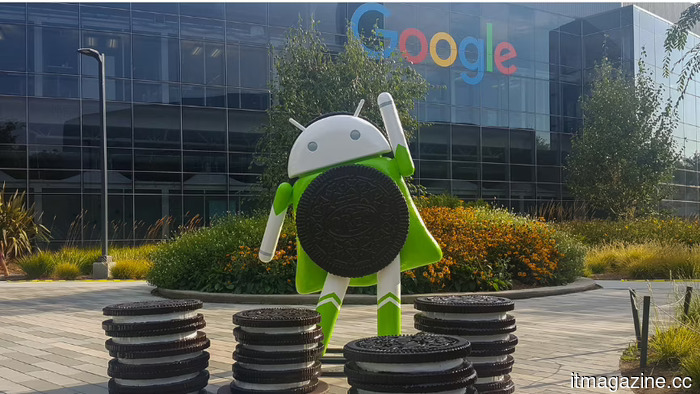 Google's fine from the EU will reduce the amount taxpayers owe to Brussels.
The 4.6 billion euro fine imposed on Google for Android goes into the EU budget, resulting in reduced contributions from member states. Germany might save approximately 1 billion euros.
Google's fine from the EU will reduce the amount taxpayers owe to Brussels.
The 4.6 billion euro fine imposed on Google for Android goes into the EU budget, resulting in reduced contributions from member states. Germany might save approximately 1 billion euros.
 Mamdani is urging landlords in NYC to indicate the use of AI in their apartment images.
New York's Rental Ripoff Report would require landlords to reveal any AI-modified listing images, as outlined in Mayor Mamdani’s 23-point plan for tenants.
Mamdani is urging landlords in NYC to indicate the use of AI in their apartment images.
New York's Rental Ripoff Report would require landlords to reveal any AI-modified listing images, as outlined in Mayor Mamdani’s 23-point plan for tenants.
 Sources indicate that the PayPal board has rejected a bid of $53 billion from Stripe and Advent, deeming it insufficient.
According to sources familiar with the discussions, PayPal's board considers a $53 billion joint acquisition offer from Stripe and Advent International to be insufficient, as reported by Reuters.
Sources indicate that the PayPal board has rejected a bid of $53 billion from Stripe and Advent, deeming it insufficient.
According to sources familiar with the discussions, PayPal's board considers a $53 billion joint acquisition offer from Stripe and Advent International to be insufficient, as reported by Reuters.
Xi states at the World AI Conference that no one nation should dominate AI.
In his inaugural keynote at the WAIC, Xi Jinping promoted open AI for developing nations while also addressing US export restrictions, just a day after China established a competing AI organization.