

AI didn't eliminate the role of travel agents. Fora has just reached unicorn status.
Fora, a platform enabling everyday individuals to become travel agents and allowing travellers to find them, has secured a $60 million Series D funding round at a $1 billion valuation, led by Forerunner and Tactile Ventures. The platform features over 15,000 advisors, 97% of whom are new to the industry, who have collectively booked more than $3 billion in travel, showing rapid growth. Fora plans to use the funds to enhance Via, an embedded AI assistant that manages administrative tasks, allowing advisors to concentrate on their clients—an explicit strategy to augment rather than replace human roles in a sector that many believed the internet and AI would eliminate.
Traditionally, travel agents were thought to be among the first victims of the internet and AI, yet Fora, built entirely on human travel agents, has reached unicorn status, according to their announcement. With this Series D funding, Fora's total funding now amounts to $138.5 million.
The investment comes from well-known venture capital firms as well as returning investors like Thrive Capital, Insight Partners, and Heartcore Capital, along with new backers such as PLUS Capital, which includes members from the artist and athlete collective featuring Amy Schumer.
This development contradicts a decade of prevailing beliefs, as the expectation was that middlemen would vanish instead of achieving billion-dollar valuations.
What Fora Represents
Founded in 2021, Fora operates as a two-sided platform. It provides a framework for regular individuals to become travel agents while helping travellers locate those agents to plan various types of trips, including honeymoons and safaris. The platform’s scale is notable, with over 15,000 active advisors; the majority of whom are new to the industry, coming from diverse backgrounds like medicine, law, trading, and retirement.
The types of advisors are varied. Some provide travel advice for extra income, while others manage bookings exceeding $10 million annually. The booking statistics are impressive, with more than $3 billion in travel booked to date. The first billion took three years to achieve, the second only eight months, and the third just five.
AI as Support, Not Replacement
An intriguing aspect of Fora's strategy is the significant investment in Via, their embedded AI assistant, which is currently being tested with top advisors. Via takes on administrative tasks such as destination research, supplier knowledge, itinerary creation, and proposal development, thereby allowing human agents to dedicate more time to clients.
Co-founder Evan Frank emphasized that AI is intended to enhance human capabilities rather than replace them. He believes that critical human qualities like expertise, relationships, and personal taste are challenging to duplicate and will become even more valuable as AI takes on routine operational functions. This reflects the augment-not-replace philosophy they have adopted as a business approach, similar to the trend in finance where AI works alongside humans instead of displacing them.
Rising Demand for Human Advisors
Interestingly, the demand for human advisors is increasing rather than declining. LinkedIn ranked the travel advisor role as the fifth-fastest-growing job in the US for 2025. This demand can be understood; as the number of booking options expands into a confusing mix of websites and pricing, a reliable human advisor who has firsthand experience in a destination becomes more valuable.
Fora's approach to the AI revolution aims to make it easier and more productive for individuals to enter this profession. Even industry leaders like Sam Altman have suggested that a jobs crisis driven by AI is unlikely, and this model exemplifies a hopeful interpretation of that outlook.
Considerations to Note
While this perspective originates from Fora, a company actively seeking investment, its investors support this viewpoint as well. Tactile Ventures’ Brian O’Malley claimed that Fora is outpacing any other company in the AI travel sector. However, such assertions have yet to be tested through a downturn or against an effective autonomous booking system, both of which could arise during the funding period.
Competitors like Trip.com, Expedia, and various startups are developing AI systems capable of handling trip planning and reservations autonomously. If successful, Fora's advisors would be competing with software, rather than just fellow agents. Moreover, the valuation exists within a volatile market where AI has quickly created unicorns, primarily among developer tools rather than consumer services. A travel-agent platform achieving a billion-dollar valuation is a notable exception in this landscape.
Why This Matters Beyond Travel
Fora demonstrates a particular business proposition: that in certain industries, the best strategy is not to eliminate human roles through automation, but rather to empower and share profits with them. This stands in contrast to a year marked by job losses due to AI and highlights a model where technology fosters a new wave of small business ownership instead of diminishing job opportunities.
Fora describes this as the emergence of a new category of entrepreneurs, which might be seen as a marketing angle, but the underlying premise holds substantial value. The funding will support Via, explore new markets, and enhance efforts in cruises, flights, and enterprise travel.
Other articles
 Meta AI will involve parents when teenagers talk about self-harm.
Meta is introducing parental notifications and human oversight for sensitive AI discussions involving teenagers who could be at risk of self-harm.
Meta AI will involve parents when teenagers talk about self-harm.
Meta is introducing parental notifications and human oversight for sensitive AI discussions involving teenagers who could be at risk of self-harm.
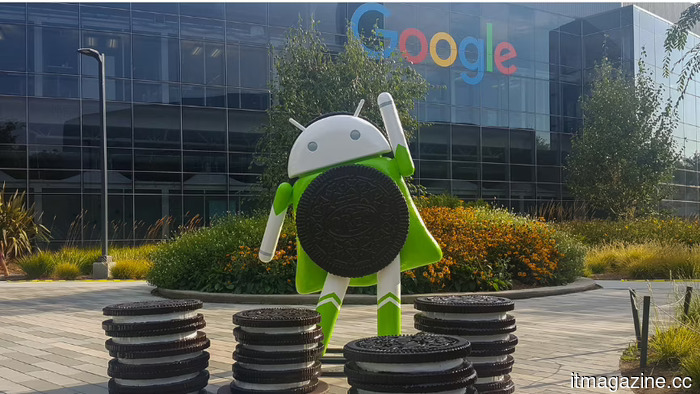 Google's fine from the EU will reduce the amount taxpayers owe to Brussels.
The 4.6 billion euro fine imposed on Google for Android goes into the EU budget, resulting in reduced contributions from member states. Germany might save approximately 1 billion euros.
Google's fine from the EU will reduce the amount taxpayers owe to Brussels.
The 4.6 billion euro fine imposed on Google for Android goes into the EU budget, resulting in reduced contributions from member states. Germany might save approximately 1 billion euros.
 Mitsubishi Electric is considering a merger of its power chip divisions with those of Rohm and Toshiba.
Sources indicate that Mitsubishi Electric is considering a partnership with Rohm and Toshiba to develop a power-chip combination that would establish them as the second-largest supplier globally.
Mitsubishi Electric is considering a merger of its power chip divisions with those of Rohm and Toshiba.
Sources indicate that Mitsubishi Electric is considering a partnership with Rohm and Toshiba to develop a power-chip combination that would establish them as the second-largest supplier globally.
 Your OnePlus phone will be transitioning to ColorOS, regardless of your preference.
OnePlus has announced that OxygenOS will be phased out in favor of ColorOS, and eligible devices around the globe will have the option to update when ColorOS 17 is released.
Your OnePlus phone will be transitioning to ColorOS, regardless of your preference.
OnePlus has announced that OxygenOS will be phased out in favor of ColorOS, and eligible devices around the globe will have the option to update when ColorOS 17 is released.
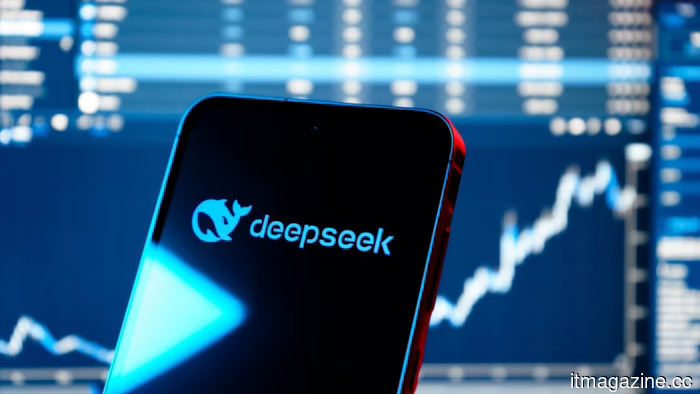 A luggage manufacturer’s filing has just valued DeepSeek at $52 billion.
A filing from a Chinese luggage manufacturer suggests that DeepSeek's value is approximately $52 billion, a figure that falls between its discussions of $45 billion and its aspirations for a $74 billion IPO.
A luggage manufacturer’s filing has just valued DeepSeek at $52 billion.
A filing from a Chinese luggage manufacturer suggests that DeepSeek's value is approximately $52 billion, a figure that falls between its discussions of $45 billion and its aspirations for a $74 billion IPO.
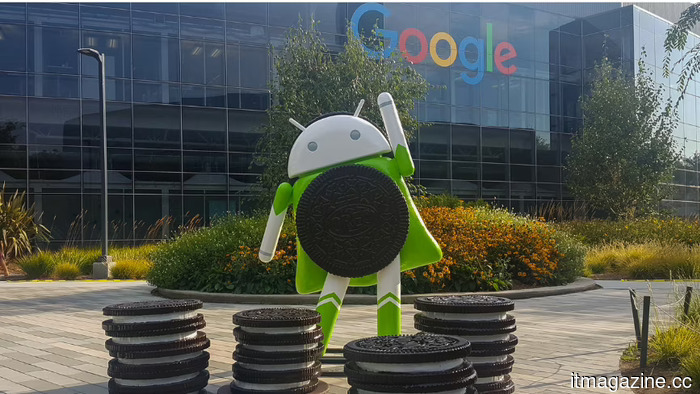 Google’s fine imposed by the EU will reduce the amount taxpayers owe to Brussels.
The 4.6 billion euro fine imposed on Google for Android will go into the EU budget, reducing the contributions needed from member states. Germany stands to save approximately 1 billion euros.
Google’s fine imposed by the EU will reduce the amount taxpayers owe to Brussels.
The 4.6 billion euro fine imposed on Google for Android will go into the EU budget, reducing the contributions needed from member states. Germany stands to save approximately 1 billion euros.
AI didn't eliminate the role of travel agents. Fora has just reached unicorn status.
Fora achieved a valuation of $1 billion by enrolling 15,000 individuals as travel agents and providing them with an AI assistant to handle the tedious tasks. The augmentation strategy.