
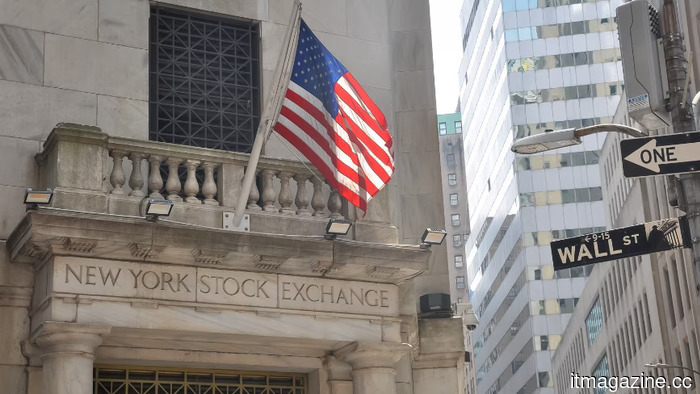
Wall Street recently experienced its strongest quarter in investment banking in years, claiming that AI has initiated a super cycle.
Goldman Sachs recorded $3.4 billion in investment banking fees for the second quarter, marking a record high and a 55% increase compared to the previous year. David Solomon, the firm's CEO, attributed this growth to what he calls an AI CapEx super cycle, highlighting the demand for financing across all financial instruments, all regions, and every industry. He shared this insight with analysts during the company’s earnings call on July 14.
Included in the total, equity underwriting surged by 130% to $985 million, while debt underwriting climbed 75% to a record $1.03 billion. This increased demand has been a factor that encouraged eight banks to participate in SoftBank’s $40 billion loan for OpenAI.
The trend was consistent across the industry, with JPMorgan reporting $3.3 billion in investment banking fees, up 30% and the highest since 2021. Morgan Stanley's fees rose by 58% to $2.44 billion, Bank of America’s increased by 50% to $2.14 billion, and Citigroup's rose 44% to $1.55 billion, although Citi changed its reporting method this quarter, making its figures not directly comparable to its peers.
Morgan Stanley CEO Ted Pick estimated the current phase of the investment cycle to be about 10%-15% complete. He referenced his firm’s research predicting data center capital expenditures of approximately $850 billion this year and $1.3 trillion by 2027, potentially reaching $1.5 trillion in 2028. However, he tempered this optimism by acknowledging the uncertainties involved, stating, “It’s really early, and I’m not sure we altogether know because of the known unknown element of this.”
Jamie Dimon attributed part of JPMorgan's performance to AI, mentioning factors such as AI-driven capital investment, fiscal stimulus, and the advantages of more efficient regulation contributing to a strong US economy. However, he was more cautious during the call, stating, “It’s getting close to as good as it gets. We just don’t know how long it’s going to last.”
Citigroup's Jane Fraser talked about the demand landscape, noting that AI is a prevalent topic in discussions. She remarked that sectors such as tech, data centers, energy, and defense are witnessing accelerating CapEx, adding, “Wherever there’s a bottleneck in that whole energy power compute memory ecosystem, we’re seeing a lot of activity.” She cited SK Hynix, which recently priced a $26.5 billion American depositary receipt offering on July 9.
An intriguing comment came from JPMorgan's CFO Jeremy Barnum regarding deals that the bank chose not to pursue. He mentioned concerns over power supply and tenant reliability in data center projects, stating, “We passed on some deals. We saw some deals come through where we were just like, ‘Yeah, we’re not doing that.’”
No bank revealed specific figures related to their data center lending or AI infrastructure exposure, including JPMorgan, Goldman, Morgan Stanley, Citi, or Bank of America. When asked about AI's specific contribution to Goldman’s results, Solomon refrained from providing a detailed figure, saying, “I’m not sure that I can do that in a way where I give you a good answer.”
Aggregate net income for the five largest US banks reached approximately $49 billion, reflecting a 39% year-on-year increase. The advisory segment, which requires bankers to interact with clients, did not grow as quickly as underwriting: Goldman’s advisory fees rose by 17%, while Citi’s declined by 4%. The bulk of revenues stemmed from underwriting roles.
Solomon also shared a critical observation that IPO volumes were “kind of at or below the 10-year average,” even with the record fee figures. Regarding the future, he suggested that the market will experience a recalibration, reset, drawdown, and then possibly another acceleration.
As the volumes increase, the financing structures are becoming more complex. For instance, Meta raised $27.3 billion in a private placement involving Blue Owl and Pimco for a single campus in Louisiana, contributing to more than $40 billion placed in that market since November. Meanwhile, ICE is developing futures contracts on computing, and CoreWeave is exploring ways to hedge memory chips, which currently lack an established market. Goldman is set to report again in October, and Barnum's two key questions, power supply and tenant stability, remain significant considerations for the upcoming report.
Other articles
 An F1 aerodynamicist has secured $55 million in funding to train factory robots by utilizing videos of individuals performing household tasks.
Microagi secured $55 million in funding, with Hummingbird at the forefront. Its data division compensates 20,000 individuals across 15 nations to record themselves while working. Robots lack internet access for learning.
An F1 aerodynamicist has secured $55 million in funding to train factory robots by utilizing videos of individuals performing household tasks.
Microagi secured $55 million in funding, with Hummingbird at the forefront. Its data division compensates 20,000 individuals across 15 nations to record themselves while working. Robots lack internet access for learning.
 Europe’s strongest earnings quarter in three years is attributed to energy, rather than AI.
Profits for the STOXX 600 are expected to increase by 15.3% in the second quarter, marking the highest growth since 2022. Excluding the energy sector, the growth drops to 6%, compared to 19.6% in the United States.
Europe’s strongest earnings quarter in three years is attributed to energy, rather than AI.
Profits for the STOXX 600 are expected to increase by 15.3% in the second quarter, marking the highest growth since 2022. Excluding the energy sector, the growth drops to 6%, compared to 19.6% in the United States.
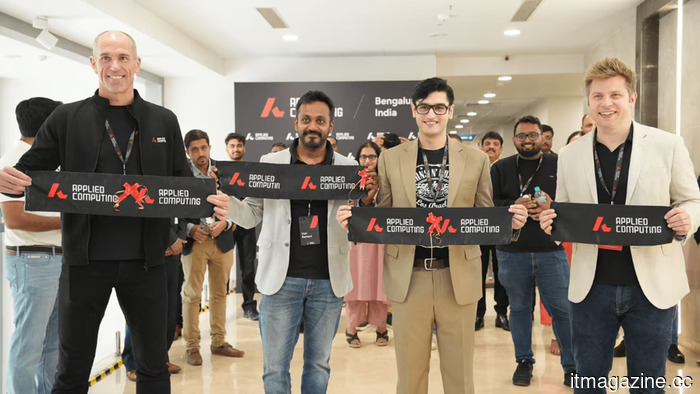 Applied Computing secures $20 million to develop a foundational model for the refinery.
The London-based startup reports that its plants utilize less than 8% of the data they gather. Its Orbital model integrates time series, physics, and language. KBR spearheaded the $20 million funding round.
Applied Computing secures $20 million to develop a foundational model for the refinery.
The London-based startup reports that its plants utilize less than 8% of the data they gather. Its Orbital model integrates time series, physics, and language. KBR spearheaded the $20 million funding round.
 Ofcom launches an investigation into TikTok regarding child safety.
Ofcom is looking into whether TikTok is capable of identifying child users and if it effectively prevents harmful content from reaching them. Penalties could amount to 10% of the company's global revenue.
Ofcom launches an investigation into TikTok regarding child safety.
Ofcom is looking into whether TikTok is capable of identifying child users and if it effectively prevents harmful content from reaching them. Penalties could amount to 10% of the company's global revenue.
 Europe's strongest earnings quarter in three years is attributed to energy rather than AI.
Profits for the STOXX 600 are expected to increase by 15.3% in the second quarter, marking the highest growth since 2022. Excluding the energy sector, the growth is projected at 6%, compared to 19.6% in the United States.
Europe's strongest earnings quarter in three years is attributed to energy rather than AI.
Profits for the STOXX 600 are expected to increase by 15.3% in the second quarter, marking the highest growth since 2022. Excluding the energy sector, the growth is projected at 6%, compared to 19.6% in the United States.
 Europe's strongest earnings quarter in three years is driven by energy rather than AI.
Profits for the STOXX 600 are expected to increase by 15.3% in the second quarter, marking the highest growth rate since 2022. Excluding the energy sector, the growth rate drops to 6%, compared to 19.6% in the United States.
Europe's strongest earnings quarter in three years is driven by energy rather than AI.
Profits for the STOXX 600 are expected to increase by 15.3% in the second quarter, marking the highest growth rate since 2022. Excluding the energy sector, the growth rate drops to 6%, compared to 19.6% in the United States.
Wall Street recently experienced its strongest quarter in investment banking in years, claiming that AI has initiated a super cycle.
Goldman recorded an all-time high of $3.4 billion in investment banking fees, representing a 55% increase. The CEO refers to it as an AI capex super cycle. Meanwhile, JPMorgan's CFO is opting out of data center transactions.