
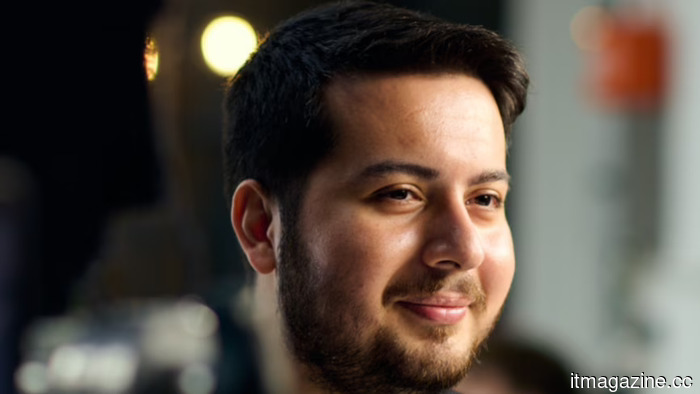
An F1 aerodynamicist has secured $55 million in funding to train factory robots by utilizing videos of individuals performing household tasks.
Bercan Kilic landed his dream job in 2023, working on aerodynamics for Red Bull Racing as the team celebrated numerous victories. He found the engineering to be magnificent yet subtle.
His Munich startup, microagi, has secured $55 million, claiming to be the largest seed funding round raised by a German company. The round was led by Hummingbird, with participation from Northzone, LocalGlobe, Village Global, and redalpine, although the valuation wasn’t disclosed.
What microagi offers is more specialized than the funding implies, which is intriguing. The company does not manufacture robots or create models. Instead, it captures footage of workers using cameras and sensor-equipped gloves, and utilizes that data to teach existing robotics models how to perform specific tasks in various customer factories.
This approach is somewhat out of step in a sector that has heavily invested in hardware, exemplified by Walden Robotics’ $300 million launch and All3’s legged construction robots. microagi operates in the space between third-party robots and pre-existing models.
According to Kilic, five companies are gathering data through their platform, with one getting ready to deploy robots on a production line, with clients from industries including automotive, logistics, and food. He refrained from naming the model partners involved.
“We provide the labs with data, and they give us models, which we enhance with our proprietary data to ensure customer satisfaction,” he explained.
This strategy emerged due to a change in direction. Originally, microagi intended to focus solely on deployment, but the team discovered that the majority of robotics models were inadequate for practical application.
Kilic drew a comparison with training a new employee, noting that while an adult can adapt to a factory role in a week, a child might never learn, and similarly, current robotics models are still immature.
This led to the development of shift, which you may have heard of without knowing its origin. It gained popularity this year by offering free apartment cleaning services in New York in exchange for filming cleaners washing dishes, mopping, and folding laundry. Recently, it began offering free private chef services in San Francisco.
shift now operates in 15 countries, compensating over 20,000 individuals to record themselves performing various physical tasks, selling this footage to labs that develop robotic artificial intelligence. It faces competition from companies like Scale AI, Turing, and micro1, all pursuing similar objectives.
The business model is driven by a significant imbalance. Language models are trained using online data, while robots lack internet access—a disparity Ken Goldberg, a roboticist from Berkeley, estimates could take 100,000 years to bridge, regardless of capital influx. This is why capturing video footage is crucial.
Kilic’s perspective on whether he is displacing workers is driven more by demographic factors than ethical considerations. Europe and the US are experiencing a workforce decline, while China continues to advance its automation efforts, having installed 295,000 factory robots in 2024, which comprises 54% of the global total, compared to 34,200 in the US.
Focusing on adapting current models instead of creating new ones also represents a gamble on the availability of those models—a theory that Nvidia has been promoting throughout the year. If successful, microagi stands to benefit; if not, it will have amassed extensive footage of people performing menial tasks.
“For those running factories, the calculations are clear,” he stated. “Many seasoned workers will retire this decade, and their successors aren’t yet born. Reshoring efforts will only succeed if robotics can keep pace.”
The statistics reinforce this perspective. The EU's median age reached 44.9 in 2025, up from 39.6 two decades before, and the European Commission projects that the bloc could lose 18.8 million workers by 2050.
Firat Ileri from Hummingbird, who led the investment round and has previously supported Lovable, Kraken, and Etched, remarked on how infrequently anyone seemed to leave the Munich office.
The funding will be allocated for computing resources, expanding the network for shift, and establishing a presence in the US, which will be managed from New York. Currently, microagi has a workforce of 37, while shift employs around 75.
Kilic's four co-founders include a former Mercedes F1 engineer, Yoan Iliev, and Anton Poletaev, a former researcher at the Alan Turing Institute.
Kilic believes the robotics field is at its “GPT-2 moment,” suggesting a scaling strategy is on the verge of discovery but not fully realized yet. He aims for microagi to become the world's largest company within five years.
“If we haven't deployed over 20 million or 30 million robots in five years, it will be a significant failure,” he remarked, noting that the company currently has one client nearing the point of utilizing robots on the factory floor.
Other articles
 Europe's strongest earnings quarter in three years is attributed to energy rather than AI.
Profits for the STOXX 600 are expected to increase by 15.3% in the second quarter, marking the highest growth since 2022. Excluding the energy sector, the growth is projected at 6%, compared to 19.6% in the United States.
Europe's strongest earnings quarter in three years is attributed to energy rather than AI.
Profits for the STOXX 600 are expected to increase by 15.3% in the second quarter, marking the highest growth since 2022. Excluding the energy sector, the growth is projected at 6%, compared to 19.6% in the United States.
 Europe's strongest earnings quarter in three years is driven by energy rather than AI.
Profits for the STOXX 600 are expected to increase by 15.3% in the second quarter, marking the highest growth rate since 2022. Excluding the energy sector, the growth rate drops to 6%, compared to 19.6% in the United States.
Uber consents to a $14.8 billion acquisition of Delivery Hero, which is 26% higher than its offer made in May.
Uber has reached an agreement for a takeover of Delivery Hero at €41.50 per share, which values the company at $14.8 billion. In May, it had proposed €33 per share. Additionally, fourteen markets will be sold to SSW Partners for $1.6 billion.
Europe's strongest earnings quarter in three years is driven by energy rather than AI.
Profits for the STOXX 600 are expected to increase by 15.3% in the second quarter, marking the highest growth rate since 2022. Excluding the energy sector, the growth rate drops to 6%, compared to 19.6% in the United States.
Uber consents to a $14.8 billion acquisition of Delivery Hero, which is 26% higher than its offer made in May.
Uber has reached an agreement for a takeover of Delivery Hero at €41.50 per share, which values the company at $14.8 billion. In May, it had proposed €33 per share. Additionally, fourteen markets will be sold to SSW Partners for $1.6 billion.
 AGCOM imposed a fine of €750,000 on Google due to gambling videos on YouTube.
AGCOM imposed a €750,000 fine on Google for gambling videos on YouTube. Google referenced the hosting protection. The creator was part of a verified revenue-sharing agreement.
AGCOM imposed a fine of €750,000 on Google due to gambling videos on YouTube.
AGCOM imposed a €750,000 fine on Google for gambling videos on YouTube. Google referenced the hosting protection. The creator was part of a verified revenue-sharing agreement.
 Nvidia partners with Japan's robotics industry for its open world models.
FANUC, Yaskawa, Kawasaki, and 19 other companies plan to become part of Nvidia's Cosmos Coalition. No financial commitments or binding agreements have been revealed.
Nvidia partners with Japan's robotics industry for its open world models.
FANUC, Yaskawa, Kawasaki, and 19 other companies plan to become part of Nvidia's Cosmos Coalition. No financial commitments or binding agreements have been revealed.
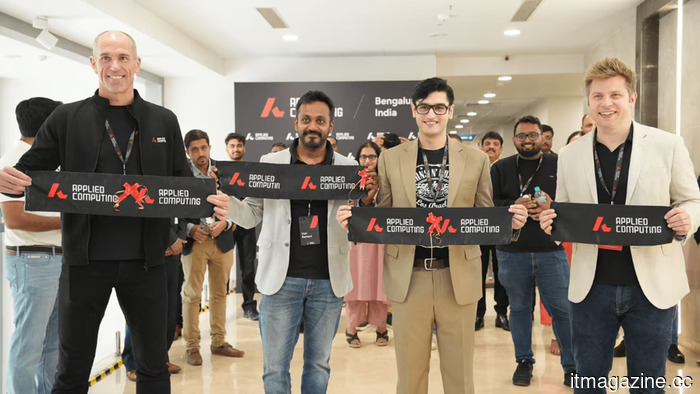 Applied Computing secures $20 million to develop a foundational model for the refinery.
The London-based startup reports that its plants utilize less than 8% of the data they gather. Its Orbital model integrates time series, physics, and language. KBR spearheaded the $20 million funding round.
Applied Computing secures $20 million to develop a foundational model for the refinery.
The London-based startup reports that its plants utilize less than 8% of the data they gather. Its Orbital model integrates time series, physics, and language. KBR spearheaded the $20 million funding round.
An F1 aerodynamicist has secured $55 million in funding to train factory robots by utilizing videos of individuals performing household tasks.
Microagi secured $55 million in funding, with Hummingbird at the forefront. Its data division compensates 20,000 individuals across 15 nations to record themselves while working. Robots lack internet access for learning.