
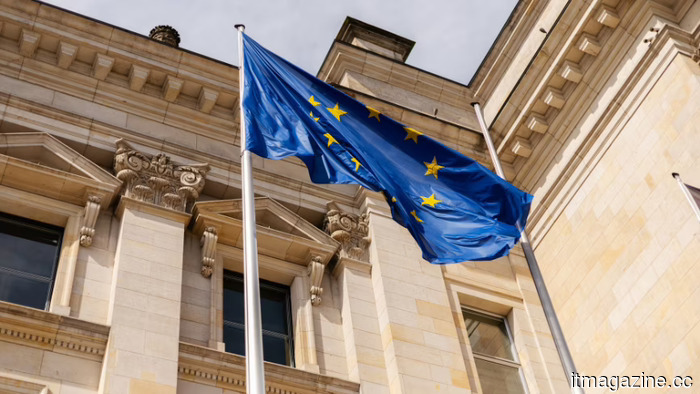
Europe's strongest earnings quarter in three years is driven by energy rather than AI.
European companies are approaching their most robust quarterly earnings season in over three years, and the factor driving it is largely unrelated to AI. According to LSEG I/B/E/S data compiled by analyst Tajinder Dhillon and released on July 9, STOXX 600 constituents are expected to see second-quarter profit growth of 15.3% year over year. This translates to €156.8 billion compared to €136.1 billion from the previous year, across 318 firms with comparable data. If accurate, this would mark the strongest quarter since the last quarter of 2022.
Excluding the energy sector, however, the growth figure drops significantly to just 6%. For comparison, the equivalent figure for the S&P 500, using the same LSEG methodology, stands at 19.6%. This gap highlights why a headline growth rate that suggests a European revival also comes with a cautionary note. It reflects the same discrepancies seen in adoption data and the halted gigafactory plans, now reflected in earnings.
The forecasts have been progressively increasing throughout the year, which is notable. LSEG projected a growth rate of 5.2% on October 1, 12.7% by April 1, and 14.5% on July 1. Analysts have been revising their estimates upwards, with the 15.3% figure being compared to actual results from the previous year.
The energy sector is primarily driving this growth, with LSEG estimating a 112.4% increase in earnings and a 45.7% rise in revenues, making it the strongest sector in the index. In contrast, healthcare is projected to decline by 2.4%.
Contributing to this are crude oil prices; Brent crude averaged $103.28 per barrel in the second quarter compared to $68.01 during the same period in 2025, marking an increase of roughly 52%, according to US Energy Information Administration spot data. The conflict involving the US, Israel, and Iran, which escalated in late February, is a contributing factor.
However, the trends within the quarter do not paint as favorable a picture. Brent reached a peak of $124.24 on April 30 but then steadily decreased, averaging $85.40 in June and dipping to $68.53 on July 2, briefly falling below pre-war levels.
Earnings for the quarter are accounted based on averages, while guidance for the third quarter will be based on exit rates, which diverge from the overall data. The relevance of this disparity hinges on an ongoing conflict that remains unresolved. Although the Islamabad Memorandum was signed on June 17, the US conducted further strikes on Iranian targets on July 8 and reinstated a naval blockade on July 15, causing Brent prices to rise above $80 again.
Anyone forecasting a peace dividend in European energy earnings is basing their projections on an outcome that has yet to materialize.
The most evident AI-related earnings in Europe came from ASML, which reported second-quarter net sales of €9.33 billion on July 15, surpassing its guidance of €8.4 billion to €9.0 billion, achieving a gross margin of 54% versus a forecast of 51% to 52%, and net income of €2.92 billion. The company also raised its full-year sales forecast to €43 billion to €45 billion, up from a previous range of €36 billion to €40 billion, marking the second increase this year.
Chief Executive Christophe Fouquet noted, “Ongoing AI-related investments and continued progress in AI technologies are driving demand for advanced Logic and Memory chips.” He added that their order intake remained exceptionally strong in the first half of the year.
Furthermore, the company is increasing its 2027 low-NA EUV and DUV immersion capacity by 30%, bringing it to approximately 65 and 130 units, respectively, with an additional 30% expansion under consideration for 2028. It also projected third-quarter sales of €11 billion to €12 billion with a gross margin of 55% to 57%.
ASML is a solitary standout. The remainder of the index reveals more mixed data, with consumer cyclicals expected to grow by 11.6% and consumer non-cyclicals by 5.2%, while the automotive sector is feeling the strain of diminished Chinese demand and rising energy costs affecting domestic sentiment.
Europe’s structural economic position remains unchanged, and much of the AI capital entering the continent is primarily through debt raised by American firms.
Notably, the perspectives on this situation are not unanimous. On July 2, Goldman Sachs’s chief global equity strategist Peter Oppenheimer argued that AI infrastructure spending “does not stay bottled up inside five US megacaps” and will eventually contribute to enhanced earnings growth in other sectors. This reporting season will begin to clarify these dynamics in the upcoming weeks.
Other articles
 Europe's strongest earnings quarter in three years is attributed to energy rather than AI.
Profits for the STOXX 600 are expected to increase by 15.3% in the second quarter, marking the highest growth since 2022. Excluding the energy sector, the growth is projected at 6%, compared to 19.6% in the United States.
Europe's strongest earnings quarter in three years is attributed to energy rather than AI.
Profits for the STOXX 600 are expected to increase by 15.3% in the second quarter, marking the highest growth since 2022. Excluding the energy sector, the growth is projected at 6%, compared to 19.6% in the United States.
 An F1 aerodynamicist has secured $55 million in funding to train factory robots by utilizing videos of individuals performing household tasks.
Microagi secured $55 million in funding, with Hummingbird at the forefront. Its data division compensates 20,000 individuals across 15 nations to record themselves while working. Robots lack internet access for learning.
An F1 aerodynamicist has secured $55 million in funding to train factory robots by utilizing videos of individuals performing household tasks.
Microagi secured $55 million in funding, with Hummingbird at the forefront. Its data division compensates 20,000 individuals across 15 nations to record themselves while working. Robots lack internet access for learning.
 Wall Street recently experienced its strongest quarter for investment banking in years, and it is referring to AI as a supercycle.
Goldman recorded a historic $3.4 billion in investment banking fees, an increase of 55%. The CEO describes it as an AI capital expenditure super cycle. Meanwhile, JPMorgan's CFO is opting out of data center agreements.
Wall Street recently experienced its strongest quarter for investment banking in years, and it is referring to AI as a supercycle.
Goldman recorded a historic $3.4 billion in investment banking fees, an increase of 55%. The CEO describes it as an AI capital expenditure super cycle. Meanwhile, JPMorgan's CFO is opting out of data center agreements.
 Nvidia partners with Japan's robotics industry for its open world models.
FANUC, Yaskawa, Kawasaki, and 19 other companies plan to become part of Nvidia's Cosmos Coalition. No financial commitments or binding agreements have been revealed.
Uber consents to a $14.8 billion acquisition of Delivery Hero, which is 26% higher than its offer made in May.
Uber has reached an agreement for a takeover of Delivery Hero at €41.50 per share, which values the company at $14.8 billion. In May, it had proposed €33 per share. Additionally, fourteen markets will be sold to SSW Partners for $1.6 billion.
Nvidia partners with Japan's robotics industry for its open world models.
FANUC, Yaskawa, Kawasaki, and 19 other companies plan to become part of Nvidia's Cosmos Coalition. No financial commitments or binding agreements have been revealed.
Uber consents to a $14.8 billion acquisition of Delivery Hero, which is 26% higher than its offer made in May.
Uber has reached an agreement for a takeover of Delivery Hero at €41.50 per share, which values the company at $14.8 billion. In May, it had proposed €33 per share. Additionally, fourteen markets will be sold to SSW Partners for $1.6 billion.
 Ofcom initiates an investigation regarding child safety on TikTok.
Ofcom is looking into whether TikTok is able to identify child users and if it effectively protects them from harmful content. Fines could amount to 10% of the company's global revenue.
Ofcom initiates an investigation regarding child safety on TikTok.
Ofcom is looking into whether TikTok is able to identify child users and if it effectively protects them from harmful content. Fines could amount to 10% of the company's global revenue.
Europe's strongest earnings quarter in three years is driven by energy rather than AI.
Profits for the STOXX 600 are expected to increase by 15.3% in the second quarter, marking the highest growth rate since 2022. Excluding the energy sector, the growth rate drops to 6%, compared to 19.6% in the United States.