

Europe's strongest earnings quarter in three years is attributed to energy rather than AI.
European firms are entering their most robust quarterly earnings season in over three years, with little focus on AI. According to LSEG I/B/E/S data, analyzed by analyst Tajinder Dhillon and published on July 9, STOXX 600 companies are expected to increase second-quarter profits by 15.3% compared to the previous year. This translates to €156.8 billion, up from €136.1 billion a year ago, among the 318 companies with comparable figures. If achieved, it would mark the strongest quarter since late 2022.
However, excluding the energy sector reduces the growth figure to just 6%. In comparison, the S&P 500's growth rate excluding energy stands at 19.6%. This discrepancy raises questions, as a growth rate typically indicative of a European resurgence instead comes with a caveat. This gap is also evident in adoption rates and the halted gigafactory initiative, now reflected in earnings.
The earnings forecast has been improving throughout the year; LSEG projected a growth of 5.2% at the beginning of October, 12.7% by April 1, and 14.5% on July 1. Analysts have been revising estimates upward, with the 15.3% figure being compared to actual results from the previous year.
The energy sector is largely responsible for this growth, with LSEG reporting earnings growth of 112.4% and revenue growth of 45.7%, making it the strongest sector on the index. In contrast, healthcare is projected to shrink by 2.4%.
The increase in energy earnings is primarily driven by crude oil prices. Brent averaged $103.28 per barrel in the second quarter, up from $68.01 during the same period in 2022, roughly 52% higher, according to the US Energy Information Administration. The ongoing conflict between the US and Iran, which intensified in February, is a contributing factor.
However, the trajectory during the quarter is less optimistic than the averages suggest. Brent peaked at $124.24 on April 30 and has been in decline since, averaging $85.40 in June and dropping to $68.53 by July 2, briefly dipping below pre-war levels.
Quarterly profits are calculated based on averages, while guidance for the third quarter will rely on exit rates, which currently appear inconsistent with reported figures. The significance of this remains uncertain, as the conflict remains unresolved. Although the Islamabad Memorandum was signed on June 17, the US conducted strikes on Iranian targets on July 8 and reestablished a naval blockade on July 15, with Brent prices climbing back above $80.
Forecasts that factor in a peace dividend for European energy earnings are based on assumptions that have yet to materialize.
The most notable AI-related earnings in Europe come from ASML, which reported second-quarter net sales of €9.33 billion on July 15, surpassing its guidance of €8.4 billion to €9.0 billion, with a gross margin of 54% compared to a forecast of 51% to 52%, and a net income of €2.92 billion. The company has raised its full-year sales outlook to €43 billion to €45 billion, up from €36 billion to €40 billion three months prior, marking its second increase this year.
“Ongoing AI-related investments and continued progress in AI technologies are driving demand for advanced Logic and Memory chips,” said CEO Christophe Fouquet. “Our order intake remained extremely strong in the first half of the year.” The company plans to increase its 2027 capacity for low-NA EUV and DUV immersion lithography by 30%, targeting approximately 65 and 130 units respectively, with an additional 30% expansion under consideration for 2028. It has guided third-quarter sales estimates of €11 billion to €12 billion with gross margins of 55% to 57%.
ASML stands out as a single case; the broader index reflects more mixed conditions. Consumer cyclicals are projected to grow by 11.6% and consumer non-cyclicals by 5.2%, while the automotive sector faces challenges from weak demand in China and rising energy costs impacting sentiment at home.
Europe’s fundamental economic conditions remain unchanged, and the AI investments arriving in the region are primarily funded by debt from American firms. Perspectives on this are not unanimous. Goldman Sachs’ global equity strategist Peter Oppenheimer stated on July 2 that AI infrastructure spending “does not stay bottled up inside five US megacaps” and will eventually benefit other regions as well. The upcoming earnings season will provide clearer insights into this situation.
Other articles
 Applied Computing secures $20 million to develop a foundational model for the refinery.
The London-based startup reports that its plants utilize less than 8% of the data they gather. Its Orbital model integrates time series, physics, and language. KBR spearheaded the $20 million funding round.
Applied Computing secures $20 million to develop a foundational model for the refinery.
The London-based startup reports that its plants utilize less than 8% of the data they gather. Its Orbital model integrates time series, physics, and language. KBR spearheaded the $20 million funding round.
 Nvidia partners with Japan's robotics industry for its open world models.
FANUC, Yaskawa, Kawasaki, and 19 other companies plan to become part of Nvidia's Cosmos Coalition. No financial commitments or binding agreements have been revealed.
Nvidia partners with Japan's robotics industry for its open world models.
FANUC, Yaskawa, Kawasaki, and 19 other companies plan to become part of Nvidia's Cosmos Coalition. No financial commitments or binding agreements have been revealed.
 5 Questions Every CIO Must Consider Before Introducing Another Software Tool
In 2023, the typical tech stack comprised 291 applications, resulting in significant software expenditures. By 2026, numerous enterprise tech stacks have evolved to be even more intricate as companies keep integrating AI features into their processes. As vibe coding becomes more widespread and the number of SaaS platforms increases, how can a leader determine which [...]
5 Questions Every CIO Must Consider Before Introducing Another Software Tool
In 2023, the typical tech stack comprised 291 applications, resulting in significant software expenditures. By 2026, numerous enterprise tech stacks have evolved to be even more intricate as companies keep integrating AI features into their processes. As vibe coding becomes more widespread and the number of SaaS platforms increases, how can a leader determine which [...]
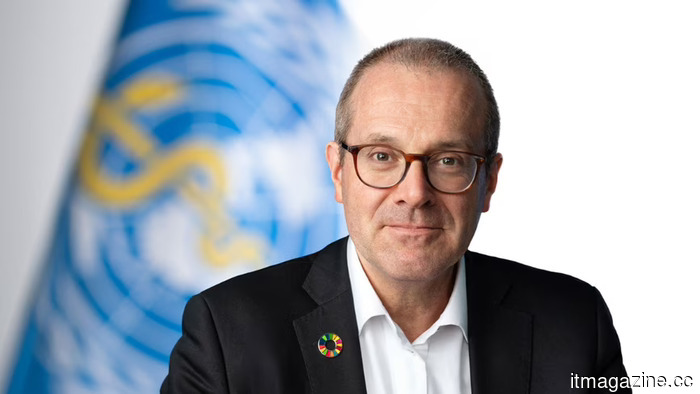 WHO cautions that the gap in health governance for AI in Europe is increasingly becoming irreversible.
Almost two-thirds of nations in the WHO European Region utilize AI diagnostics, but only one out of twelve has a strategy for its governance. Kluge describes this disparity as the key challenge.
WHO cautions that the gap in health governance for AI in Europe is increasingly becoming irreversible.
Almost two-thirds of nations in the WHO European Region utilize AI diagnostics, but only one out of twelve has a strategy for its governance. Kluge describes this disparity as the key challenge.
 Wall Street recently experienced its strongest quarter in investment banking in years, claiming that AI has initiated a super cycle.
Goldman recorded an all-time high of $3.4 billion in investment banking fees, representing a 55% increase. The CEO refers to it as an AI capex super cycle. Meanwhile, JPMorgan's CFO is opting out of data center transactions.
Uber consents to a $14.8 billion acquisition of Delivery Hero, which is 26% higher than its offer made in May.
Uber has reached an agreement for a takeover of Delivery Hero at €41.50 per share, which values the company at $14.8 billion. In May, it had proposed €33 per share. Additionally, fourteen markets will be sold to SSW Partners for $1.6 billion.
Wall Street recently experienced its strongest quarter in investment banking in years, claiming that AI has initiated a super cycle.
Goldman recorded an all-time high of $3.4 billion in investment banking fees, representing a 55% increase. The CEO refers to it as an AI capex super cycle. Meanwhile, JPMorgan's CFO is opting out of data center transactions.
Uber consents to a $14.8 billion acquisition of Delivery Hero, which is 26% higher than its offer made in May.
Uber has reached an agreement for a takeover of Delivery Hero at €41.50 per share, which values the company at $14.8 billion. In May, it had proposed €33 per share. Additionally, fourteen markets will be sold to SSW Partners for $1.6 billion.
Europe's strongest earnings quarter in three years is attributed to energy rather than AI.
Profits for the STOXX 600 are expected to increase by 15.3% in the second quarter, marking the highest growth since 2022. Excluding the energy sector, the growth is projected at 6%, compared to 19.6% in the United States.