

Microsoft is training its sales team to downplay the models it currently utilizes.
On Tuesday, Microsoft executives held an internal meeting to instruct the sales team on how to position their offerings against OpenAI, Google, and Anthropic—an occurrence that could be seen as ordinary, except that two of these companies provide the models used in Microsoft’s products.
The session was presented as a strategy launch for the new fiscal year that began this month, emphasizing cost and comprehensiveness. The company contends that its in-house models are more cost-effective and efficient, and are bundled with all other Microsoft products.
This marks a sales-floor manifestation of a trend that has been developing throughout the year, as Microsoft integrates its own MAI models into products that previously relied on external providers. “Others are selling parts,” said executive vice president Jay Parikh to the attendees. “We’re offering the complete end-to-end system. This is the narrative we need to convey in FY27.”
Another executive vice president, Jacob Andreou, furthered this idea in a presentation that directly compared Copilot with Anthropic’s Claude. He stated that within Microsoft’s office applications, Anthropic’s model was slower, less accurate, and lacked adequate security features.
Currently, Claude is part of Copilot. Therefore, the simplified pitch is for Microsoft's salespeople to inform customers that one of the underlying engines is the inferior choice, while they continue to distribute it.
Sales teams routinely critique competitors, which is standard practice. However, what makes this situation significant is the target of criticism. Microsoft has invested considerable resources over the years to build a dependence on these companies and is now positioning itself against them.
This shift has been noticeable for months, with Microsoft starting to replace OpenAI and Anthropic models in Word and Excel at the beginning of this month, a decision presented as a cost-reduction effort.
The head of AI has explicitly stated that the company aims to eliminate payments to Anthropic. This situation doesn't necessitate a conspiracy; Anthropic charges for its models, and Microsoft prefers not to incur those costs. The most straightforward way to stop paying for them is to persuade the market that the product being resold was never that impressive.
Anthropic represents an expensive dependence, which Microsoft is all too aware of, as its own engineers were among the largest users of Claude outside of Anthropic’s clients. Recently, Microsoft has quietly reduced its internal usage of Claude Code.
The foundational change in this scenario occurred in April when Microsoft and OpenAI revised their partnership, removing the exclusivity clause that allowed OpenAI to sell to Microsoft’s competitors. When a partner can do business with rivals, it complicates the rationale for not competing against them. Shortly after, Amazon began to offer OpenAI models via AWS.
There is also a market perspective to consider. Microsoft has spent the past year justifying its AI capital investments to investors who remain skeptical, especially in light of a $357 billion drawdown.
Instructing the sales team to assert that the in-house models are not just cheaper but superior serves as a justification for the investments made. Whether customers will accept this claim is another question. Claude has become the go-to option in enterprise AI coding tools, and those who chose it did so based on available benchmarks.
A Microsoft slide claiming the contrary, presented by a Microsoft salesperson with targets to meet, does not equate to the same level of evidence.
TechCrunch reached out to both Microsoft and Anthropic for comments, but neither provided a response by the time of publication.
For now, the three-way arrangement remains in place. Microsoft holds a significant stake in OpenAI, incorporates Anthropic’s models in Copilot, and promotes its own MAI models against both competitors. This is a justifiable strategy as long as it lasts, and Tuesday’s meeting serves as a clear indicator of which of the three Microsoft would prefer to push in the future.
Other articles
 Ofcom initiates an investigation regarding child safety on TikTok.
Ofcom is looking into whether TikTok is able to identify child users and if it effectively protects them from harmful content. Fines could amount to 10% of the company's global revenue.
Ofcom initiates an investigation regarding child safety on TikTok.
Ofcom is looking into whether TikTok is able to identify child users and if it effectively protects them from harmful content. Fines could amount to 10% of the company's global revenue.
 xAI's initial lawsuit against a user examines accountability for the content generated by Grok.
xAI has filed a lawsuit against a man from South Carolina for reportedly using Grok to create child sexual abuse material, marking the first case of its kind, while also contending with lawsuits that claim the opposite.
xAI's initial lawsuit against a user examines accountability for the content generated by Grok.
xAI has filed a lawsuit against a man from South Carolina for reportedly using Grok to create child sexual abuse material, marking the first case of its kind, while also contending with lawsuits that claim the opposite.
 Japan is constructing a 140MW AI factory dedicated to robotics, with Nvidia providing all the necessary equipment.
Noetra, a consortium composed of SoftBank, NEC, Sony, and Honda, will operate 27,500 Rubin GPUs for the FRONTia physical AI project in Japan. The price has not been revealed.
Japan is constructing a 140MW AI factory dedicated to robotics, with Nvidia providing all the necessary equipment.
Noetra, a consortium composed of SoftBank, NEC, Sony, and Honda, will operate 27,500 Rubin GPUs for the FRONTia physical AI project in Japan. The price has not been revealed.
 Wall Street recently experienced its strongest quarter in investment banking in years, claiming that AI has initiated a super cycle.
Goldman recorded an all-time high of $3.4 billion in investment banking fees, representing a 55% increase. The CEO refers to it as an AI capex super cycle. Meanwhile, JPMorgan's CFO is opting out of data center transactions.
Wall Street recently experienced its strongest quarter in investment banking in years, claiming that AI has initiated a super cycle.
Goldman recorded an all-time high of $3.4 billion in investment banking fees, representing a 55% increase. The CEO refers to it as an AI capex super cycle. Meanwhile, JPMorgan's CFO is opting out of data center transactions.
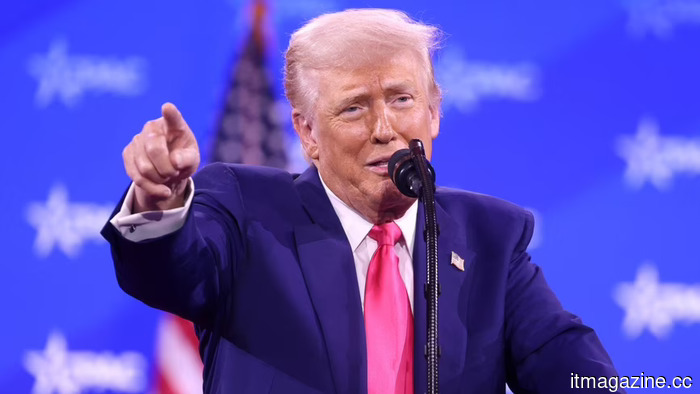 Trump describes the halt on New York's data center as a "terrible decision." Hochul remains steadfast.
The day after New York became the first state to halt large data centers, Trump called for an immediate reversal of that decision. Hochul responded within hours.
Trump describes the halt on New York's data center as a "terrible decision." Hochul remains steadfast.
The day after New York became the first state to halt large data centers, Trump called for an immediate reversal of that decision. Hochul responded within hours.
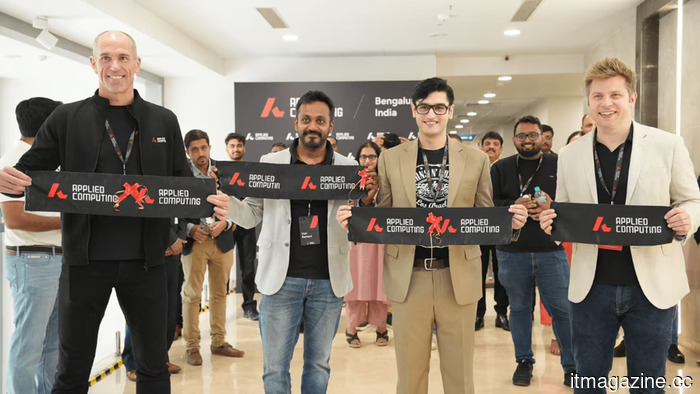 Applied Computing secures $20 million to develop a foundational model for the refinery.
The London-based startup reports that its plants utilize less than 8% of the data they gather. Its Orbital model integrates time series, physics, and language. KBR spearheaded the $20 million funding round.
Applied Computing secures $20 million to develop a foundational model for the refinery.
The London-based startup reports that its plants utilize less than 8% of the data they gather. Its Orbital model integrates time series, physics, and language. KBR spearheaded the $20 million funding round.
Microsoft is training its sales team to downplay the models it currently utilizes.
During an internal kickoff for FY27, Microsoft executives instructed the sales team to highlight Copilot positively when comparing it to Claude and OpenAI in terms of cost, speed, and security.