
Japan is constructing a 140MW AI factory dedicated to robotics, with Nvidia providing all the necessary equipment.
Nvidia, in collaboration with a Japanese industrial consortium, is developing what Nvidia refers to as the world's first national AI infrastructure tailored for physical AI. The details presented are notably specific for such an announcement.
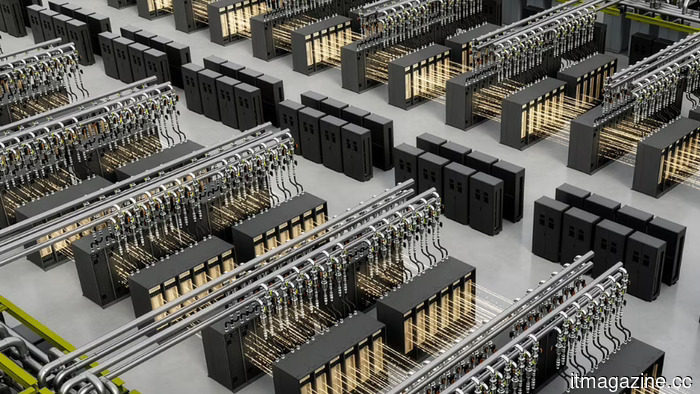
The AI factory will utilize 13,750 Nvidia Vera CPUs and 27,500 Rubin GPUs, operating within a data center capacity of 140 megawatts. This infrastructure is based on the Nvidia DSX platform, incorporating Vera Rubin NVL72 racks, Spectrum-X Ethernet, and BlueField DPUs.
This project is spearheaded by Noetra Corp, with the aim of creating open multimodal foundation models for AI agents, digital twins, and robots. It is essential to note that Noetra is a private consortium predominantly owned by SoftBank, NEC, Sony Group, and Honda, functioning as the channel through which Japan is pursuing its physical AI goals.
This is the second Nvidia announcement from Tokyo this week; the first had secured partnerships with much of Japan’s robotics sector to Nvidia’s open world models, while this one focuses on providing the computational resources for training those models.
The government’s involvement is primarily at the initial stage. METI and NEDO have jointly tasked Noetra and AIST, the national research institute, with executing the FRONTia Project, officially named Development of Multimodal Foundation Models with a View to AI Robotics and Physical AI. The computing power is crucial for this initiative.
The funding for this project is substantial, albeit more conditional than its headline figures imply. METI has pledged up to ¥1 trillion, approximately $6 billion, for the fiscal years 2026 to 2030. The initial funding is ¥387.3 billion, sourced from Japan’s GX Economy Transition Bonds, with only the first two years secured. Future funding will depend on annual evaluations, making the ¥1 trillion figure a cap rather than a guaranteed amount.
“Japan has launched the FRONTia Project, which will be central to the country’s physical AI ecosystem,” stated Ryosei Akazawa, Japan’s Minister of Economy, Trade and Industry, emphasizing the mix of international technology and domestic capabilities, citing Japan’s on-site expertise and manufacturing technology base.
Jensen Huang, echoing his earlier remarks in Tokyo, noted, “Japan invented modern manufacturing. Now, it is building the AI factories that will drive the next industrial revolution.”
However, no one has disclosed the costs involved. Nvidia’s announcement lacks specific figures regarding purchase prices, deal values, or a financial estimate for the chips. It mentions Nvidia partnering with Noetra to establish a facility, which differs from a government procurement of hardware, a distinction important for understanding risk responsibilities.
Hironobu Tamba, CEO of Noetra, highlighted the need for collaboration, stating, “Integrating physical AI into the real world requires immense computing, data, and foundational technologies, challenges that no single company can tackle alone.”
Nvidia’s strategic aim aligns with Japan’s AI Robotics Strategy, released in March, which targets over 30% of the global AI robotics market by 2040, valuing it at $133 billion. Additionally, METI aims for 10 million AI-enabled robots across 18 sectors by the same year.
Although these figures stem from separate documents and should not be conflated, they indicate a similar direction: Japan seeks to embed intelligence in machines it has the capability to manufacture, representing a more focused and realistic approach.
In comparison, Europe's attempts over the past two years to establish a gigafactory program have encountered delays, while Japan has identified a concrete operator, ministry involvement, a bond-funded initial tranche, and a clear rack count.
Furthermore, Japan has entrusted the entire setup to a single American supplier, a topic that Europe has debated for two years. In this context, sovereignty implies holding ownership of the models and deployment while utilizing rented silicon. Whether this counts as sufficient remains a matter Japan seems to have resolved by not addressing it explicitly.
It’s important to clarify that the designation of "world’s first national AI infrastructure" comes from Nvidia itself in both the title and text of the announcement, and no independent entity has corroborated this claim, with other nations likely to challenge it.
Other articles
 Trump describes the halt on New York's data center as a "terrible decision." Hochul remains steadfast.
The day after New York became the first state to halt large data centers, Trump called for an immediate reversal of that decision. Hochul responded within hours.
Trump describes the halt on New York's data center as a "terrible decision." Hochul remains steadfast.
The day after New York became the first state to halt large data centers, Trump called for an immediate reversal of that decision. Hochul responded within hours.
 Microsoft is training its sales team to downplay the models it currently utilizes.
During an internal kickoff for FY27, Microsoft executives instructed the sales team to highlight Copilot positively when comparing it to Claude and OpenAI in terms of cost, speed, and security.
Microsoft is training its sales team to downplay the models it currently utilizes.
During an internal kickoff for FY27, Microsoft executives instructed the sales team to highlight Copilot positively when comparing it to Claude and OpenAI in terms of cost, speed, and security.
 Google has just hinted at a Pixel 11 feature that we've been anticipating for several months.
A multicolored light featured in the teaser for Google’s new Pixel 11 series could indicate the functionality of Pixel Glow on the soon-to-be-released Pixel 11 Pro.
Google has just hinted at a Pixel 11 feature that we've been anticipating for several months.
A multicolored light featured in the teaser for Google’s new Pixel 11 series could indicate the functionality of Pixel Glow on the soon-to-be-released Pixel 11 Pro.
 WHO cautions that the gap in health governance for AI in Europe is increasingly becoming irreversible.
Almost two-thirds of nations in the WHO European Region utilize AI diagnostics, but only one out of twelve has a strategy for its governance. Kluge describes this disparity as the key challenge.
WHO cautions that the gap in health governance for AI in Europe is increasingly becoming irreversible.
Almost two-thirds of nations in the WHO European Region utilize AI diagnostics, but only one out of twelve has a strategy for its governance. Kluge describes this disparity as the key challenge.
 Applied Computing secures $20 million to develop a foundational model for the refinery.
The London-based startup reports that its plants utilize less than 8% of the data they gather. Its Orbital model integrates time series, physics, and language. KBR spearheaded the $20 million funding round.
Applied Computing secures $20 million to develop a foundational model for the refinery.
The London-based startup reports that its plants utilize less than 8% of the data they gather. Its Orbital model integrates time series, physics, and language. KBR spearheaded the $20 million funding round.
 An F1 aerodynamicist has secured $55 million in funding to train factory robots by utilizing videos of individuals performing household tasks.
Microagi secured $55 million in funding, with Hummingbird at the forefront. Its data division compensates 20,000 individuals across 15 nations to record themselves while working. Robots lack internet access for learning.
An F1 aerodynamicist has secured $55 million in funding to train factory robots by utilizing videos of individuals performing household tasks.
Microagi secured $55 million in funding, with Hummingbird at the forefront. Its data division compensates 20,000 individuals across 15 nations to record themselves while working. Robots lack internet access for learning.
Japan is constructing a 140MW AI factory dedicated to robotics, with Nvidia providing all the necessary equipment.
Noetra, a consortium composed of SoftBank, NEC, Sony, and Honda, will operate 27,500 Rubin GPUs for the FRONTia physical AI project in Japan. The price has not been revealed.